Inventions & Discoveries · Chemistry
Friction match
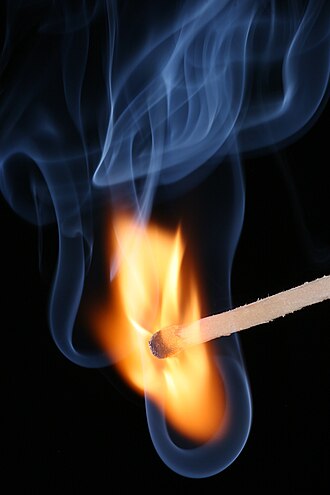
A friction match is a small stick tipped with a mixture that ignites when struck against a rough surface. Pinewood sticks tipped with sulfur, lit from a flame, are described in China around 950, and in 1805 Jean Chancel of Paris made a match lit by dipping it in sulfuric acid. The first commercially successful friction match was made by John Walker, a chemist and pharmacist of Stockton-on-Tees, England, and first recorded in April 1827: sticks tipped with antimony trisulfide and potassium chlorate. Samuel Jones sold an improved version as the lucifer, and Gustaf Erik Pasch’s striking surface of red phosphorus of 1844 led to the safety match.
On the inventions tree
- First known
- 1827
- Where
- Stockton-on-Tees, England
- Credited to
- John Walker · Isaac Holden · Charles Sauria
NoteWalker may have made his first friction matches during experiments in 1826. Earlier French friction lighters, Cagniard de la Tour’s phosphorus bottle of 1810 and François Derosne’s briquet phosphorique of 1816, proved inconvenient and unsafe.
See also

Cite this entry
- APA
- The Epoch Institute. (2026). Friction match. In The Epoch Institute Encyclopedia. https://the-epoch-institute.org/encyclopedia/friction-match
- MLA
- “Friction match.” The Epoch Institute Encyclopedia, The Epoch Institute, 2026, https://the-epoch-institute.org/encyclopedia/friction-match. Accessed .
- Chicago
- The Epoch Institute. “Friction match.” The Epoch Institute Encyclopedia. 2026. https://the-epoch-institute.org/encyclopedia/friction-match.
- Harvard
- The Epoch Institute (2026) ‘Friction match’, The Epoch Institute Encyclopedia. Available at: https://the-epoch-institute.org/encyclopedia/friction-match (Accessed: ).
Last reviewed October 2026Random entry ↻