Event
ʻAi Noa
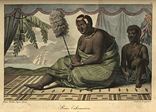
The ʻAi Noa, literally free eating, was a period of taboo-breaking in the Hawaiian Islands in October 1819 that overturned the kapu, the strict rules of Hawaiian religion and society. After the death of Kamehameha I, his son Liholiho, later Kamehameha II, tried to reimpose the kapu suspended during mourning, but was opposed by his mother Keōpūolani, Kamehameha's other wives including Kaʻahumanu, and the kahuna-nui Hewahewa. He then ate a feast the chiefesses had prepared, and messengers announced that the kapu had fallen: women could eat forbidden food and eat with men, and human sacrifice was to end. A revolt led by Keaoua Kekuaokalani was defeated at the Battle of Kuamo'o in December 1819.
See also
Cite this entry
- APA
- The Epoch Institute. (2026). ʻAi Noa. In The Epoch Institute Encyclopedia. https://the-epoch-institute.org/encyclopedia/ai-noa
- MLA
- “ʻAi Noa.” The Epoch Institute Encyclopedia, The Epoch Institute, 2026, https://the-epoch-institute.org/encyclopedia/ai-noa. Accessed .
- Chicago
- The Epoch Institute. “ʻAi Noa.” The Epoch Institute Encyclopedia. 2026. https://the-epoch-institute.org/encyclopedia/ai-noa.
- Harvard
- The Epoch Institute (2026) ‘ʻAi Noa’, The Epoch Institute Encyclopedia. Available at: https://the-epoch-institute.org/encyclopedia/ai-noa (Accessed: ).
Last reviewed October 2026Random entry ↻