Inventions & Discoveries · Farming and food
Kuk Swamp
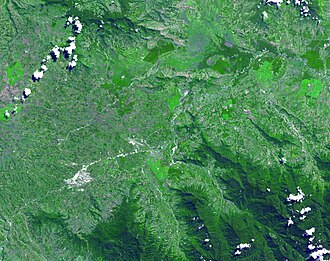
Kuk Swamp is an archaeological site in the Wahgi Valley of the Papua New Guinea highlands, at about 1,550 metres, some 12–13 kilometres northeast of Mount Hagen. Drainage ditches dug there from about 9,000 years ago, from major disposal channels to small field ditches, turned the swamp into grassland where taro was grown, and bananas and sugar cane were cultivated from 6,900–6,400 years ago. Studied by the Australian archaeologist Jack Golson, it was made a UNESCO World Heritage Site in 2008 as one of the places where people developed agriculture independently. The Kawelka people live in the area today.
On the inventions tree
- First known
- c. 9,000 years ago
- Where
- Wahgi Valley, Papua New Guinea
See also


Cite this entry
- APA
- The Epoch Institute. (2026). Kuk Swamp. In The Epoch Institute Encyclopedia. https://the-epoch-institute.org/encyclopedia/kuk-swamp
- MLA
- “Kuk Swamp.” The Epoch Institute Encyclopedia, The Epoch Institute, 2026, https://the-epoch-institute.org/encyclopedia/kuk-swamp. Accessed .
- Chicago
- The Epoch Institute. “Kuk Swamp.” The Epoch Institute Encyclopedia. 2026. https://the-epoch-institute.org/encyclopedia/kuk-swamp.
- Harvard
- The Epoch Institute (2026) ‘Kuk Swamp’, The Epoch Institute Encyclopedia. Available at: https://the-epoch-institute.org/encyclopedia/kuk-swamp (Accessed: ).
Last reviewed October 2026Random entry ↻