Encyclopedia: K
1,373 entries under K · page 13 of 14: Kudur-Mabuk – Kushano-Sasanian Kingdom
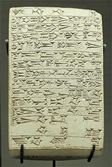 Kudur-MabukPersonKudur-Mabuk was an Amorite chief of the Yamutbal tribe in the region east of the Tigris, whose name is Elamite.
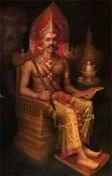 Kue NaPersonKue Na was a king of Lan Na from 1355 to 1385, remembered as a pious and learned ruler.
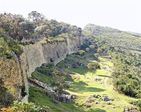 KuélapPlaceKuélap is a walled settlement of the Chachapoya culture on a ridge above the Utcubamba valley in Amazonas, northern Peru, built mainly from about the 6th century CE.
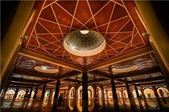 KufaPlaceKufa was a garrison city founded by Arab Muslim forces in southern Iraq in the 630s during the Rashidun conquests.
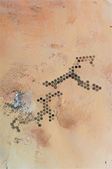 KufraPlaceKufra is a group of oases in the Libyan Desert of south-eastern Libya.
 KuitoPlaceKuito is the capital of Bié Province in the central highlands of Angola.
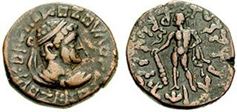 Kujula KadphisesPersonKujula Kadphises was the founder of the Kushan Empire in the 1st century CE.
- KūkanilokoPlaceKūkaniloko is a sacred site near Wahiawā in central Oʻahu, Hawaii, where chiefly women came to give birth so that their children would be of the highest rank.
- KukawaPlaceKukawa is a town in Borno State in north-eastern Nigeria, near the western shore of Lake Chad.
- KukshaPersonKuksha was a monk of the Kiev Monastery of the Caves who preached Christianity to the pagan Vyatichi in the late 11th or early 12th century and was killed by them…
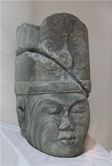 Kül TiginPersonKul Tigin was a prince and military commander of the Second Turkic Khaganate, brother of the ruler Bilge Khagan.
 Kul-ObaPlaceKul-Oba is a Scythian burial mound near Kerch in eastern Crimea, raised in the fourth century BCE.
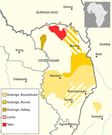 KulangoPeople / groupThe Kulango are a Gur-speaking people of north-eastern Ivory Coast and western Ghana, living around Bouna and Bondoukou.
- Kulashekhara AlvarPersonKulashekhara Alvar was a king of the Chera Perumals of Kerala and one of the twelve Alvars, the Tamil Vaishnava poet-saints, probably of the 9th century.
 KulinPeople / groupThe Kulin are an alliance of five Aboriginal nations of central Victoria, Australia, including the Wurundjeri and Boonwurrung, whose lands cover the Port Phillip region.
- KulinismTermKulinism was a system of ranking among Bengali Brahmins and Kayasthas that placed certain families, the Kulins, at the top of the social order.
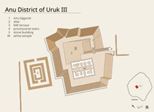 KullabaPlaceKullaba was one of the two original settlements that grew together to form the Sumerian city of Uruk in the 4th millennium BCE, alongside Eanna.
 Kullervo MannerPersonKullervo Manner was a Finnish Social Democrat, speaker of parliament in 1917, who chaired the Finnish People's Delegation, the Red government during the Finnish Civil…
 KulluPlaceKullu is a town and district in Himachal Pradesh, India, in the valley of the Beas River.
 Kullu DussehraEventKullu Dussehra is a week-long festival held each autumn on the Dhalpur maidan at Kullu, Himachal Pradesh, beginning on Vijayadashami.
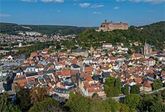 KulmbachPlaceKulmbach is a town in Upper Franconia, northern Bavaria, Germany, overlooked by the Plassenburg fortress.
 KulmiyePeople / groupKulmiye (Peace, Unity and Development Party) is a political party in Somaliland founded in 2002 by Ahmed Mohamed Mohamoud (Silanyo).
 KulobPlaceKulob is a city in Khatlon province in southern Tajikistan, centre of a historic region east of the Vakhsh river.
 Kulottunga IPersonKulottunga I was emperor of the Chola Empire from 1070 to 1122.
 Kulottunga IIIPersonKulottunga III was the last strong king of the Chola Empire, reigning from 1178 to 1218.
- KulturkampfEventThe Kulturkampf was a political conflict in the 1870s between the government of Otto von Bismarck and the Catholic Church in the newly founded German Empire.
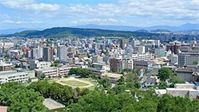 KumamotoPlaceKumamoto is a city in central Kyushu, Japan, and the capital of Kumamoto Prefecture.
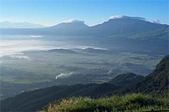 Kumamoto PrefecturePlaceKumamoto Prefecture is a prefecture in central Kyushu, Japan, with its capital at Kumamoto.
- KumanoPlaceKumano is a mountainous, forested region in the south of the Kii Peninsula of Japan, in Wakayama, Mie and Nara prefectures.
- KumanovoPlaceKumanovo is a city in the north of North Macedonia, near the Serbian border.
- KumaonPlaceKumaon is the eastern of the two divisions of Uttarakhand in the central Himalaya of India, with Nainital and Almora as its main towns.
 Kumara KampanaPersonKumara Kampana was a prince and general of the Vijayanagara Empire, a son of Bukka Raya I.
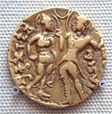 KumaradeviPersonKumaradevi was a Licchavi princess who married Chandragupta I, regarded as the true founder of the Gupta Empire.
 KumarajivaPersonKumarajiva was a Buddhist monk and translator from the oasis kingdom of Kucha, the son of an Indian father and a Kuchean princess.
 Kumarapala (Chaulukya dynasty)PersonKumarapala was king of the Chaulukya dynasty of Gujarat from about 1143 to 1172, succeeding Jayasimha Siddharaja.
- Kumarbi CycleWork / monumentThe Kumarbi Cycle is a group of Hittite mythological texts of Hurrian origin, preserved on tablets from the Hittite capital Hattusa.
 Kumari (goddess)Religion / ideaKumari is the tradition in Nepal of worshipping a young girl before puberty as the living embodiment of the goddess Taleju, a form of Durga.
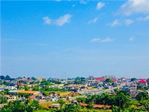 KumasiPlaceKumasi is a city in present-day Ghana and was the capital of the Ashanti Empire.
 Kumazawa BanzanPersonKumazawa Banzan was a Japanese Confucian scholar of the Wang Yangming school and a pupil of Nakae Tōju.
 KumbakonamPlaceKumbakonam is a temple town in the Thanjavur district of Tamil Nadu, India, between the Kaveri and Arasalar rivers.
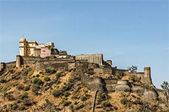 KumbhalgarhPlaceKumbhalgarh is a hill fort in the Aravalli Range north of Udaipur, built in the mid-fifteenth century by Rana Kumbha of Mewar.
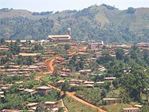 KumboPlaceKumbo is a town in the North-West Region of Cameroon and the capital of the Nso kingdom, whose Fon has his palace there.
- KumemuraPlaceKumemura was a community of Chinese immigrants at Kume, near the port of Naha on Okinawa, founded in the late 14th century by settlers from Fujian.
- KummaPlaceKumma was an Egyptian fortress of the Middle Kingdom on the east bank of the Nile at the Semna gorge, south of the Second Cataract in Lower Nubia, facing the fortress…
- KummanniPlaceKummanni was the chief city and religious centre of Kizzuwatna in south-eastern Anatolia in the 2nd millennium BCE, known for its temple of the goddess Hebat and its…
- Kumo XiPeople / groupThe Kumo Xi, or Xi, were a nomadic people of the upper Liao River region of eastern Inner Mongolia, closely related to the Khitan and traced by Chinese sources to the…
 Kumtor Gold MinePlaceThe Kumtor Gold Mine is an open-pit gold mine high in the Tian Shan mountains of Kyrgyzstan, south of Lake Issyk-Kul, at about 4,000 metres.
- KumukhPlaceKumukh is a large mountain village in the Lak district of Dagestan, Russia, the historic centre of the Lak people.
 Kumul RebellionRevolt · 1931–1934The Kumul Rebellion was an uprising of Uyghurs and other Muslims in Xinjiang that began at Hami, or Kumul, in 1931 after the provincial governor Jin Shuren abolished…
- Kumwimbe NgombePersonKumwimbe Ngombe was a ruler of the Luba Empire in Central Africa, whose reign is dated to about 1810 to 1840.
- Kumwimbe TshimbuPersonKumwimbe Tshimbu was a claimant to the Luba throne in the late nineteenth century.
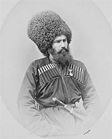 KumyksPeople / groupThe Kumyks are a Turkic people of Dagestan in the North Caucasus, living mainly on the plain between the mountains and the Caspian Sea.
 Kunar RiverPlaceThe Kunar River rises near the Broghil Pass in the Hindu Kush and flows south-west through Chitral in north-western Pakistan, where it is known as the Chitral or Mastuj…
- KunduzPlaceKunduz is a city in northern Afghanistan, capital of Kunduz province, on the Kunduz River in the fertile plain of ancient Bactria.
 Kunene RiverPlaceThe Kunene, or Cunene, is a river of south-western Africa that rises in the Angolan highlands and flows south and then west to the Atlantic, forming part of the border…
 Kunjali MarakkarPeople / groupKunjali Marakkar was the title of the hereditary Muslim naval commanders of the Zamorin of Calicut in the 16th century.
 Kunlun MountainsPlaceThe Kunlun Mountains are one of the longest mountain systems in Asia, stretching about 3,000 km from the Pamirs into central China along the northern edge of the…
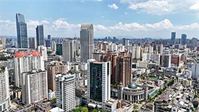 KunmingPlaceKunming is the capital of Yunnan province in south-western China, on the northern shore of Lake Dian.
 Kunta Kinteh IslandPlaceKunta Kinteh Island is a small island in the Gambia River, formerly St Andrew's Island and then James Island.
 Kuntillet AjrudPlaceKuntillet Ajrud is an archaeological site in north-eastern Sinai, a small way station of around 800 BCE on a desert route between Gaza and the Gulf of Aqaba.
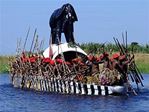 KuombokaEventKuomboka ('to get out of the water') is the annual ceremony of the Lozi of western Zambia, held near the end of the rainy season when the Zambezi floods the Bulozi plain.
 KuomintangPeople / groupThe Kuomintang, or Chinese Nationalist Party, is a political party founded by Sun Yat-sen and his allies in 1912, growing out of the revolutionary Tongmenghui.
 KupangPlaceKupang is the capital of the Indonesian province of East Nusa Tenggara, at the south-western end of Timor.
- KupechestvoPeople / groupKupechestvo was the merchant estate of the Russian Empire, the legally defined class of urban traders.
- Kura (god)Religion / ideaKura was the chief god of the city of Ebla in northern Syria in the 3rd millennium BCE.
- Kura (river)PlaceThe Kura is the main river of the South Caucasus, about 1,360 kilometres long.
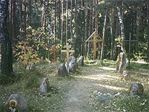 KurapatyPlaceKurapaty is a wooded area on the northern outskirts of Minsk, Belarus, where the Soviet NKVD shot and buried thousands of people between 1937 and 1941.
- KurdistanPlaceKurdistan is a mountainous region inhabited largely by Kurds, spanning parts of present-day Turkey, Iran, Iraq and Syria.
- KurdsPeople / groupThe Kurds are an Iranian-speaking people of the mountainous region of Kurdistan in the Middle East.
- KürePlaceKüre is a town in Kastamonu province in northern Turkey, known since antiquity for its copper mines.
 KuressaarePlaceKuressaare, in German Arensburg, is the main town of the island of Saaremaa in Estonia.
 KurganTermA kurgan is a burial mound raised over a grave, a form of tomb common across the Eurasian steppe from prehistoric times.
- Kuria (Kiribati)PlaceKuria is an atoll of two islands in the central Gilbert Islands of Kiribati, west of Aranuka and Abemama.
 Kurigalzu IPersonKurigalzu I was a Kassite king of Babylonia in the early 14th century BCE.
 Kuril IslandsPlaceThe Kuril Islands are a chain of volcanic islands stretching about 1,200 kilometres from Hokkaido to the Kamchatka Peninsula.
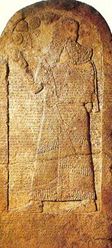 Kurkh MonolithsWork / monumentThe Kurkh Monoliths are two Assyrian stelae found in 1861 at Kurkh, near Diyarbakır in south-eastern Turkey, and now in the British Museum.
 Kurmanbek BakiyevPersonKurmanbek Bakiyev was President of Kyrgyzstan from 2005 to 2010.
 Kuroda NagahiroPersonKuroda Nagahiro was daimyo of the Fukuoka domain in northern Kyushu from 1834 to 1869.
 Kuroda NagamasaPersonKuroda Nagamasa was a Japanese daimyo and general, son of Toyotomi Hideyoshi's strategist Kuroda Kanbei.
 Kuroda NagatomoPersonKuroda Nagatomo was the last daimyo of the Fukuoka domain, succeeding his adoptive father Kuroda Nagahiro in 1869.
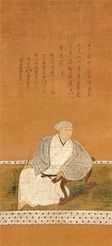 Kuroda YoshitakaPersonKuroda Yoshitaka, better known as Kuroda Kanbei, was a Japanese samurai and strategist who served Toyotomi Hideyoshi in his campaigns to unify Japan and was rewarded…
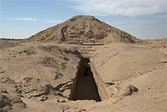 El-KurruPlaceEl-Kurru is a royal cemetery near Napata in northern Sudan, burial place of the early kings of Kush.
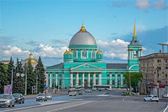 KurskPlaceKursk is a city in south-western Russia on the Seym river, first mentioned in 1032.
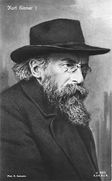 Kurt EisnerPersonKurt Eisner was a German journalist and Independent Social Democrat who led the revolution in Munich on 7 November 1918, proclaiming Bavaria a republic and ending…
 Kurt HahnPersonKurt Hahn was a German-born educator.
- Kurt SchuschniggPersonKurt Schuschnigg was Chancellor of the Federal State of Austria from 1934 to 1938, succeeding the murdered Engelbert Dollfuss.
 Kuru kingdomStateThe Kuru kingdom was a Vedic Indo-Aryan realm of northern India, centred on the upper Ganges–Yamuna region around present-day Haryana and Delhi, in roughly 1200–500 BCE.
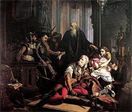 KurucPeople / groupKuruc was the name given to the armed anti-Habsburg rebels of Royal Hungary between 1671 and 1711.
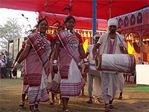 Kurukh peoplePeople / groupThe Oraon, who call themselves Kurukh, are an Adivasi people of eastern and central India, living mainly in Jharkhand, Chhattisgarh, Odisha and West Bengal.
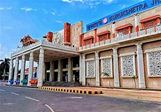 KurukshetraPlaceKurukshetra is a city and district in Haryana, northern India, north of Delhi.
 KurultaiInstitutionA kurultai was a political and military assembly of Mongol and Turkic chiefs, convened to choose leaders and decide major matters.
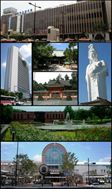 KurumePlaceKurume is a city in Fukuoka Prefecture, Japan, on the Chikugo river in northern Kyushu.
 KurunegalaPlaceKurunegala is a city in the North Western Province of Sri Lanka, set among large rock outcrops, among them Elephant Rock.
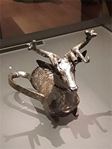 KuruntaPersonKurunta was a Hittite prince, son of Muwatalli II, who ruled the appanage kingdom of Tarhuntassa in southern Anatolia in the 13th century BCE.
- KuruvaInstitutionKuruva was a system of tribute and taxation used in the Zimbabwe plateau states.
- KuryaPersonKurya was a khan of the Pechenegs, the Turkic nomads of the steppe north of the Black Sea.
 KusailaPersonKusaila was a Christian Berber chief of the Awraba confederation who led resistance to the Arab conquest of North Africa in the 680s.
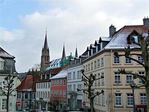 KuselPlaceKusel is a small town in the Western Palatinate, Rhineland-Palatinate, Germany.
 Kushan EmpireStateThe Kushan Empire was a state founded by the Yuezhi in Bactria that expanded into northern India in the first centuries CE.
 Kushano-Sasanian KingdomStateThe Kushano-Sasanian Kingdom was the realm of Sasanian princes who governed Bactria and parts of Gandhara after the Sasanian conquest of the western Kushan lands in the…