Work / monument · monument
Ajanta Caves
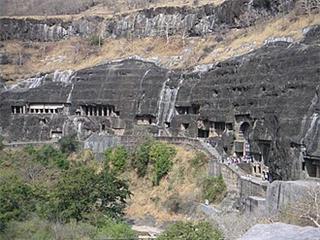
The Ajanta Caves are about thirty Buddhist rock-cut monasteries and prayer halls in a horseshoe-shaped gorge of the Waghora river in Maharashtra, India. The earliest were cut around the 2nd and 1st centuries BCE; most of the rest date from the late 5th century, under the Vakataka king Harishena and his nobles. Their wall paintings of the Buddha's lives are the finest surviving ancient Indian paintings, and the site is a World Heritage Site.
Mentioned in 1 state history
See also




Cite this entry
- APA
- The Epoch Institute. (2026). Ajanta Caves. In The Epoch Institute Encyclopedia. https://the-epoch-institute.org/encyclopedia/ajanta-caves
- MLA
- “Ajanta Caves.” The Epoch Institute Encyclopedia, The Epoch Institute, 2026, https://the-epoch-institute.org/encyclopedia/ajanta-caves. Accessed .
- Chicago
- The Epoch Institute. “Ajanta Caves.” The Epoch Institute Encyclopedia. 2026. https://the-epoch-institute.org/encyclopedia/ajanta-caves.
- Harvard
- The Epoch Institute (2026) ‘Ajanta Caves’, The Epoch Institute Encyclopedia. Available at: https://the-epoch-institute.org/encyclopedia/ajanta-caves (Accessed: ).
Last reviewed October 2026Random entry ↻