Inventions & Discoveries · Medicine and health
Artemisinin
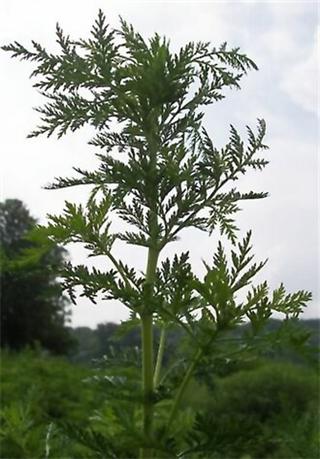
Artemisinin is a drug against malaria caused by Plasmodium falciparum, discovered in China in 1972 by Tu Youyou in the leaves of sweet wormwood (Artemisia annua). It came out of Project 523, a secret military programme of the People's Liberation Army set up in 1967 that screened a list of nearly 2,000 traditional Chinese medicines; Tu said she was guided by a handbook of 340 CE by Ge Hong. Artemisinin-based combination therapies have become the standard treatment for malaria worldwide, and Tu shared the 2015 Nobel Prize in Physiology or Medicine for the discovery.
On the inventions tree
- First known
- 1972
- Where
- China
- Credited to
- Tu Youyou · People's Republic of China
Built onQuinineby 1632
See also


Cite this entry
- APA
- The Epoch Institute. (2026). Artemisinin. In The Epoch Institute Encyclopedia. https://the-epoch-institute.org/encyclopedia/artemisinin
- MLA
- “Artemisinin.” The Epoch Institute Encyclopedia, The Epoch Institute, 2026, https://the-epoch-institute.org/encyclopedia/artemisinin. Accessed .
- Chicago
- The Epoch Institute. “Artemisinin.” The Epoch Institute Encyclopedia. 2026. https://the-epoch-institute.org/encyclopedia/artemisinin.
- Harvard
- The Epoch Institute (2026) ‘Artemisinin’, The Epoch Institute Encyclopedia. Available at: https://the-epoch-institute.org/encyclopedia/artemisinin (Accessed: ).
Last reviewed October 2026Random entry ↻