Inventions & Discoveries · Building and engineering
Elevator
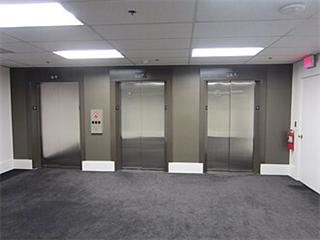
An elevator, or lift, is a machine that carries people or goods vertically between levels; the earliest known reference, by the Roman architect Vitruvius, reports that Archimedes built one, probably in 236 BCE. The Colosseum, completed in 80 CE, had about 25 elevators powered by men for raising animals. Steam-powered elevators served mines and factories in the mid-19th century, and in 1852 Elisha Otis introduced the safety elevator, which kept the cab from falling if the cable broke; the first passenger one was installed in New York City in 1857.
On the inventions tree
- First known
- 1852
- Where
- New York
- Credited to
- Elisha Otis · United States
NoteA safety device already featured in Gaetano Genovese’s “flying chair” at Caserta in 1845.
Built onSteam engine1606
Led toSkyscraper1885
See also


Cite this entry
- APA
- The Epoch Institute. (2026). Elevator. In The Epoch Institute Encyclopedia. https://the-epoch-institute.org/encyclopedia/elevator
- MLA
- “Elevator.” The Epoch Institute Encyclopedia, The Epoch Institute, 2026, https://the-epoch-institute.org/encyclopedia/elevator. Accessed .
- Chicago
- The Epoch Institute. “Elevator.” The Epoch Institute Encyclopedia. 2026. https://the-epoch-institute.org/encyclopedia/elevator.
- Harvard
- The Epoch Institute (2026) ‘Elevator’, The Epoch Institute Encyclopedia. Available at: https://the-epoch-institute.org/encyclopedia/elevator (Accessed: ).
Last reviewed October 2026Random entry ↻