Americas
United States
At a glance
- Founded by thirteen British colonies in 1776, it was the first modern republic built on a written national constitution.
- It expanded across North America by purchase, war and the dispossession of Native nations; slavery ended only after civil war.
- Victory in the two world wars made it a superpower, and after the fall of the Soviet Union in 1991 it was the only one.
Rise & Fall
- 1776The Declaration of Independence is adopted on 4 July
- 1783The Treaty of Paris recognises American independence
- 1789The Constitution takes effect and George Washington becomes president
- 1803The Louisiana Purchase roughly doubles the country’s area
- 1861The Civil War begins after eleven Southern states secede
- 1865Union victory and the Thirteenth Amendment end slavery
- 1945The United States emerges from the Second World War as a superpower
- 1969Apollo 11 lands the first astronauts on the Moon
Foundation
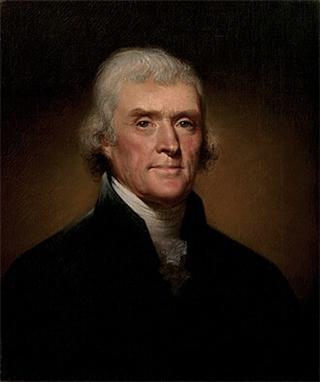
The United States grew out of thirteen British colonies along the Atlantic coast of North America, founded between the settlement of Jamestown in Virginia in 1607 and the chartering of Georgia in 1732. After Britain's victory in the Seven Years' War, Parliament sought to tax the colonies to help pay for their defence, through the Stamp Act of 1765 and the Townshend duties of 1767, provoking protests against taxation without representation. The Boston Tea Party of 1773 led to the punitive Coercive Acts, and the colonies coordinated their resistance through the First Continental Congress in 1774. Fighting began at Lexington and Concord in April 1775. On 4 July 1776 the Second Continental Congress adopted the Declaration of Independence, drafted mainly by Thomas Jefferson, which justified separation by appeal to natural rights. The Articles of Confederation, in force from 1781, created a loose league of sovereign states with a Congress unable to levy taxes. After the Treaty of Paris of 1783 recognised independence, with a western border on the Mississippi, debts and unrest such as Shays' Rebellion of 1786–1787 persuaded leaders to call the Constitutional Convention at Philadelphia in 1787. The Constitution it drafted was ratified in 1788 and took effect in 1789, with George Washington as the first president.
Socioeconomy

The early republic was overwhelmingly agricultural. In the North family farms, shipping and, from the 1790s, textile mills in New England dominated, while in the South plantations worked by enslaved people of African descent produced tobacco, rice and above all cotton, whose output soared after Eli Whitney's cotton gin of 1793; by 1860 nearly four million people were enslaved. Canals such as the Erie Canal, opened in 1825, and then railways bound the interior to the eastern ports, and the first transcontinental railroad was completed in 1869. After the Civil War industrialisation, built on steel, oil, railways and electricity, made the United States the largest economy in the world by the late nineteenth century, while more than 20 million immigrants arrived, mainly from Europe, between 1880 and 1920. Religion was diverse and voluntary, with no established national church under the First Amendment, and waves of Protestant revival inspired reform movements from abolition to temperance. The Great Depression that followed the crash of 1929 left about a quarter of the workforce unemployed and brought the New Deal of Franklin D. Roosevelt. After 1945 the country produced a large share of world output, suburban mass consumption spread, and the dollar became the world's main reserve currency. In recent decades services and technology have replaced manufacturing as the core of the economy.
Military
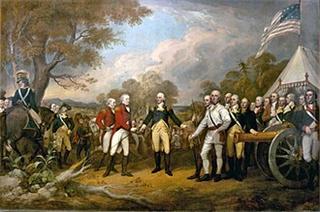
The Continental Army under George Washington, aided from 1778 by an alliance with France, won independence despite repeated defeats; the surrender of British armies at Saratoga in 1777 and Yorktown in 1781 proved decisive. The young republic kept only a small regular army and relied on state militias, but it fought Britain again in the War of 1812 and waged a long series of wars against Native American nations that drove them west and onto reservations. The Mexican–American War of 1846–1848 added California and the Southwest. The Civil War of 1861–1865, the deadliest conflict in American history, with between about 620,000 and 750,000 soldiers dead, ended in Union victory over the Confederacy after battles such as Gettysburg in 1863. Victory over Spain in 1898 brought Puerto Rico, Guam and the Philippines. American troops helped tip the balance on the Western Front in 1918, and in the Second World War, which the United States entered after the Japanese attack on Pearl Harbor on 7 December 1941, its industry and forces fought in Europe and the Pacific, and the war ended after atomic bombs were dropped on Hiroshima and Nagasaki. During the Cold War it led NATO, founded in 1949, fought in Korea and Vietnam and built a global network of bases; since then it has fought in the Gulf, Afghanistan and Iraq and remains the world's strongest military power.
Governance & Law

The Constitution of 1787 created a federal republic in which power was divided between the national government and the states and, at the national level, separated among Congress, a president chosen through an electoral college, and a judiciary headed by the Supreme Court. Its first ten amendments, the Bill of Rights of 1791, protected freedom of speech, religion and the press and the rights of the accused. In Marbury v. Madison in 1803 the Supreme Court under Chief Justice John Marshall asserted the power of judicial review. Party politics emerged early, with Federalists against Jeffersonian Republicans, later Democrats against Whigs and, from the 1850s, Democrats against the new Republican Party. The franchise widened from property-owning white men to almost all white men by the 1830s. The Reconstruction amendments abolished slavery in 1865 and promised equal protection and the vote to Black men, but Southern states soon disenfranchised them and imposed segregation through Jim Crow laws. The Nineteenth Amendment gave women the vote in 1920. Federal power grew sharply with the New Deal and the Second World War, creating Social Security, regulatory agencies and a large national security establishment. The civil rights movement, with leaders such as Martin Luther King Jr., won the Civil Rights Act of 1964 and the Voting Rights Act of 1965, ending legal segregation and restoring Black voting rights in the South.
Global & Regional Impact
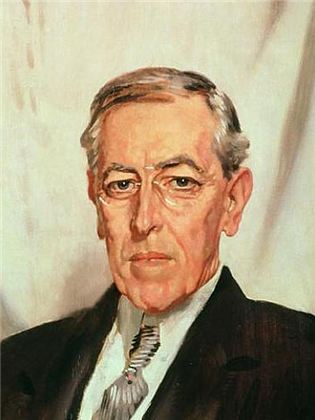
The United States was the first modern state founded on a written declaration of natural rights and a written national constitution, and both became models: the Declaration influenced the French Revolution and later independence movements, while federalism, presidential government and judicial review were copied across Latin America and beyond. Its westward expansion displaced and devastated Native American nations and, through the Mexican–American War, took about half of Mexico's territory. As a destination for tens of millions of immigrants it became a nation of unusually diverse origins. In the twentieth century its power shaped the world order: Woodrow Wilson's Fourteen Points of 1918 promoted national self-determination, and after 1945 the United States led the creation of the United Nations, the International Monetary Fund and the World Bank, and financed European recovery through the Marshall Plan. Its rivalry with the Soviet Union in the Cold War, including the space race that landed astronauts on the Moon in 1969, defined world politics for four decades. American inventors, universities and companies drove much of modern technology, from electric light and powered flight to the transistor and the internet, and its films, music and consumer culture spread worldwide. Its record also includes slavery, segregation and contested interventions abroad, which remain central to debates about its legacy.
Into the Present

The United States has never ceased to exist, but it has been transformed several times. The Civil War replaced a union of states in which slavery was protected with a stronger nation in which it was abolished, and the New Deal and the world wars turned a limited federal government into a modern administrative and military state. After victory in 1945 the United States became one of two superpowers, and with the dissolution of the Soviet Union in 1991 it remained the only one. Since then it has faced the terrorist attacks of 11 September 2001, long wars in Afghanistan from 2001 to 2021 and in Iraq from 2003, the financial crisis of 2008 and the rise of China as an economic and strategic rival, while deep political polarisation has tested its institutions. Alaska and Hawaii became the 49th and 50th states in 1959, and the country also holds territories including Puerto Rico and Guam. With about 340 million people it is the third most populous country in the world, and it remains the largest economy by nominal output, the issuer of the main reserve currency and the leading military power: a federal republic of 50 states governed under the Constitution of 1787, the oldest written national constitution still in force.
The United States, founded on a written declaration of rights and the oldest national constitution still in force, grew from thirteen colonies into a continental federal republic and, after victory in the two world wars, into the dominant economic, military and cultural power of the modern world.
Test yourself
5 questions on this page, from its key events and facts.
The questions open here once the page has loaded.
References
- Foner, E. (1988) Reconstruction: America's Unfinished Revolution, 1863–1877. New York: Harper & Row.
- Herring, G.C. (2008) From Colony to Superpower: U.S. Foreign Relations since 1776. New York: Oxford University Press.
- Howe, D.W. (2007) What Hath God Wrought: The Transformation of America, 1815–1848. New York: Oxford University Press.
- Kennedy, D.M. (1999) Freedom from Fear: The American People in Depression and War, 1929–1945. New York: Oxford University Press.
- McPherson, J.M. (1988) Battle Cry of Freedom: The Civil War Era. New York: Oxford University Press.
- Wood, G.S. (1969) The Creation of the American Republic, 1776–1787. Chapel Hill: University of North Carolina Press.
Connections
Open the full connections map →