Americas
Iroquois Confederacy
At a glance
- A league of the Mohawk, Oneida, Onondaga, Cayuga and Seneca, joined by the Tuscarora around 1722, under the Great Law of Peace.
- Fifty hereditary chiefs, chosen and removable by clan mothers, decided by consensus in a Grand Council at Onondaga.
- Strongest Native power of the north-east for over a century, it was split by the American Revolution but its councils still meet.
Rise & Fall
- c. 1450Traditional founding date of the league under the Great Law of Peace (dates debated)
- 1649Haudenosaunee war parties destroy the towns of the Huron Confederacy
- 1677The Covenant Chain alliance is agreed with the English at Albany
- 1701The Great Peace of Montreal ends decades of war with New France
- c. 1722The Tuscarora join, making the Five Nations the Six Nations
- 1777The Grand Council covers its fire as the nations take sides in the American Revolution
- 1784Joseph Brant leads loyalist Haudenosaunee to the Grand River in Ontario
Foundation
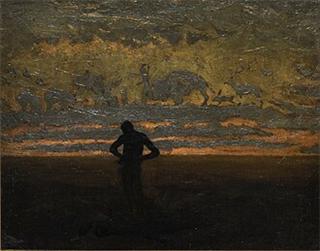
The Haudenosaunee, the People of the Longhouse, were Iroquoian-speaking farming peoples of what is now upstate New York, living in palisaded villages of bark longhouses between the Hudson River and the Genesee. According to Haudenosaunee tradition, a time of blood feuds and endless revenge among them was ended by the Peacemaker, Deganawida, a Huron-born prophet, and his spokesman Hiawatha, an Onondaga who had lost his family to violence. Together they persuaded the Mohawk, Oneida, Onondaga, Cayuga and Seneca to accept the Great Law of Peace, the Gayanashagowa, and finally won over the feared Onondaga chief Tadodaho, whose name became the title of the league’s presiding chief. The five nations buried their weapons beneath a Great Tree of Peace, a white pine, and became one symbolic longhouse stretching across their lands, with the Mohawk as keepers of the eastern door and the Seneca of the western door. The date of the founding is uncertain and much debated. Proposals range from the twelfth century, partly based on a tradition linking it to a solar eclipse, to the late sixteenth century, and archaeology suggests a gradual consolidation of villages and alliances over the fifteenth and sixteenth centuries. The register follows a mid-fifteenth-century date, and the league was certainly in existence when Europeans first met its peoples in the early seventeenth century.
Socioeconomy

Haudenosaunee society was matrilineal. People belonged to the clan of their mother, such as Turtle, Wolf or Bear, and extended families of related women lived together in longhouses that could reach more than 50 metres in length, each housing several families around shared hearths. Women owned and worked the fields, growing the Three Sisters, maize, beans and squash, which provided most of the diet, while men hunted, fished, traded, made war and conducted diplomacy. Villages of several hundred to a few thousand people moved every decade or two as soils and firewood were exhausted. Before the great epidemics the five nations may have numbered around 20,000 people or more, but smallpox and other diseases, notably in 1634, killed perhaps half of them. In the seventeenth century the fur trade transformed the economy. The Mohawk traded beaver pelts with the Dutch at Fort Orange, founded in 1624 on the site of present-day Albany, for metal tools, cloth and firearms, and later traded with the English. Wampum, strings and belts of white and purple shell beads, recorded agreements, conveyed messages and gave weight to words in council. Religious life centred on thanksgiving to the Creator and the forces of nature through seasonal ceremonies, and in 1799 the Seneca prophet Handsome Lake founded the Longhouse religion, which is still practised today.
Military

Haudenosaunee warfare was originally driven by the mourning war, in which raiding parties took captives to replace the dead, to be adopted into families or executed. The fur trade, epidemics and access to Dutch guns transformed this practice in the seventeenth century. The hostility of New France began when Samuel de Champlain and his Huron and Algonquin allies killed several Mohawk leaders near Lake Champlain in 1609. In the Beaver Wars the league fought for control of furs and captives: in 1649 Haudenosaunee war parties destroyed the main towns of the Huron Confederacy and dispersed its people, then broke the Neutral Confederacy around 1651 and the Erie Nation by about 1656, absorbing thousands of captives. French counter-attacks were severe. The Marquis de Tracy burned Mohawk villages in 1666, the Marquis de Denonville invaded Seneca country in 1687, and Frontenac struck the Onondaga in 1696, while Haudenosaunee warriors raided Lachine near Montreal in 1689. Exhausted by these wars, the league made the Great Peace of Montreal with France and its Native allies in 1701. In the eighteenth century Mohawk warriors under Hendrick Theyanoguin fought beside the British at the Battle of Lake George in 1755, and in the American Revolution the league’s nations fought one another, notably at the Battle of Oriskany in 1777.
Governance & Law
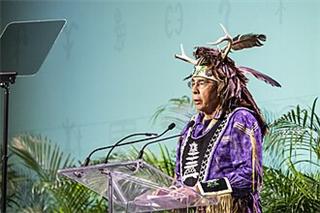
The Great Law created a Grand Council of fifty hereditary chiefs, the hoyaneh, whose titles were distributed unequally among the nations: fourteen for the Onondaga, ten for the Cayuga, nine each for the Mohawk and Oneida, and eight for the Seneca. Numbers did not decide votes, because each nation spoke with one voice and decisions required consensus. The Onondaga kept the central fire and the wampum belts that recorded the league’s laws and agreements, and the Tadodaho presided over the council. Debate followed a set procedure: the Mohawk and Seneca, as elder brothers, considered a matter first, then passed it across the fire to the Oneida and Cayuga, the younger brothers, before the Onondaga confirmed or returned the decision. Clan mothers, the senior women of each lineage, chose the chiefs from eligible men, advised them, and could remove those who failed in their duties. The Condolence Ceremony mourned dead chiefs and installed their successors. The confederacy was a framework of peace among its members rather than a centralised government: each nation kept wide autonomy and could pursue its own diplomacy and war, which sometimes produced divided policies. When the Tuscarora moved north from North Carolina after the Tuscarora War of 1711–1713 and were adopted around 1722, they joined under the sponsorship of the Oneida, and the league became the Six Nations.
Global & Regional Impact

For more than a century the Haudenosaunee held the balance of power in north-eastern North America between New France and the English colonies. Through the Covenant Chain, the alliance made at Albany in 1677 with Governor Edmund Andros of New York and later extended to other colonies, they became the principal Native partner of the English and claimed authority over many dependent peoples, including the Delaware and remnant groups of the Susquehannock. After 1701 their policy of neutrality between the empires allowed them to play the two powers against each other. Their councils, oratory and wampum diplomacy set the forms of treaty-making that colonial officials adopted, and Sir William Johnson, British superintendent of Indian Affairs, built his influence on close ties with the Mohawk. Benjamin Franklin pointed to the union of the Six Nations when advocating colonial union, and the Albany Congress of 1754 met partly to renew the alliance with them. Whether the league directly influenced the United States Constitution is debated by historians, although the United States Congress acknowledged such an influence in a resolution of 1988. Haudenosaunee communities today remain among the most active Indigenous nations in asserting sovereignty, issuing their own passports and fielding national lacrosse teams in international competition.
Into the Present

The American Revolution broke the league’s unity. In 1777 the Grand Council could not agree on a common policy and covered its central fire at Onondaga, leaving each nation to choose its side. Most Mohawk, Onondaga, Cayuga and Seneca joined the British, led in part by the Mohawk war leader Joseph Brant, while most Oneida and Tuscarora supported the Americans. In 1779 the Sullivan Expedition destroyed some forty Haudenosaunee towns and their crops, and the Treaty of Paris of 1783 made no provision for Britain’s Native allies. The Treaty of Fort Stanwix of 1784 and later state purchases stripped the nations of most of their lands in New York, although the Treaty of Canandaigua of 1794 recognised the remaining lands of the Six Nations and is still honoured with an annual distribution of cloth. Under the Haldimand Proclamation of 1784, Brant led many loyalist Haudenosaunee to the Grand River in present-day Ontario, where the Six Nations of the Grand River is now the most populous First Nations reserve in Canada. In 1924 Canada imposed an elected band council at Six Nations, after the Cayuga chief Deskaheh had sought recognition from the League of Nations, but the traditional chiefs continue to meet. The Grand Council still sits at Onondaga, near Syracuse, New York.
The Iroquois Confederacy, or Haudenosaunee, united five and later six nations under the Great Law of Peace, governed by consensus among hereditary chiefs chosen by clan mothers, and for more than a century held the balance of power between France and Britain in north-eastern North America; its councils still meet today.
References
- Fenton, W.N. (1998) The Great Law and the Longhouse: A Political History of the Iroquois Confederacy. Norman: University of Oklahoma Press.
- Jennings, F. (1984) The Ambiguous Iroquois Empire. New York: W.W. Norton.
- Richter, D.K. (1992) The Ordeal of the Longhouse: The Peoples of the Iroquois League in the Era of European Colonization. Chapel Hill: University of North Carolina Press.
- Snow, D.R. (1994) The Iroquois. Oxford: Blackwell.
- Taylor, A. (2006) The Divided Ground: Indians, Settlers, and the Northern Borderland of the American Revolution. New York: Alfred A. Knopf.
Connections
Open the full connections map →