Americas
New Spain
At a glance
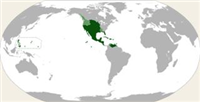
- Spain’s richest viceroyalty, ruled from Mexico City over Mexico, Central America, the Caribbean and the Philippines.
- Its silver, coined as the Spanish dollar and carried by the Manila galleons, linked Europe, the Americas and China.
- Hidalgo’s revolt of 1810 began a long war, and the Plan of Iguala and Treaty of Córdoba ended Spanish rule in 1821.
Rise & Fall
- 1521Tenochtitlan falls to Hernán Cortés and his indigenous allies
- 1535Antonio de Mendoza becomes the first viceroy of New Spain
- 1546Silver is discovered at Zacatecas
- 1565The Manila galleon route links Acapulco with the Philippines
- 1767The Jesuits are expelled during the Bourbon reforms
- 1810Miguel Hidalgo launches the war of independence at Dolores
- 1821The Plan of Iguala and the Treaty of Córdoba end Spanish rule
Foundation
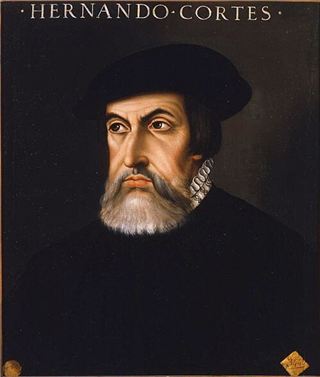
New Spain was born from the conquest of the Aztec Empire. Hernán Cortés landed on the Gulf coast in 1519, founded Veracruz, and with the decisive help of indigenous allies, above all the Tlaxcalans, besieged Tenochtitlan, which fell on 13 August 1521 after a smallpox epidemic had already devastated its defenders. Cortés named the conquered lands New Spain and had Mexico City built on the ruins of the Aztec capital. Conquistadors spread out to subdue Oaxaca, Michoacán, Guatemala and the Gulf coast, while Nuño de Guzmán’s brutal campaigns in the 1530s created the Kingdom of New Galicia in the west. The Crown moved quickly to curb the power of the conquerors. It created the Audiencia of Mexico, a royal court and governing council, in 1527, and in 1535 appointed Antonio de Mendoza as the first viceroy, who governed until 1550 and laid the foundations of colonial administration, founding the Mexico City mint and supporting the first printing press in the Americas, which began work in 1539. Franciscan, Dominican and Augustinian friars arrived from 1524 to convert the indigenous population. Over the following decades the viceroyalty’s authority came to extend over Central America, the Spanish Caribbean, the northern frontier provinces and, after 1565, the Philippines.
Socioeconomy

The conquest was followed by demographic catastrophe. Epidemics of smallpox, measles and the diseases known as cocoliztli, especially in 1545–1548 and 1576–1580, together with war and forced labour, reduced the indigenous population of central Mexico by perhaps 90 per cent by the early seventeenth century, although the size of the original population is disputed. Indigenous communities nevertheless survived as self-governing towns that paid tribute and supplied labour, first through the encomienda and later the repartimiento. Silver transformed the economy after the discoveries at Zacatecas in 1546 and Guanajuato soon after; the patio process of amalgamation with mercury, developed by Bartolomé de Medina at Pachuca in the 1550s, made mass production possible. Silver went to Seville in the convoys from Veracruz and across the Pacific in the Manila galleons from Acapulco, where it bought Chinese silk and porcelain. Large haciendas raised cattle, wheat and maize, and sugar estates relied partly on enslaved Africans, perhaps 200,000 of whom were brought to New Spain, mostly before 1650. A layered society emerged of Spaniards born in Spain, American-born criollos, indigenous people, Africans and mixed groups classified as castas. The Catholic Church was the central institution of cultural life, and the devotion to the Virgin of Guadalupe, said to have appeared to Juan Diego in 1531, became a shared focus of identity.
Military

For most of its history New Spain kept only a small regular army, relying on conquistadors, militias and indigenous allies. Resistance did not end with the fall of Tenochtitlan. In the Mixtón War of 1540–1542 the Caxcanes and other peoples of New Galicia rose against Spanish rule, and Viceroy Mendoza himself led the army that crushed them with thousands of indigenous auxiliaries. The discovery of silver in the north provoked the Chichimeca War, a long conflict along the road from Mexico City to Zacatecas from about 1550 to 1590, which the Spaniards ended less by force than by a policy of gifts, settlement and missions. On the northern frontier, a line of presidios, or garrisoned forts, protected missions and mining towns against Apache and Comanche raids, and the Pueblo Revolt of 1680 drove the Spaniards out of New Mexico until Diego de Vargas returned in 1692. At sea, the fortress of San Juan de Ulúa guarded Veracruz, though pirates led by Laurens de Graaf sacked the port in 1683. After Britain captured Havana in 1762, the Crown built a regular army and an extensive colonial militia in New Spain. These forces, commanded by royalist officers such as Félix María Calleja, fought the insurgents during the war of independence from 1810, defeating Miguel Hidalgo at the Bridge of Calderón in January 1811.
Governance & Law

The viceroy was the king’s personal representative, combining the roles of governor, captain-general and president of the Audiencia of Mexico. He answered to the Council of the Indies in Spain, and at the end of his term his conduct was examined in a judicial review, the residencia. Other audiencias, in Guatemala from 1543, Guadalajara from 1548 and Manila from 1583, exercised judicial and administrative authority within the viceroyalty, and Guatemala, Cuba and the Philippines were ruled by captains-general who were largely autonomous in practice. Provinces were run by corregidores and alcaldes mayores. The law distinguished a republic of Spaniards from a republic of Indians, whose towns kept their own councils and nobles, and Nahuatl, Mixtec and other languages were used in local records. The Crown held extensive rights over the Church under the royal patronage, and the Inquisition established a tribunal in Mexico City in 1571. Laws issued over two centuries were compiled in the Recopilación de Leyes de los Reinos de las Indias of 1680. In the eighteenth century the Bourbon reforms, driven by the inspector-general José de Gálvez from 1765, reorganised the colony: a royal tobacco monopoly, the expulsion of the Jesuits in 1767, the Commandancy General of the Internal Provinces in 1776 and twelve intendancies in 1786 increased revenue and central control.
Global & Regional Impact

New Spain was the most valuable part of the Spanish Empire and a hinge of the first global economy. Its silver, coined in the Mexico City mint as the real de a ocho or Spanish dollar, circulated from Europe to China and became a standard trade coin across the world, later serving as a model for the currencies of the United States and China. The Manila galleons, sailing between Acapulco and Manila from 1565 to 1815, connected the Americas and Asia directly for two and a half centuries. Crops, animals and techniques were exchanged across the Atlantic and Pacific, carrying maize, cacao and chillies outward and introducing wheat, cattle, horses and sugar cane into Mexico. Culturally, New Spain produced a distinctive baroque civilisation: the cathedrals of Mexico City and Puebla, the poet and scholar Sor Juana Inés de la Cruz, the polymath Carlos de Sigüenza y Góngora, and the Royal University of Mexico, founded in 1551. Indigenous and Spanish traditions mixed in religion, art and language, while the Virgin of Guadalupe became a lasting symbol. The viceroyalty shaped the borders, legal systems and cities of modern Mexico and Central America, and left Spanish place names, missions and law across the south-western United States, from Texas to California, as well as a lasting Hispanic and Catholic imprint on the Philippines.
Decline & Fall
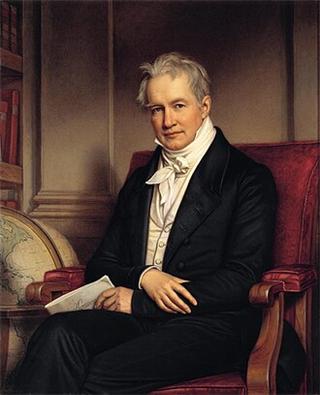
New Spain reached its peak of wealth around 1800, when it had some six million inhabitants, its mines were producing more silver than ever, and Alexander von Humboldt described Mexico City as one of the finest cities built by Europeans. Yet resentment was growing. Bourbon reforms favoured Spanish-born officials over criollos, and the Consolidation of 1804 forced the Church to call in loans, damaging landowners and merchants. When Napoleon forced the Spanish Bourbons to abdicate in 1808, Spanish merchants in Mexico City overthrew Viceroy José de Iturrigaray to prevent criollo moves towards self-government. On 16 September 1810 the priest Miguel Hidalgo launched a mass revolt at Dolores, which took Guanajuato but was defeated in 1811; Hidalgo was executed. José María Morelos continued the struggle, convening the Congress of Chilpancingo in 1813, until his capture and execution in 1815. Royalist armies then contained the insurgency, which survived as guerrilla warfare under Vicente Guerrero. The end came from within the royalist camp. After liberal revolution in Spain in 1820, the royalist officer Agustín de Iturbide agreed with Guerrero on the Plan of Iguala of February 1821, promising independence, Catholicism and equality. On 24 August 1821 the newly arrived Juan O’Donojú signed the Treaty of Córdoba, and in September Iturbide’s army entered Mexico City, founding the First Mexican Empire.
New Spain was the richest and most populous viceroyalty of the Spanish Empire, governing Mexico, Central America, the Caribbean and the Philippines from Mexico City for three centuries; its silver and Pacific galleons helped to create the first global economy, and its society laid the foundations of modern Mexico.
Test yourself
5 questions on this page, from its key events and facts.
The questions open here once the page has loaded.
References
- Bakewell, P.J. (1971) Silver Mining and Society in Colonial Mexico: Zacatecas 1546–1700. Cambridge: Cambridge University Press.
- Brading, D.A. (1971) Miners and Merchants in Bourbon Mexico, 1763–1810. Cambridge: Cambridge University Press.
- Gerhard, P. (1972) A Guide to the Historical Geography of New Spain. Cambridge: Cambridge University Press.
- Gibson, C. (1964) The Aztecs under Spanish Rule: A History of the Indians of the Valley of Mexico, 1519–1810. Stanford: Stanford University Press.
- Hamnett, B.R. (1999) A Concise History of Mexico. Cambridge: Cambridge University Press.
- Van Young, E. (2001) The Other Rebellion: Popular Violence, Ideology, and the Mexican Struggle for Independence, 1810–1821. Stanford: Stanford University Press.
Connections
Open the full connections map →