Americas
Viceroyalty of Peru
At a glance
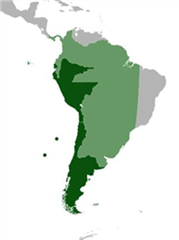
- Spain’s viceroyalty for South America, ruled from Lima, which at first covered nearly all of Spanish South America.
- Silver from Potosí, mined with forced mita labour, financed the Spanish crown and flowed to Europe and China.
- Bourbon reforms cut its territory in the eighteenth century, and the Battle of Ayacucho in 1824 ended Spanish rule.
Rise & Fall
- 1542The New Laws of Charles V create the Viceroyalty of Peru
- 1545Silver is discovered at the Cerro Rico of Potosí
- 1551The University of San Marcos is founded in Lima
- 1572Túpac Amaru, last ruler of the Neo-Inca State, is executed in Cuzco
- 1746An earthquake and tsunami destroy much of Lima and the port of Callao
- 1776Upper Peru and Potosí pass to the new Viceroyalty of the Río de la Plata
- 1780The rebellion of Túpac Amaru II begins in the southern Andes
- 1824Sucre defeats the royalists at the Battle of Ayacucho
Foundation
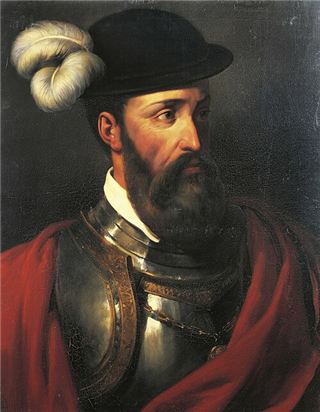
The Viceroyalty of Peru grew out of the conquest of the Inca Empire by Francisco Pizarro and his companions, who captured the Sapa Inca Atahualpa at Cajamarca in 1532 and entered Cuzco in 1533. The Crown first divided the conquered lands into the governorates of New Castile, granted to Pizarro, and New Toledo, granted to Diego de Almagro, but rivalry between the two conquerors led to civil war, the execution of Almagro in 1538 and the assassination of Pizarro in 1541 in Lima, the city he had founded in 1535. To impose royal authority, Charles V issued the New Laws of 1542, which created the viceroyalty with its seat at Lima and restricted the encomiendas, the grants of indigenous tribute and labour held by the conquerors. The first viceroy, Blasco Núñez Vela, arrived in 1544, but his attempt to enforce the New Laws provoked a revolt of encomenderos under Gonzalo Pizarro, who defeated and killed him at the Battle of Añaquito in 1546. The cleric Pedro de la Gasca, sent with broad powers and a promise to soften the laws, won over most of the rebels and defeated Gonzalo Pizarro at Jaquijahuana in 1548, after which Pizarro was executed. A further rising under Francisco Hernández Girón in 1553–1554 was suppressed, and royal government was then secure.
Socioeconomy

Colonial Peruvian society was formally divided into a república de españoles and a república de indios, each with its own laws, courts and obligations. Indigenous communities paid tribute and were governed through their hereditary lords, the kurakas, who mediated between villagers and Spanish officials, while the Andean population fell steeply in the sixteenth century through epidemics, war and forced labour. The economy rested on silver. The Cerro Rico of Potosí, discovered in 1545, became the largest source of silver in the world, and after mercury amalgamation was introduced in the 1570s its output soared, supplied with mercury from Huancavelica, discovered in 1563. Through the mita, Viceroy Francisco de Toledo assigned some 13,000 indigenous men a year from sixteen highland provinces to work at Potosí, a burden that drove many to abandon their communities. Silver travelled by the Armada del Mar del Sur from Callao to Panama and on to Seville, and by way of Acapulco and the Manila galleons to China. Coastal estates grew sugar and vines with the labour of enslaved Africans, and textile workshops, the obrajes, supplied cloth. The Catholic Church organised parishes, missions and confraternities, and Lima produced Rose of Lima, canonised in 1671 as the first saint of the Americas, and Martin de Porres.
Military

For much of its history the Viceroyalty of Peru relied less on a standing army than on the loyalty of its settlers and the distance that shielded it from European rivals. Its first decades were dominated by civil wars among the conquerors and by the resistance of the Neo-Inca State in Vilcabamba, whose last ruler, Túpac Amaru, was captured and executed at Cuzco in 1572 on the orders of Viceroy Toledo. On the southern frontier the Spanish in Chile fought a long war against the Mapuche, financed by an annual subsidy, the real situado, sent from Lima. The Pacific coast suffered raids by English and Dutch interlopers: Francis Drake seized ships at Callao in 1579, and a Dutch fleet under Jacques l'Hermite blockaded the port in 1624. In response the viceroys walled Callao in the 1640s and Lima in the 1680s, and after the earthquake and tsunami of 1746 destroyed Callao, the Real Felipe fortress was built there. From the 1760s Viceroy Manuel de Amat y Junyent expanded the colonial militias. During the wars of independence Viceroy José Fernando de Abascal turned Peru into the royalist base of South America, sending armies that crushed revolutionaries in Upper Peru and Quito and reconquered Chile after the Battle of Rancagua in 1814.
Governance & Law

The viceroy, appointed by the king on the advice of the Council of the Indies, was the Crown's personal representative: he presided over the Audiencia of Lima, commanded the armed forces, supervised the treasury and exercised royal patronage over the Church. Further audiencias were established at Panama, Santa Fe de Bogotá, Charcas, Quito and Santiago de Chile, each with judicial and some governing powers. Provinces were run by corregidores, who collected tribute and organised the mita but became notorious for forcing goods on indigenous communities through the reparto. Viceroy Francisco de Toledo (1569–1581) gave the system its lasting shape: he carried out a general inspection of the highlands, resettled scattered indigenous villages into planned towns, the reducciones, fixed tribute assessments and issued ordinances on mine labour that remained in force for two centuries. Royal treasury offices, the cajas reales, kept accounts across the territory, and viceroys faced a residencia, a judicial review of their conduct, at the end of their terms. In the seventeenth century the sale of offices allowed American-born creoles to buy seats on the audiencia and treasury posts, weakening the Crown's control. The Bourbon reforms reversed this trend: the intendancy system introduced in 1784 replaced the corregidores with salaried intendants, and a new audiencia was founded at Cuzco in 1787.
Global & Regional Impact

Silver from the Viceroyalty of Peru reshaped the early modern world economy. Potosí and the other Andean mines produced a large share of the bullion that financed the wars of the Spanish Habsburgs in Europe, contributed to rising prices across the continent and, carried across the Pacific to Manila, paid for Chinese silk and porcelain, binding the Americas, Europe and Asia into a single trading system. The silver peso, struck at Potosí and Lima, circulated as an international currency. Lima, the City of the Kings, became the political and cultural capital of Spanish South America. Its University of San Marcos, founded in 1551, is among the oldest universities in the Americas, and the first book printed in South America, a catechism in Spanish, Quechua and Aymara, appeared there in 1584 following the Third Council of Lima. Colonial Peru also produced classic accounts of the Andean past, the Royal Commentaries of the Incas by Inca Garcilaso de la Vega, published in 1609, and the illustrated chronicle of Felipe Guaman Poma de Ayala, while the Cuzco School of painting blended European and Andean styles. The viceroyalty's administrative divisions shaped the later borders of Peru, Bolivia, Ecuador and Chile, and its legacy of a Lima-centred state and the marginalisation of the indigenous highlands persisted long after independence.
Decline & Fall

The Bourbon kings of the eighteenth century reduced Peru's size and status in order to govern and defend their empire more effectively. The Viceroyalty of New Granada was carved out of its northern territories in 1717, suppressed in 1723 and permanently restored in 1739, and in 1776 the creation of the Viceroyalty of the Río de la Plata took Upper Peru and Potosí, whose silver now flowed out through Buenos Aires. The free trade regulation of 1778 ended Lima's privileged position in Pacific commerce. Heavier taxation and the abuses of the reparto fed the great rebellion of Túpac Amaru II, a kuraka who claimed descent from the Inca rulers, in 1780; it spread across the southern Andes and Upper Peru before he was captured and executed at Cuzco in 1781, and tens of thousands died in the fighting. Peru remained loyal during the early wars of independence, but José de San Martín landed on the coast in 1820, entered Lima and proclaimed independence on 28 July 1821. Viceroy José de la Serna withdrew to the highlands, where the royalists held out until Simón Bolívar's forces won at Junín in August 1824 and Antonio José de Sucre defeated and captured La Serna at the Battle of Ayacucho on 9 December 1824. The last royalist garrison, at Callao, surrendered in January 1826.
The Viceroyalty of Peru was the centre of Spanish power in South America for almost three centuries, and the silver that its mita labourers dug at Potosí financed the Spanish monarchy and linked Europe, the Americas and China in the first truly global trading system.
Test yourself
5 questions on this page, from its key events and facts.
The questions open here once the page has loaded.
References
- Andrien, K.J. (1985) Crisis and Decline: The Viceroyalty of Peru in the Seventeenth Century. Albuquerque: University of New Mexico Press.
- Anna, T.E. (1979) The Fall of the Royal Government in Peru. Lincoln: University of Nebraska Press.
- Bakewell, P.J. (1984) Miners of the Red Mountain: Indian Labor in Potosí, 1545–1650. Albuquerque: University of New Mexico Press.
- Fisher, J.R. (1970) Government and Society in Colonial Peru: The Intendant System 1784–1814. London: Athlone Press.
- Lockhart, J. (1968) Spanish Peru, 1532–1560: A Colonial Society. Madison: University of Wisconsin Press.
- Stern, S.J. (1982) Peru's Indian Peoples and the Challenge of Spanish Conquest: Huamanga to 1640. Madison: University of Wisconsin Press.
Connections
Open the full connections map →