Europe
Duchy of Parma and Piacenza
At a glance
- Created in 1545 by Pope Paul III for his son Pier Luigi Farnese, from territory taken from the Papal States.
- Its duke Alessandro Farnese was Spain’s leading general in the Netherlands, and the Farnese were major patrons of art.
- Later ruled by the Bourbon-Parma line and Napoleon’s widow Marie Louise, it joined Italy in 1859–1860.
Rise & Fall
- 1545Pope Paul III creates the duchy for his son Pier Luigi Farnese
- 1547Pier Luigi Farnese is murdered in Piacenza
- 1585Alessandro Farnese captures Antwerp for Spain
- 1618The Teatro Farnese is built in the Pilotta palace
- 1731The Farnese line dies out; Charles of Bourbon inherits
- 1748Treaty of Aix-la-Chapelle founds the Bourbon-Parma line
- 1814Marie Louise, Napoleon’s wife, receives the duchy
- 1860A plebiscite approves annexation to the Kingdom of Sardinia
Foundation
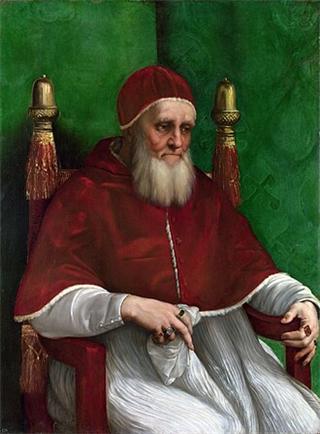
Parma and Piacenza, two prosperous cities of the Po plain on the Via Emilia, had belonged to the Duchy of Milan for much of the late Middle Ages before Pope Julius II annexed them to the Papal States in 1512. In August 1545 Pope Paul III, born Alessandro Farnese, detached them from the Church and created a duchy for his son Pier Luigi Farnese, who already held the small papal fief of Castro north of Rome. The grant was controversial both in the College of Cardinals and at the court of the Emperor Charles V, who regarded the cities as rightfully part of Milan. Pier Luigi tried to curb the local nobility, and on 10 September 1547 he was murdered in Piacenza by conspirators acting with the support of Ferrante Gonzaga, the imperial governor of Milan, whose troops at once occupied the city. His son Ottavio Farnese held on to Parma, with French support in the War of Parma of 1551–1552, and through his marriage to Margaret of Parma, the illegitimate daughter of Charles V, he reconciled the family with the Habsburgs. In 1556 Philip II of Spain restored Piacenza to him, though a Spanish garrison remained in its citadel until 1585. By then the Farnese had established one of the most durable dynastic states of early modern Italy.
Socioeconomy

The duchy lay in one of the most fertile parts of Italy. Its economy rested on the agriculture of the Po plain and the Apennine foothills, on grain, wine, livestock and dairy farming, including the long-established hard cheese of the Parma and Reggio area, and on markets and crafts in Parma and Piacenza. The landed nobility, many of them older than the dynasty, remained powerful in the countryside, while the Church held extensive property and the cities kept guilds and municipal institutions. The Farnese invested heavily in their capital: Ranuccio I built the vast Palazzo della Pilotta, inside which Giovanni Battista Aleotti constructed the wooden Teatro Farnese in 1618, first used for a court spectacle in 1628. Parma also inherited a great artistic legacy from the early sixteenth century, the dome frescoes of Correggio and the works of Parmigianino. Under the Bourbon dukes the minister Guillaume du Tillot promoted agriculture, manufactures and learning, founding an academy of fine arts and the Palatine Library, and from 1768 Giambattista Bodoni ran the ducal printing house, whose typefaces became famous across Europe. In the nineteenth century Marie Louise sponsored public works, including the Teatro Regio, opened in 1829, and a bridge over the Taro. Giuseppe Verdi was born in the duchy’s territory, at Le Roncole near Busseto, in 1813.
Military
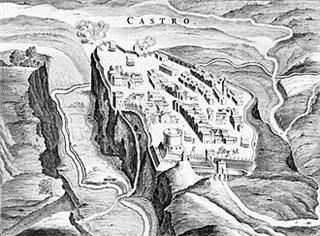
Parma was too small to wage war on its own and depended on alliances with greater powers, but its rulers achieved military fame abroad. Alessandro Farnese, son of Ottavio and Margaret, served Philip II as governor-general of the Netherlands from 1578. He recovered much of the southern Netherlands for Spain, took Antwerp after a celebrated siege in 1584–1585, and led the Army of Flanders into France to relieve Paris in 1590 and Rouen in 1592; he became duke in 1586 but never returned to rule in person. At home the great citadel of Parma was begun in 1591 under his rule. Duke Odoardo Farnese, ambitious for glory, allied with France in 1635 during the Thirty Years’ War, and Spanish troops ravaged the Piacenza countryside until he made peace in 1637. He then fought the First War of Castro against Pope Urban VIII in 1641–1644 over the family fief north of Rome; in a second war in 1649 Pope Innocent X captured Castro and razed it. In the eighteenth century the duchy was a battlefield of others’ wars: Austrian and Franco-Sardinian armies fought at Parma and Guastalla in 1734, the Austrians defeated the French and Spanish at Piacenza in 1746, and in 1799 Alexander Suvorov defeated the French on the Trebbia nearby.
Governance & Law

The duchy was a hereditary absolute monarchy, held as a papal fief under the Farnese, a status the papacy continued to assert even after the dynasty died out. The dukes ruled with a small privy council, secretaries and magistracies for justice and finance, and they gradually reduced the independence of the feudal nobility. Ranuccio I (r. 1592–1622) was especially harsh: in 1612 he had a group of leading nobles, among them Barbara Sanseverino, Countess of Sala, executed for an alleged conspiracy against him, and their estates were confiscated. Succession and foreign policy were tied to dynastic marriage. When the last Farnese duke, Antonio, died in 1731, the duchy passed to Charles of Bourbon, son of Elisabeth Farnese, queen of Spain, under the European settlement of the Quadruple Alliance. After he became king of Naples in 1735, Parma passed to the Habsburgs, and the Treaty of Aix-la-Chapelle of 1748 then gave Parma, Piacenza and Guastalla to Philip of Bourbon, founding the Bourbon-Parma line. His ministers, above all du Tillot, pursued an enlightened programme that limited church privileges, and when Pope Clement XIII condemned these measures in the Monitorium of Parma of January 1768, the duchy responded by expelling the Jesuits. Marie Louise (r. 1814–1847) ruled with Austrian advisers and a relatively mild administration.
Global & Regional Impact

Although a minor state, Parma left a substantial mark on European culture and dynastic politics. The Farnese were among the great art patrons of the age. Their collections, built up by Paul III and his descendants in Rome and Parma, included works by Titian, Raphael and Correggio and the classical sculptures of the Palazzo Farnese in Rome. When Charles of Bourbon left for Naples he took much of this inheritance with him, and it now forms a core of the Capodimonte collections and the National Archaeological Museum in Naples. The Teatro Farnese is an important monument in the history of theatre architecture, one of the earliest theatres built with a permanent proscenium arch. Alessandro Farnese’s campaigns helped fix the frontier between the Spanish Netherlands and the Dutch Republic, roughly the later border of Belgium and the Netherlands. Elisabeth Farnese, as queen of Spain, used her claim to Parma to found Bourbon dynasties in Naples and Parma, reshaping eighteenth-century Italy. The Bodoni press made Parma a centre of fine printing, and Bodoni’s typefaces are still used today. Parma’s musical life, shaped by its ducal theatres, helped nurture the operatic culture of the region, and the Bourbon-Parma family remains a well-known European royal house, related to the grand-ducal family of Luxembourg.
Decline & Fall
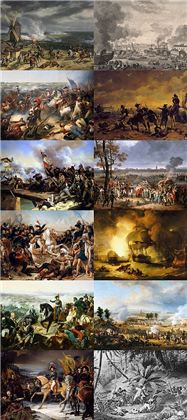
The French Revolutionary Wars ended the duchy’s first independent existence. In 1796 Duke Ferdinand bought an armistice from Napoleon Bonaparte with money, supplies and paintings, including works by Correggio sent to Paris. Under the Treaty of Aranjuez of 1801 Ferdinand’s son Louis received the new Kingdom of Etruria in Tuscany in exchange for the Bourbon claim to Parma, and after Ferdinand’s death in October 1802 the French took over the administration; in 1808 the territory was annexed to France as the department of Taro. After Napoleon’s fall the Congress of Vienna gave the duchy for life to his wife, Marie Louise of Austria, who ruled under Austrian protection until her death in December 1847, surviving a brief revolt in 1831. The Bourbons then returned under Charles II, who fled in the revolution of 1848, when Piacenza voted to join Piedmont; Austrian troops restored the dynasty. His son Charles III was assassinated in Parma in 1854, leaving the regent Louise Marie of Artois to govern for the young Robert I. During the Second Italian War of Independence the regent left in June 1859, provisional authorities, later led by Luigi Carlo Farini, joined the duchy to the United Provinces of Central Italy, and a plebiscite in March 1860 confirmed annexation to the Kingdom of Sardinia, soon to become Italy.
The Duchy of Parma and Piacenza, created by Pope Paul III for his son in 1545, gave the Farnese and then the Bourbon-Parma dynasties a lasting Italian state, produced the general Alessandro Farnese and notable art patronage and printing, and survived as a pawn of greater powers until Italian unification.
References
- Parker, G. (1972) The Army of Flanders and the Spanish Road, 1567–1659. Cambridge: Cambridge University Press.
- Hanlon, G. (2014) The Hero of Italy: Odoardo Farnese, Duke of Parma, His Soldiers, and His Subjects in the Thirty Years’ War. Oxford: Oxford University Press.
- Carpanetto, D. and Ricuperati, G. (1987) Italy in the Age of Reason, 1685–1789. London: Longman.
- Woolf, S.J. (1979) A History of Italy, 1700–1860: The Social Constraints of Political Change. London: Methuen.
- Hearder, H. (1983) Italy in the Age of the Risorgimento, 1790–1870. London: Longman.
Connections
Open the full connections map →