Americas
New France
At a glance
- France’s North American empire, reaching from the St Lawrence through the Great Lakes and the Mississippi to the Gulf of Mexico.
- It rested on the fur trade and Native alliances, but had only about 70,000 settlers in Canada by 1760.
- Britain conquered it in the Seven Years War, yet its language, law and Catholicism survive in Quebec today.
Rise & Fall
- 1534Jacques Cartier claims the Gaspé Peninsula for France
- 1608Samuel de Champlain founds Quebec
- 1642Ville-Marie, later Montreal, is founded
- 1663Louis XIV makes New France a royal province
- 1682La Salle reaches the mouth of the Mississippi and claims Louisiana
- 1701The Great Peace of Montreal ends war with the Iroquois Confederacy
- 1759Quebec falls after the Battle of the Plains of Abraham
- 1763The Treaty of Paris cedes Canada to Britain
Foundation
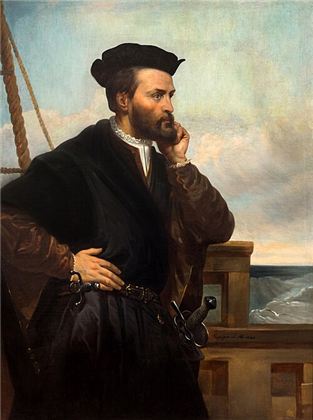
France’s claim in North America began in 1534, when Jacques Cartier, sailing for Francis I, explored the Gulf of St Lawrence and planted a cross on the Gaspé Peninsula. On his second voyage in 1535–1536 he went up the St Lawrence to the Iroquoian villages of Stadacona and Hochelaga, near present-day Quebec City and Montreal, but an attempt at settlement with the Sieur de Roberval in 1541–1543 failed. For the rest of the sixteenth century French contact was limited to fishermen and fur traders. Permanent colonisation began in the early seventeenth century. After a first settlement at Port-Royal in Acadia in 1605, Samuel de Champlain founded Quebec in 1608 as a fur-trading post, allied himself with the Montagnais, Algonquin and Huron, and explored as far as Lake Huron. Growth was slow. The Company of One Hundred Associates, created by Cardinal Richelieu in 1627, was meant to bring settlers, but English privateers under the Kirke brothers captured Quebec in 1629, and it was only restored to France in 1632. Trois-Rivières was founded in 1634 and Ville-Marie, later Montreal, in 1642 by Paul de Chomedey de Maisonneuve and Jeanne Mance as a religious mission. By 1663, when Louis XIV took the colony under direct royal government, it still had only about 3,000 French inhabitants.
Socioeconomy

New France rested on two economies. Along the St Lawrence, settlers known as habitants farmed long narrow strips of land running back from the river, held from seigneurs under the seigneurial system, and grew wheat, raised livestock and paid modest dues. The interior economy was the fur trade, above all in beaver pelts for the European hat industry, which depended on alliances with Native peoples who trapped and transported furs in exchange for cloth, kettles, tools, guns and alcohol. Young men went west as coureurs des bois and, later, licensed voyageurs, paddling canoes to posts on the Great Lakes. Immigration from France remained small: about 800 young women, the filles du roi, were sent between 1663 and 1673 to marry settlers, and most later growth came from a high birth rate, so the population of Canada reached only about 70,000 by 1760, compared with more than a million in the British colonies. Fisheries on the Atlantic coast, shipbuilding and the Saint-Maurice ironworks added to the economy, but the colony relied heavily on the Crown. The Catholic Church shaped daily life. Jesuit missionaries, whose Relations reported on Native peoples to readers in France, worked among the Huron, the Ursuline Marie de l’Incarnation ran a school for girls at Quebec from 1639, and parishes, hospitals and seminaries organised society.
Military

New France was almost always outnumbered by its English rivals and depended on Native alliances, a militia that included all able-bodied men, and from the 1680s the Troupes de la Marine, regular soldiers under the navy. Champlain’s fight against the Mohawk near Lake Champlain in 1609 began a long hostility with the Iroquois Confederacy, whose raids in the 1650s threatened the colony’s survival. In 1665 Louis XIV sent the Carignan-Salières Regiment, some 1,200 men, which burned Mohawk villages in 1666 and forced a peace. Wars with England followed. Governor Frontenac repulsed Sir William Phips’s attack on Quebec in 1690, and French and Native raiding parties struck English frontier settlements such as Schenectady in 1690 and Deerfield in 1704. The fortress of Louisbourg on Île Royale, begun around 1720, guarded the Gulf of St Lawrence but fell to New England forces in 1745, before being returned in 1748. In the Seven Years War, French and Native forces defeated General Edward Braddock near the Monongahela in 1755, and the Marquis de Montcalm took Fort Oswego in 1756 and Fort William Henry in 1757 and won at Carillon in 1758. Britain’s naval power and far larger armies then prevailed. Louisbourg fell in 1758, and Quebec in September 1759 after the Battle of the Plains of Abraham, where both Montcalm and James Wolfe were killed.
Governance & Law
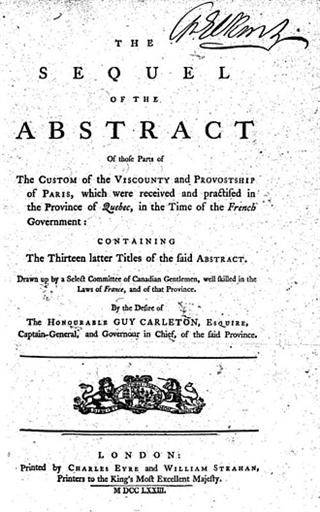
From 1663 New France was a royal province administered on the model of a French province. The governor general, a noble soldier, commanded the military and handled diplomacy with Native nations and rival colonies. The intendant directed justice, police and finance, and the first great intendant, Jean Talon, who served in 1665–1668 and 1670–1672, promoted immigration, agriculture, shipbuilding and a census, the first taken in New France in 1666. A Sovereign Council at Quebec, later called the Superior Council, registered laws and served as the highest court, and the Custom of Paris was the civil law of the colony. The bishop of Quebec, beginning with François de Laval, vicar apostolic from 1658 and bishop from 1674, headed a powerful church that also founded the Séminaire de Québec in 1663. Policy was set at Versailles by the Ministry of the Marine, and letters took months to cross the Atlantic. There was no elected assembly. Tensions between governors and intendants were frequent, notably under Louis de Buade de Frontenac in the 1670s, and the last intendant, François Bigot, was later convicted in France of corruption. Louisiana, founded by Pierre Le Moyne d’Iberville in 1699, had its own governor and became a separate colony, while the western posts were run by military commandants who relied on gift-giving and diplomacy with their Native allies.
Global & Regional Impact

New France shaped the map and peoples of North America far beyond its small population. French explorers charted much of the interior: Louis Jolliet and Jacques Marquette descended the Mississippi in 1673, René-Robert Cavelier de La Salle reached its mouth in 1682 and claimed Louisiana for Louis XIV, and the La Vérendrye family pushed west towards the prairies in the 1730s and 1740s. Posts and missions such as Detroit, founded in 1701, Mobile and New Orleans, founded in 1718, became lasting cities. French alliances with Native nations created a distinctive world of trade, intermarriage and diplomacy around the Great Lakes, which the historian Richard White called the middle ground. The Great Peace of Montreal of 1701, signed by about forty Native nations, ended a century of war with the Iroquois. The colony’s most enduring legacy is French Canada. Its language, Catholic faith, civil law and seigneurial landholding survived the British conquest and were guaranteed by the Quebec Act of 1774. Today some seven million French-speaking Quebecers and francophone communities across Canada trace their origins largely to the roughly 10,000 French immigrants who settled in the St Lawrence valley. The Métis of western Canada and the French heritage of Louisiana, together with the Cajuns descended from Acadians exiled after 1755, are further legacies.
Decline & Fall

New France’s weakness lay in its population and its dependence on France. While the British colonies grew to well over a million people by 1760, Canada had about 70,000, and its long line of posts from the St Lawrence to the Ohio and the Mississippi was thinly held. The Treaty of Utrecht of 1713 had already surrendered Acadia, Newfoundland and the Hudson Bay region to Britain. Conflict over the Ohio country, where the French built Fort Duquesne in 1754, opened the final war. After early victories, the colony faced British naval blockade, poor harvests, inflation and a British government under William Pitt determined to conquer it. In 1758 Louisbourg, Fort Frontenac and Fort Duquesne fell, and in 1759 Fort Niagara and then Quebec were taken. The Chevalier de Lévis defeated the British at Sainte-Foy in April 1760 but could not retake Quebec once British ships arrived in the spring, and on 8 September 1760 Governor Pierre de Rigaud de Vaudreuil surrendered Montreal and the whole of Canada. By the Treaty of Paris of 10 February 1763 France ceded Canada and the lands east of the Mississippi to Britain, having already given western Louisiana to Spain in 1762, and kept only the fishing islands of Saint-Pierre and Miquelon. Canada became the British Province of Quebec.
New France was France’s North American empire, which from Quebec and Montreal reached through the Great Lakes to Louisiana by means of fur-trade alliances with Native nations; thinly settled and conquered by Britain in the Seven Years War, it left French Canada as its lasting legacy.
Test yourself
5 questions on this page, from its key events and facts.
The questions open here once the page has loaded.
References
- Anderson, F. (2000) Crucible of War: The Seven Years’ War and the Fate of Empire in British North America, 1754–1766. New York: Alfred A. Knopf.
- Eccles, W.J. (1969) The Canadian Frontier, 1534–1760. New York: Holt, Rinehart and Winston.
- Fischer, D.H. (2008) Champlain’s Dream. New York: Simon and Schuster.
- Greer, A. (1997) The People of New France. Toronto: University of Toronto Press.
- Trudel, M. (1973) The Beginnings of New France, 1524–1663. Toronto: McClelland and Stewart.
- White, R. (1991) The Middle Ground: Indians, Empires, and Republics in the Great Lakes Region, 1650–1815. Cambridge: Cambridge University Press.
Connections
Open the full connections map →