Americas
Suriname
At a glance
- A Dutch plantation colony on the Guiana coast, taken from the English in 1667 and run for a century by the Society of Suriname.
- Enslaved Africans worked its sugar and coffee estates; runaways formed maroon nations that won peace treaties in the 1760s.
- Indentured Asian migrants made it highly diverse; it became independent in 1975 and has been a democracy since 1991.
Rise & Fall
- 1667A Zeeland fleet captures the English colony, confirmed as Dutch by the Treaty of Breda
- 1683The Society of Suriname takes over the colony
- 1760The colony makes peace with the Ndyuka maroons
- 1863Slavery is abolished on 1 July, now commemorated as Keti Koti
- 1873The first indentured labourers from British India arrive
- 1954Suriname becomes an autonomous country within the Kingdom of the Netherlands
- 1975Suriname becomes independent on 25 November
- 1980Sergeants led by Desi Bouterse seize power in a coup
Foundation

European attempts to settle the Guiana coast between the Orinoco and the Amazon began in the early seventeenth century, when Dutch, English and French traders built short-lived posts along its rivers. The first lasting colony on the Suriname River was founded in 1650 by settlers sent from Barbados by Francis Willoughby, Lord Willoughby of Parham, and by the 1660s this English colony, Willoughbyland, had several dozen sugar plantations worked by enslaved Africans. During the Second Anglo-Dutch War a fleet from the Dutch province of Zeeland under Abraham Crijnssen captured its main fort in February 1667 and renamed it Fort Zeelandia. The Treaty of Breda of July 1667 confirmed each side in what it held, so the Dutch kept Suriname while England kept New Netherland, whose capital New Amsterdam it had renamed New York. Many English planters left with their slaves in the following years. Zeeland struggled to run the colony and sold it in 1682 to the Dutch West India Company, which in 1683 formed the chartered Society of Suriname with the city of Amsterdam and Cornelis van Aerssen van Sommelsdijck, each holding one third. Van Aerssen, the first governor under the Society, made peace with the Indigenous Kalina and Lokono peoples in 1686 and imposed discipline on planters and soldiers, until mutinous soldiers killed him in 1688.
Socioeconomy
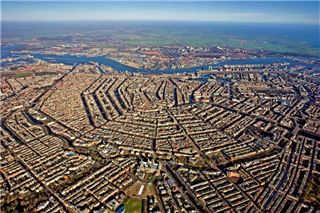
In the eighteenth century Suriname became one of the most profitable Dutch colonies. Several hundred plantations lined the Suriname, Commewijne and Cottica rivers, producing sugar, coffee, cacao and later cotton for the Amsterdam market, and in the 1750s and 1760s planters financed rapid expansion with loans from Amsterdam merchant houses. The work was done by enslaved Africans, who numbered some 50,000 or more in the later eighteenth century against a few thousand Europeans; harsh punishment, disease and heavy labour caused such high mortality that their numbers were sustained only by constant new imports. Paramaribo was the commercial and administrative centre, home to planters, officials and a growing population of free people of colour. A notable Sephardic Jewish community, with its own self-governing settlement at Jodensavanne on the Suriname River, owned many plantations. Many enslaved people escaped into the rainforest and formed maroon societies, among them the Ndyuka, Saramaka and Matawai, whose descendants still live in the interior. After slavery was abolished in 1863, followed by ten years of compulsory contract labour under state supervision, planters recruited indentured labourers from China, from British India from 1873 and from Java from 1890. Their descendants, together with Creoles, Maroons, Indigenous peoples and others, make Suriname one of the most diverse countries in the Americas. In the twentieth century bauxite mining replaced agriculture as the main source of exports.
Military
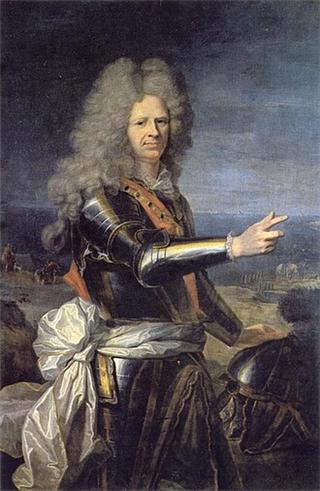
Suriname's colonial defence rested on a small garrison paid by the Society of Suriname, militias of colonists and forts commanding the rivers, above all Fort Zeelandia at Paramaribo and Fort Nieuw-Amsterdam, built between 1734 and 1747 where the Suriname and Commewijne rivers meet. The colony repulsed a French attack under Jean-Baptiste du Casse in 1689, but in 1712 a French squadron under Jacques Cassard forced the planters to pay a heavy ransom. The longest struggle was against the maroons. Expeditions into the rainforest repeatedly failed to destroy their villages, and the colonial government finally signed peace treaties with the Ndyuka in 1760, the Saramaka in 1762 and the Matawai in 1767, recognising their freedom in return for promises to hand back new runaways. When new maroon groups led by Boni attacked plantations in the 1770s, the colony called in Dutch troops, among them the soldier John Gabriel Stedman, formed a corps of Black Rangers from slaves freed for the purpose and built a defensive cordon path around the plantation zone. Britain occupied Suriname without serious resistance during the French Revolutionary and Napoleonic Wars, from 1799 to 1802 and from 1804 to 1816. After independence the small Surinamese National Army became a political force: sergeants seized power in 1980, and from 1986 to 1992 the army fought the Jungle Commando of Ronnie Brunswijk in the interior war.
Governance & Law
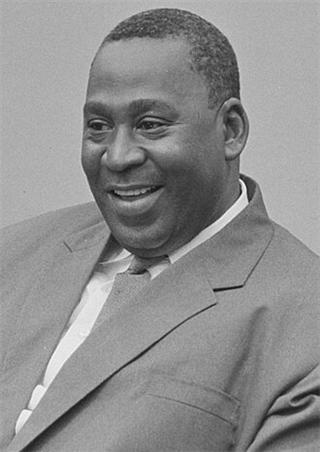
Under the Society of Suriname the directors in Amsterdam appointed the governor, who ruled with the Court of Policy, a council whose members he chose from nominees put forward by the planters. Planters, officials and governors frequently quarrelled over taxes, justice and the costs of defence, and several governors were recalled after bitter disputes. Courts handled civil and criminal cases, and colonial ordinances, the plakaten, regulated the lives of the enslaved while offering them little real protection against their owners. The Jewish community at Jodensavanne kept unusual privileges of self-government, first granted in the English period and confirmed by the Dutch. After the French conquest of the Netherlands in 1795 the Society was dissolved and the colony passed to the state, and after the British occupations it was governed from The Hague through a governor responsible to the Ministry of Colonies. From 1866 a partly elected colonial legislature, the Koloniale Staten, gave a small, wealthy electorate a voice, and universal suffrage followed in 1948. The Charter for the Kingdom of the Netherlands of 1954 made Suriname an autonomous country within the kingdom, with its own government and parliament, in which parties largely followed ethnic lines, such as the Creole-based NPS of Johan Adolf Pengel and the Hindustani-based VHP of Jagernath Lachmon. The constitution of 1987 created a republic whose president is elected by the 51-member National Assembly.
Global & Regional Impact

Suriname was among the most important Dutch possessions in the Atlantic world, and its plantation profits flowed to Amsterdam merchant houses, absentee owners and investors. It also became a byword for the brutality of plantation slavery. John Gabriel Stedman's illustrated Narrative of a Five Years Expedition against the Revolted Negroes of Surinam, published in London in 1796 with engravings by William Blake among others, shaped European debates on slavery, and Voltaire set the scene of a mutilated slave in Candide of 1759 near Suriname. Earlier, Maria Sibylla Merian's Metamorphosis insectorum Surinamensium of 1705, based on her stay in the colony, became a landmark of natural history illustration. The maroon nations of the interior are among the most significant in the Americas: their eighteenth-century treaties made them, alongside the Maroons of Jamaica, among the first communities of escaped slaves to win recognised autonomy, and they preserved languages, arts and social institutions of strongly African character that anthropologists have studied closely. The abolition of slavery on 1 July 1863 is commemorated each year as Keti Koti, which is also marked in the Netherlands. Indentured migration made Suriname a meeting place of African, Asian, Indigenous and European cultures, with Sranan Tongo as a common language beside official Dutch. Migration since the 1970s has created a large Surinamese community in the Netherlands that has shaped Dutch culture and politics.
Into the Present
Suriname's transformation from plantation colony into independent state began with the end of slavery and the decline of the plantations in the nineteenth century, as many estates were abandoned and freed people moved to Paramaribo or to small farms. During the Second World War American troops were stationed in the colony to protect the bauxite mines, which supplied a large share of the aluminium ore used by the United States. Autonomy under the Charter of 1954 was followed by rapid moves towards independence under Prime Minister Henck Arron, and Suriname became an independent republic on 25 November 1975, with Johan Ferrier as its first president and a large Dutch aid settlement. A large part of the population emigrated to the Netherlands around independence. On 25 February 1980 sixteen sergeants overthrew the government, with Desi Bouterse as their leader, and in the December murders of 1982 fifteen prominent critics were killed, prompting the Netherlands to suspend aid. The interior war of 1986–1992 against the Jungle Commando devastated Maroon areas and included the Moiwana massacre of 1986. Civilian rule returned under the 1987 constitution, and elections in 1991 restored stable democracy. Bouterse was elected president in 2010 and convicted of the December murders in 2019. Today Suriname is a multi-ethnic republic of about 600,000 people that hopes offshore oil discoveries made since 2020 will transform its economy.
Suriname was one of the most profitable plantation colonies of the Dutch and a notorious example of Atlantic slavery, whose maroon nations and later indentured migrants from India and Java created one of the most diverse societies in the Americas, independent since 1975.
Test yourself
5 questions on this page, from its key events and facts.
The questions open here once the page has loaded.
References
- Hoefte, R. (1998) In Place of Slavery: A Social History of British Indian and Javanese Laborers in Suriname. Gainesville: University Press of Florida.
- Hoefte, R. (2014) Suriname in the Long Twentieth Century: Domination, Contestation, Globalization. New York: Palgrave Macmillan.
- Price, R. (1983) First-Time: The Historical Vision of an Afro-American People. Baltimore: Johns Hopkins University Press.
- Stedman, J.G. (1988) Narrative of a Five Years Expedition against the Revolted Negroes of Surinam, ed. R. Price and S. Price. Baltimore: Johns Hopkins University Press.
Connections
Open the full connections map →