
Sub-Saharan Africa
Ashanti Empire
At a glance
- Osei Tutu I united Akan chiefdoms in Ghana's forest zone around 1700, bound together by the sacred Golden Stool.
- Rich in gold and kola, Asante resisted British expansion through five wars between 1824 and 1900.
- Annexed by Britain in 1902, it never surrendered the Golden Stool, and its king is still recognised in Ghana today.
Rise & Fall
- 1701Asante coalition defeats Denkyira at Feyiase, gaining access to coastal trade
- 1824Asante army annihilates a British-led force at Nsamankow, killing Governor MacCarthy
- 1826A British-led coalition aided by Congreve rockets defeats Asante at Katamansu
- 1831Treaty of Peace fixes the River Pra as the southern limit of Asante influence
- 1874Sir Garnet Wolseley's expedition enters Kumasi and burns the capital
- 1896British occupy Kumasi without a fight and depose Asantehene Prempeh I
- 1900Yaa Asantewaa leads the War of the Golden Stool against British rule
- 1902Asante is formally annexed as a British crown colony
Foundation
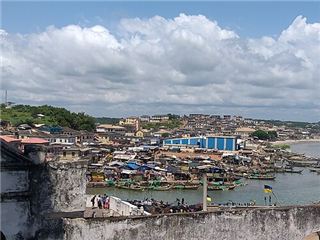
The Ashanti Empire, more properly the Asante Empire, was founded through the deliberate political and spiritual unification of fragmented Akan chiefdoms in the forest zone of modern Ghana by Osei Tutu I around the turn of the eighteenth century. The founding context was one of subjugation: the Asante states of the interior paid tribute to Denkyira, a powerful forest kingdom to the south-west that controlled their access to the coast and to European trade goods, particularly firearms obtained through the Dutch at Elmina. Osei Tutu, of the Oyoko clan, who became ruler of the small state of Kumasi in the later seventeenth century (traditionally around 1680), recognised that fragmentation left the Asante unable to challenge Denkyira, and he allied himself with the priest Okomfo Anokye, whose summoning of the Golden Stool from the heavens became the most powerful founding tradition in Asante history. The Golden Stool (Sika Dwa Kofi), said to have descended from the sky amid thunder and a cloud of white dust to rest on Osei Tutu's knees, was declared the embodiment of the soul of the Asante nation, binding the member states to a single loyalty that transcended allegiance to individual chiefs. Okomfo Anokye is traditionally credited with promulgating the laws and customs of the new union, remembered as the Seventy-Seven Laws, and with establishing the Odwira festival as an annual rite of national unity. The founding military test came at the Battle of Feyiase in 1701, where the Asante coalition defeated Denkyira, killing its king Ntim Gyakari and taking over the Dutch rent note for Elmina, which gave Asante direct access to coastal European trade and the firearms that would drive subsequent expansion. Kumasi became the capital of the new union, and Osei Tutu its first Asantehene.
Socioeconomy

The Asante imperial economy was anchored in the gold fields of the Akan forest zone, among the richest alluvial and reef gold deposits in West Africa, and expanded through a diversified trade network linking the forest interior to both the Atlantic coast and the Saharan routes to the north. Gold, kola nuts and captives were the empire's principal exports: gold for the European coastal trade; kola nuts for Muslim communities across the Sahel, who valued them as a stimulant permitted under Islamic law; and captives sold both into the Atlantic trade and northwards. Control of the main routes between the coast and the interior was a structural advantage: merchants moving goods between the forest and the Atlantic ports passed through territory where the Asantehene could levy tolls and regulate commerce, and from 1807 Kumasi increasingly turned northwards, sending kola to the great markets of Salaga and Hausaland. Gold dust served as currency, weighed with distinctive brass weights, and the Great Treasury in Kumasi was managed by specialist officials under a sophisticated system of royal accounting; when British forces entered the palace in 1874 they found not only gold but books and manuscripts in several languages. Socially, Asante was built on matrilineal descent and a complex hierarchy of chiefs, priests, military commanders and royal officials. The reforms traditionally associated with Osei Kwadwo (r. 1764–1777), who promoted officials to central offices on the basis of ability and service rather than birth, helped transform the empire from an aristocratic confederation into a more bureaucratic polity capable of administering its growing territory. The slave trade, while economically significant, also tied the empire to European firearms, a dependency that constrained its strategic autonomy in later confrontations with British power.
Military

The Asante military combined a hierarchically organised army with a large capacity for mass mobilisation, disciplined by a command structure that balanced royal authority with the fighting traditions of the member chiefdoms. The army was organised in divisions, with an advance guard, a main body around the commander, two wings and a rearguard, each led by chiefs of the constituent states commanding their own contingents under the overall direction of the Asantehene's generals. European observers reported Asante armies of tens of thousands in the field during the campaigns of Opoku Ware I (r. c. 1720–1750), who conquered Bono, Gyaman and the southern parts of Gonja, an exceptional mobilisation capacity for the region. The systematic use of firearms, obtained first through the Dutch at Elmina and later through multiple coastal trading relationships, gave the Asante a decisive edge over interior peoples who lacked coastal access. The empire's most celebrated military victory came on 21 January 1824 at the Battle of Nsamankow, where an Asante army annihilated a British-led force under Governor Sir Charles MacCarthy, who was killed; his skull was reputedly kept in Kumasi as a trophy. The victory showed that the Asante could defeat European-led forces in forest warfare, where firepower advantages were partly neutralised by terrain. Over time, however, the Anglo-Ashanti Wars exposed the empire's structural limitations: Britain's ability to bring artillery, rockets, logistics and professional troops to bear in coordinated campaigns, above all Sir Garnet Wolseley's 1874 expedition, which fought its way to Kumasi and burned it despite fierce resistance at Amoaful and Odasu, eventually overwhelmed a military system built for regional warfare rather than sustained confrontation with an industrial power.
Governance & Law

The Asante system of government was among the most sophisticated constitutional arrangements in pre-colonial Africa, combining sacred monarchical authority with institutional checks on royal power. The Asantehene exercised supreme authority but governed in consultation with the Asantemanhyiamu, the national assembly of the paramount chiefs of the member states, and, in the nineteenth century, with the Kotoko Council, an inner council of senior chiefs and officials in Kumasi; their assent was expected for major decisions, including war and peace, and an Asantehene could himself be destooled. The Golden Stool served at once as a religious object, a constitutional symbol and a practical limit on royal authority: no one sat on it, and the Asantehene was enstooled beneath it, acknowledging that his authority derived from the collective soul of the nation rather than from personal right. Kumasi's sophistication impressed European visitors: the British envoy Thomas Bowdich, who visited in 1817, described broad, clean streets, houses ornamented with elaborate relief decoration, disciplined troops and court ceremonies of remarkable splendour. The administrative reforms associated with Osei Kwadwo and his successors created appointed offices, including resident commissioners in provincial states, that strengthened the centre's capacity to govern. The empire ruled through a combination of direct authority over the Asante heartland and tributary arrangements with outer provinces whose chiefs acknowledged Asante suzerainty, paid tribute and supplied military contingents. This system proved both a strength and a weakness in the colonial era: it produced remarkable institutional resilience, so that the Golden Stool was never surrendered and the Asante kingship survives as a recognised traditional authority within Ghana today, but it also limited the empire's capacity to concentrate the resources needed for total mobilisation against British imperialism.
Global & Regional Impact
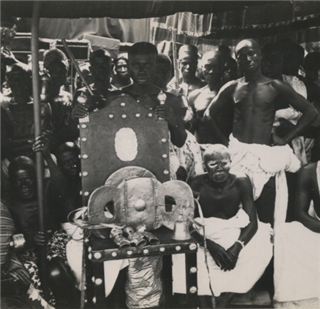
The Asante Empire's historical significance extends far beyond its role as one of West Africa's most powerful pre-colonial states, touching questions of African political thought, resistance to colonialism and the persistence of indigenous institutions into the modern world. Its armed resistance to British expansion, spanning nearly eight decades and five Anglo-Asante wars between 1824 and 1900, was among the longest sustained military resistance to British imperial expansion in Africa and demonstrated that African political institutions could maintain organised resistance against European military technology for generations. The Battle of Nsamankow in 1824, in which MacCarthy's force was destroyed, was one of the heaviest defeats suffered by British forces in West Africa; it shook British confidence and was followed by a period in which the British government considered abandoning its Gold Coast forts and handed their administration to a committee of merchants, producing a more cautious approach to Asante for decades. Economically, Asante's integration of the Akan gold fields with both Atlantic and Saharan trade networks shaped the commercial geography of West Africa for nearly two centuries, building on a gold trade that had already given the Gold Coast its European name long before Asante arose. Culturally, Adinkra symbols, kente weaving, goldwork and brass gold-weights, and the political philosophy embodied in the Golden Stool have become internationally recognised expressions of Akan civilisation. The survival of the Asante kingship as a living institution within the Republic of Ghana, with the Asantehene recognised as a traditional ruler whose authority in customary matters is protected by the Ghanaian constitution, represents a rare instance of pre-colonial African political continuity persisting through colonial annexation and into the post-independence era.
Decline & Fall
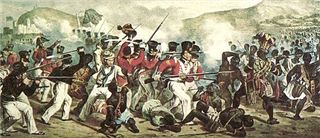
The Asante Empire's decline followed a distinctive step-down pattern driven by successive military defeats and the accumulating pressure of British colonial power, rather than the sudden collapse that befell many other pre-colonial African states. The first serious check came at the Battle of Katamansu in 1826, where a British-led coalition of coastal peoples, aided by Congreve rockets, defeated an Asante army that had advanced to the coast after the Nsamankow victory. The 1831 Treaty of Peace, negotiated by George Maclean, recognised the River Pra as the effective southern boundary of Asante influence, permanently curtailing the empire's ambitions on the coast. The decisive structural blow came in the Third Anglo-Ashanti War of 1873–1874, when Sir Garnet Wolseley led a force built around some 2,500 British regulars, with West Indian and African troops, into Asante territory, entered Kumasi on 4 February 1874, looted the palace and burned the capital two days later. The Treaty of Fomena that followed required Asante to pay an indemnity of 50,000 ounces of gold, renounce claims to the southern states and Elmina, and end human sacrifice, and it encouraged several former tributaries to break away, fracturing the empire's provincial network and triggering civil strife. In 1896, in the Fourth Anglo-Ashanti War, a British expedition occupied Kumasi without a fight and deposed Asantehene Prempeh I, who was exiled first to Sierra Leone and from 1900 to the Seychelles. The final act of resistance came in 1900, when Yaa Asantewaa, Queen Mother of Ejisu, led the War of the Golden Stool, one of the last major armed risings against British rule in West Africa, after Governor Sir Frederic Hodgson demanded that the Golden Stool be surrendered to him. The rising was crushed by the end of the year and Yaa Asantewaa was exiled to the Seychelles. On 1 January 1902 Asante was formally annexed as a British crown colony, yet the Golden Stool remained hidden and was never captured; in 1935 the British restored the Asante Confederacy under Prempeh II, a dignity maintained even in defeat.
The Asante Empire's distinctive legacy lies not only in two centuries of military and political achievement but in its institutional survival: the Golden Stool was never surrendered, and the Asantehene remains a constitutionally recognised traditional ruler within Ghana today, making the Asante kingship one of the very few pre-colonial African political institutions to endure from the late seventeenth century to the present.
References
- Arhin, K. (1979) West African Traders in Ghana in the Nineteenth and Twentieth Centuries. London: Longman.
- Boahen, A.A. (1975) Ghana: Evolution and Change in the Nineteenth and Twentieth Centuries. London: Longman.
- McCaskie, T.C. (1995) State and Society in Pre-Colonial Asante. Cambridge: Cambridge University Press.
- Rattray, R.S. (1929) Ashanti Law and Constitution. Oxford: Clarendon Press.
- Ward, W.E.F. (1958) A History of Ghana. 2nd edn. London: Allen and Unwin.
- Wilks, I. (1975) Asante in the Nineteenth Century: The Structure and Evolution of a Political Order. Cambridge: Cambridge University Press.
Connections
Open the full connections map →