Sub-Saharan Africa
Darfur Sultanate
At a glance
- The Keira sultans ruled Darfur from Jebel Marra for over 250 years, building an Islamic state in the eastern Sahel.
- Its Forty Days Road carried slaves, ivory and feathers to Egypt, and West African pilgrims passed through it to Mecca.
- Conquered in 1874 and revived in 1898, it fell to an Anglo-Egyptian force with aircraft in 1916.
Rise & Fall
- c. 1650Suleiman Solong unites the Fur under the Keira dynasty
- c. 1682Ahmad Bukr begins his reign and makes Islam the religion of the state
- c. 1791Sultan Abd al-Rahman fixes the royal court at El Fasher
- 1821Egypt conquers Kordofan, cutting Darfur's eastern trade
- 1874Al-Zubayr defeats Sultan Ibrahim at Manawashi and Darfur is annexed by Egypt
- 1898Ali Dinar returns to El Fasher and restores the sultanate
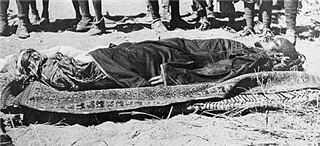
- 1916Anglo-Egyptian force wins at Birinjiya; Ali Dinar is killed in November
Foundation

The Sultanate of Darfur emerged from the Marrah Mountains (Jebel Marra) in the mid-seventeenth century, when Suleiman Solong, traditionally dated to around 1650, consolidated the authority of the Keira clan over the ethnically diverse peoples of the region and established what would become one of the most durable Islamic states of the eastern Sahel. Solong's achievement was fundamentally political and religious: he united the Fur and neighbouring groups under a single Keira dynasty and began the Islamisation of the royal court, placing the sultanate within the wider network of Sahelian Islamic states stretching from Bornu to Sennar. His grandson Ahmad Bukr, who reigned from about 1682 to 1722, deepened this process by establishing Islam as the religion of the state, encouraging the immigration of literate scholars and merchants from Bornu and Bagirmi, and developing the Darb al-Arba'in or Darb el-Arba'in (the “Forty Days Road”), the desert trade route linking Darfur's commercial centre at Kobbei to Asyut in Upper Egypt. Over the following century the sultans developed the hakura system of land grants, which conferred rights over land and its inhabitants in return for loyalty and service, binding Fur farmers, Baggara Arab pastoralists and other communities into a coherent political structure. These foundations — dynastic, religious, commercial and administrative — underpinned all subsequent Keira authority.
Socioeconomy

The sultanate's economy rested on three interlocking foundations: settled Fur agriculture in the Marrah highlands and surrounding plains, long-distance trade along the Darb al-Arba'in, and systematic slave raiding into the lands to the south, known as Dar Fertit. The Darb al-Arba'in was more than a commercial route; it was the sultanate's main link to Egypt and the Mediterranean world, carrying enslaved people, ivory, ostrich feathers, gum, camels and other goods northward while bringing textiles, metalwares, luxury goods and firearms south. The hakura system structured both land tenure and social hierarchy: grants made by the sultan created a class of title-holders obliged to provide military levies and revenue, while also integrating immigrant Islamic scholars into the governing elite as judges, scribes and advisers through estates granted to them. The Tunisian traveller Muhammad al-Tunisi, who lived in Darfur during the reign of Sultan Mohammed al-Fadl between about 1803 and 1811, described a sophisticated commercial network and a prosperous, elaborately organised royal court. The Egyptian conquest of Kordofan in 1821 deprived the sultanate of its eastern province and diverted Nile Valley commerce away from Darfur, beginning a prolonged economic decline from which the first sultanate never recovered.
Military
The Darfur army operated as a levy system rooted in the hakura structure, with title-holders obliged to provide contingents of mailed cavalry and infantry in proportion to their holdings, supplemented by the sultan's own slave troops. The system worked well during the period of expansion, enabling Sultan Mohammed Tayrab (r. c. 1752–1785) to campaign eastward and annex Kordofan in the 1780s, extending the sultanate's reach towards the Nile Valley and its trade routes. The army's greatest weakness was its inability to adapt to opponents armed with modern firearms. When al-Zubayr Rahma Mansur, a Sudanese slave-trading magnate acting in concert with the Egyptian government, moved against Sultan Ibrahim in 1874, the Darfuri forces were decisively defeated at the Battle of Manawashi in October and the sultan was killed. Likewise, Ali Dinar's restored sultanate, though it possessed riflemen, had no modern artillery or machine guns to match the Anglo-Egyptian expeditionary force, supported by aircraft, that defeated his army at the Battle of Birinjiya near El Fasher in May 1916. Its reliance on traditional cavalry made the army formidable against regional rivals but fundamentally unequal to the industrialised warfare of the nineteenth and twentieth centuries.
Governance & Law
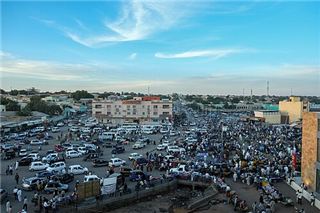
The sultanate's administration combined Islamic legal institutions with indigenous Fur political traditions in a manner characteristic of Sahelian state-building. The sultan governed through a hierarchy of territorial title-holders whose authority derived from hakura grants, creating a layered system of delegated administration extending from the royal court — fixed at El Fasher from about 1791 under Sultan Abd al-Rahman — down to local Fur chiefs and village heads. The realm was divided into great provinces under senior officials, among them the powerful Abu Shaykh, a eunuch official who governed the eastern province of Dar Dali. Islamic law (sharia) provided the framework for commercial, family and criminal law, administered by a class of learned judges whose immigration Ahmad Bukr had deliberately encouraged. The sultan's authority was reinforced by elaborate court ceremonial and by the dynasty's claim to Arab, specifically Abbasid, descent, a form of legitimation common across Sahelian Islamic states. The restoration under Ali Dinar after 1898 consciously rebuilt this institutional framework: he rebuilt the palace at El Fasher, reissued hakura charters and re-established the court hierarchy, showing remarkable institutional memory. However, his status as a tribute-paying client of the Anglo-Egyptian Condominium fundamentally compromised the sovereignty that had previously given these institutions their authority.
Global & Regional Impact

The Darfur Sultanate's regional significance derived primarily from its place in the trade and pilgrimage networks connecting West Africa to Egypt and the Hejaz. Its routes carried not only commercial traffic but West African pilgrims travelling eastward to Mecca, making Darfur an important transit state in the religious geography of Sahelian Islam. The sultanate's patronage of Islamic scholarship and its deliberate incorporation of learned immigrants from Bornu, Bagirmi and the Nile Valley contributed to the spread of Islamic legal and administrative culture across the central and eastern Sahel. Its long resistance to Egyptian and later British expansion made it one of the last independent Islamic sultanates in north-eastern Africa, and its absorption into Anglo-Egyptian Sudan in 1916 completed the colonial partition of the Sahelian interior. The hakura land system, though transformed under colonial rule, left deep imprints on patterns of land tenure and ethnic identity in Darfur that remain important for understanding the region's later history and conflicts.
Decline & Fall

The sultanate's decline unfolded in two distinct phases separated by an interregnum of Egyptian and then Mahdist rule from 1874 to 1898. The first collapse was determined economically before it was executed militarily: the Egyptian conquest of Kordofan in 1821 removed the sultanate's eastern buffer and diverted its trade revenues, leaving it progressively weakened and isolated over the following five decades. Al-Zubayr's defeat and killing of Sultan Ibrahim in 1874 ended the first sultanate, and Darfur was annexed to Egyptian Sudan; in 1883–1884 it fell to the forces of the Mahdi, and Keira authority remained in abeyance until 1898. Ali Dinar, a grandson of Sultan Muhammad al-Fadl, returned to El Fasher after the Mahdist defeat at Omdurman, and his restored sultanate was a genuine revival, but its sovereignty was limited from the outset by an annual tribute to the Anglo-Egyptian Condominium. His decision to side with the Ottoman Empire after the outbreak of the First World War, influenced by Pan-Islamic appeals and by the Sanusiyya movement in Libya, was an understandable bid by a client ruler for real independence, but it gave the British the pretext for a swift military expedition. His death in November 1916, killed by a pursuing column after fleeing towards the Marrah Mountains, closed a chapter of Keira sovereignty lasting more than two and a half centuries.
The Darfur Sultanate's historical significance lies in its demonstration that institutional resilience — the capacity to rebuild administrative structures across conquest and exile — was ultimately insufficient against the asymmetric force of industrialised colonial power.
References
- Holt, P.M. and Daly, M.W. (1988) A History of the Sudan: From the Coming of Islam to the Present Day. 4th edn. London: Longman.
- Kapteijns, L. (1985) Mahdist Faith and Sudanic Tradition: The History of the Masalit Sultanate, 1870–1930. London: Kegan Paul International.
- O'Fahey, R.S. (1980) State and Society in Dar Fur. London: C. Hurst.
- O'Fahey, R.S. and Spaulding, J.L. (1974) Kingdoms of the Sudan. London: Methuen.
- Prunier, G. (2005) Darfur: The Ambiguous Genocide. London: C. Hurst.
- de Waal, A. (2004) Famine that Kills: Darfur, Sudan. Revised edn. Oxford: Oxford University Press.
Connections
Open the full connections map →