
At a glance
- A Lozi kingdom on the upper Zambezi floodplain, ruled by the Litunga with a princess-chief governing the south from Nalolo.
- Kololo invaders from the south ruled the floodplain for a generation until the Lozi restored their kingdom in 1864.
- Lewanika’s treaties with Rhodes’s company kept Barotseland’s king and councils alive under British rule until 1964.
Rise & Fall
- c. 1780Mulambwa becomes Litunga and extends the kingdom’s tribute over neighbouring peoples
- c. 1840The Kololo under Sebitwane conquer the floodplain
- 1864Sipopa leads a Lozi rising that ends Kololo rule
- 1878Lubosi, later called Lewanika, becomes Litunga
- 1890Lewanika signs the Lochner Concession with the British South Africa Company
- 1905Italian arbitration fixes the border with Angola, cutting off western lands
- 1964The Barotseland Agreement brings the kingdom into independent Zambia
- 1969Zambia abrogates the agreement and renames the area Western Province
Foundation
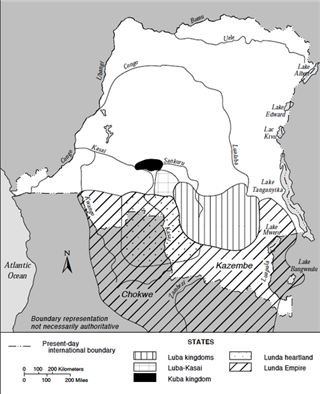
Barotseland grew out of the Bulozi floodplain of the upper Zambezi in what is now western Zambia, a broad grassland flooded each year between about January and June. Its people, the Luyi or Aluyana, later known as the Lozi, probably came from the north, and their own traditions link them to the Lunda and Luba world of the southern Congo basin. Oral tradition names a woman, Mbuywamwambwa, as the ancestress of the royal line and her son Mboo as the first Litunga, or king. The date is uncertain, but most historians place the emergence of kingship in the floodplain in the seventeenth century. Mboo’s successors, notably Ngalama, subdued rival Luyi chiefs, absorbed neighbouring groups and turned the plain into a single kingdom. Control of the floodplain mattered because its soils, fisheries and pastures were far richer than the surrounding woodland. A distinctive dual structure appeared early: the Litunga ruled from the north of the plain, while a royal princess, the Mulena Mukwae, ruled the south from Nalolo with her own court. By the late eighteenth century, under Mulambwa (r. c. 1780–c. 1830), the Luyana kingdom was the dominant power of the upper Zambezi, drawing tribute from many of the peoples around the plain.
Socioeconomy

The economy followed the annual rhythm of the flood. Farmers cultivated gardens on the fertile margins and on raised mounds in the plain, growing sorghum and millet and later maize and cassava; large herds of cattle grazed the plain when the waters fell, and fish were caught in weirs and traps as the flood retreated. The kingdom drew on the different environments around it through tribute: subject peoples such as the Nkoya, Toka-Leya, Subiya and Mbunda sent iron hoes, canoes, honey, skins, grain and ivory to the capital, while commoners owed the king periods of labour, building mounds and digging drainage canals. Lewanika had further canals cut across the plain for drainage and transport. Society was stratified between Lozi aristocrats, Lozi commoners, tributary peoples and slaves, many of them captives taken in raids. Long-distance trade linked Bulozi westwards to Angola through the Mambari, Ovimbundu merchants who exchanged cloth and guns for ivory and slaves, and from the 1870s southwards through traders such as George Westbeech. The Kololo occupation left a lasting mark on daily life: the language of the kingdom, Silozi, derives largely from the Sotho speech of the conquerors. Religious life centred on the royal ancestors, whose graves were tended as shrines.
Military

The Lozi state had no large standing army. In war the Litunga called up men through the makolo, units of people attached to royal and noble households, and campaigns were led by titled councillors. Fleets of dugout canoes gave the kingdom a mobility on the floodplain’s waterways that its neighbours lacked, and the flooded plain itself was a natural defence. Mulambwa extended Lozi overlordship over neighbouring peoples, partly through raids for cattle and captives. The kingdom’s weakness was exposed around 1840, when the Kololo, a Sotho-speaking people led by Sebitwane who had migrated north during the upheavals of the Mfecane, defeated the Lozi, then divided by a succession war after Mulambwa’s death. Kololo rule lasted about a generation. After Sebitwane died in 1851 and his son Sekeletu died around 1863, the Lozi rose in 1864 under Sipopa, who came back from exile in the north, and killed most of the Kololo men. Later rulers obtained muskets and rifles from traders from Angola and the south. Lewanika led raids against the Ila and Tonga to the east in the 1880s, bringing back cattle and captives, but Ndebele raids from the south and enemies at his own court led him by the late 1880s to seek British protection.
Governance & Law

At the head of the state stood the Litunga, a sacred king chosen by the councillors from among the descendants of Mboo, alongside the princess-chief at Nalolo, who ruled the southern part of the kingdom with a council of her own. Business was conducted in the kuta, a council of titled officials who sat in order of rank and were led by the Ngambela, the chief councillor, who spoke for the people and could oppose the king. Most titles were appointive rather than hereditary, which allowed kings to reward loyal men. The anthropologist Max Gluckman made the Lozi courts famous in the 1940s and 1950s as an African legal system that reasoned with the standard of the “reasonable man” and used careful cross-examination. Tradition credits Mulambwa with reforms of the law, including rules on inheritance, theft and the treatment of immigrants. The court moved each year as the flood rose: in the Kuomboka ceremony the Litunga travels in the royal barge Nalikwanda, paddled by dozens of men, from the floodplain capital to a residence on higher ground, today from Lealui to Limulunga. Lewanika (r. 1878–1884 and 1885–1916), who ruled from Lealui, was overthrown in a coup in 1884, and after regaining the throne in 1885 he strengthened royal control over the councils and titles.
Global & Regional Impact

Barotseland is one of the best-documented kingdoms of south-central Africa, thanks to oral traditions recorded in the colonial period, the writings of David Livingstone, who stayed with the Kololo in the 1850s, the French Protestant missionary François Coillard, who worked in the kingdom from 1886, and twentieth-century anthropologists. Its floodplain economy and courts shaped classic studies of African anthropology and law. Politically, Lewanika’s decision to seek British protection, encouraged by the example of Khama III of the Bangwato in Bechuanaland, opened the lands north of the Zambezi to the British South Africa Company of Cecil Rhodes, and the concessions he signed became the legal basis of company claims over much of what became North-Western Rhodesia. Because of these agreements, Barotseland kept a special status within Northern Rhodesia: its king, councils and courts survived, and it was administered more indirectly than other districts. The memory of that status remains central to Lozi identity. The Kuomboka is still held in years when the flood is high enough and is among Zambia’s best-known ceremonies, and Silozi serves as a common language across western Zambia. The disputed legacy of the Barotseland Agreement of 1964 continues to shape relations between Lozi leaders and the Zambian state.
Decline & Fall
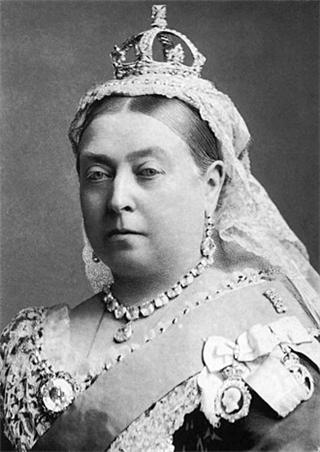
The kingdom’s independence ended by treaty rather than conquest. On 27 June 1890 Lewanika signed the Lochner Concession with the British South Africa Company, believing he was placing his country under the protection of Queen Victoria; in practice it granted the company mineral and commercial rights in return for an annual subsidy. Further concessions in 1898 and 1900, negotiated with the company’s administrator Robert Coryndon, widened its authority, and the Barotziland–North-Western Rhodesia Order in Council of 1899 placed the territory under company administration. In 1905 an arbitration award by King Victor Emmanuel III of Italy fixed the border with Portuguese Angola and gave Portugal much of the western land Lewanika had claimed. In 1911 the company joined its two territories into Northern Rhodesia, which passed to the British Colonial Office in 1924. Within it the Litunga kept his courts and a measure of self-government, but hut tax and labour migration to the mines drew men away and the floodplain economy declined. As independence approached, Litunga Mwanawina III and Kenneth Kaunda signed the Barotseland Agreement on 18 May 1964, bringing Barotseland into Zambia with guarantees for its institutions. Zambia abrogated the agreement in 1969 and renamed the area Western Province; the Litunga remains a traditional ruler, and Lozi demands for autonomy continue.
Barotseland, the Lozi kingdom of the upper Zambezi floodplain, built a distinctive state around the annual flood, survived a generation of Kololo conquest, and through Lewanika’s treaties with the British South Africa Company kept its king and institutions under colonial rule, a special status whose loss after 1964 is still contested.
Test yourself
5 questions on this page, from its key events and facts.
The questions open here once the page has loaded.
References
- Mainga, M. (1973) Bulozi under the Luyana Kings: Political Evolution and State-Formation in Pre-colonial Zambia. London: Longman.
- Gluckman, M. (1955) The Judicial Process among the Barotse of Northern Rhodesia. Manchester: Manchester University Press.
- Prins, G. (1980) The Hidden Hippopotamus: Reappraisal in African History: The Early Colonial Experience in Western Zambia. Cambridge: Cambridge University Press.
- Caplan, G.L. (1970) The Elites of Barotseland, 1878–1969: A Political History of Zambia’s Western Province. London: C. Hurst.
- Roberts, A. (1976) A History of Zambia. London: Heinemann.
Connections
Open the full connections map →