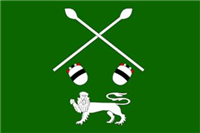
At a glance
- A cattle kingdom of south-western Uganda ruled by the Hinda dynasty, whose kingship was embodied in the royal drum Bagyendanwa.
- Its society was divided between Bahima herders, who held power, and Bairu farmers, who formed the majority.
- The 1901 Ankole Agreement enlarged it under British rule; it was abolished in 1967 and never restored.
Rise & Fall
- c. 1500Ruhinda traditionally founds the Hinda dynasty of Nkore
- late 1600sNtare IV Kitabanyoro repels an invasion from Bunyoro
- c. 1870sNtare V becomes king and extends Nkore's influence over its neighbours
- c. 1891Rinderpest destroys most of the kingdom's cattle
- 1895Ntare V dies; Kahaya II is installed with Nuwa Mbaguta's support
- 1901The Ankole Agreement enlarges the kingdom within the Uganda Protectorate
- 1944Charles Gasyonga II succeeds Kahaya II
- 1967Uganda's new constitution abolishes the kingdom
Foundation

The Kingdom of Nkore, known as Ankole from the colonial period, grew up in the grasslands of south-western Uganda between Lake Edward and the Kagera River. Its traditions attribute the founding of the Hinda dynasty to Ruhinda, said to have been a son of Wamara, the last ruler of the semi-legendary Chwezi kingdom of Kitara, who inherited the southern grazing lands and the royal drum Bagyendanwa when Chwezi rule dissolved, conventionally around the fifteenth century. Related Hinda dynasties ruled Karagwe and other kingdoms to the south, which points to a shared origin, but the dates and even the historicity of Ruhinda are uncertain. The original core, called Karokarungi in tradition, was small and often overrun. Bunyoro, the new Babito power to the north, raided it repeatedly, and traditions recall at least one devastating Nyoro invasion before Ntare IV, probably in the late seventeenth century, defeated the invaders and earned the praise name Kitabanyoro, 'killer of the Banyoro'. Slow expansion began in the eighteenth century, as Nkore absorbed border districts and lands of the Kingdom of Mpororo after that state broke up. The process accelerated in the nineteenth century under rulers such as Mutambuka and Ntare V, who extended Nkore's influence over Buhweju, Igara and the remnants of Mpororo.
Socioeconomy

Nkore society was divided between the Bahima, a minority of pastoralists who owned the great herds and supplied the kings and chiefs, and the Bairu, the cultivating majority who grew millet, sorghum and later bananas and provided beer, grain and labour. The division was largely hereditary and enforced by custom: Bairu were generally barred from owning productive cattle and from marrying Bahima women, and they had little redress against Bahima in disputes. Cattle were the measure of wealth and honour. The long-horned Ankole breed, the source of the Ankole-Watusi cattle later raised in the Americas, was prized for the size of its horns as well as its milk, and the Bahima diet relied heavily on milk, butter and meat. Herds moved between pastures with the seasons, and the king's own cattle were spread among camps throughout the kingdom. Bairu craftsmen forged iron hoes and spears, made pottery and wove baskets, and exchange with neighbours supplied salt from Lake Katwe, iron, and in the nineteenth century cloth and beads from the coast, brought through Karagwe and Buganda. Religion honoured ancestral spirits and the Chwezi spirits, served by mediums, and Bagyendanwa itself received offerings as a sacred object. Christian missions arrived around the turn of the twentieth century and spread quickly among both Bahima and Bairu.
Military

Nkore had no standing army in the modern sense. War was above all the business of the Bahima, who fought in regiments raised by the king and his chiefs and led by men of proven courage, while Bairu served mainly as porters and auxiliaries. Warfare consisted largely of cattle raids and counter-raids, which redistributed herds and rewarded followers, and of defensive campaigns against stronger neighbours. For centuries the principal threat came from Bunyoro, whose kings raided southwards in force, and Nkore tradition celebrates the victory of Ntare IV Kitabanyoro over the Nyoro as the moment the kingdom secured its survival. In the nineteenth century Nkore turned from defence to expansion, raiding Buhweju, Igara, the Mpororo successor chiefdoms and other neighbours and drawing them into tributary relations. Rwanda under Kigeli IV Rwabugiri was a formidable enemy, and Rwandan armies raided Nkore in the late nineteenth century. Firearms reached the kingdom only in small numbers, through Arab and Swahili traders working from Karagwe and Buganda, and never transformed its forces as they transformed Bunyoro's under Kabalega. The epidemics of the 1890s, above all the rinderpest that destroyed most of the herds, together with the succession conflict that followed Ntare V's death in 1895, left Nkore unable to resist the British, and the kingdom passed under colonial rule without major fighting.
Governance & Law
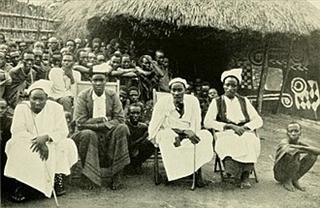
The mugabe was at once war leader, chief herdsman and focus of ritual. Kingship was embodied less in the king's person than in the royal drum Bagyendanwa, which had its own shrine, attendants and herds; a prince became king by gaining possession of the regalia and the support of the leading Bahima. No fixed rule of succession existed: on a king's death his sons traditionally fought one another until one prevailed, a custom that tested the strength of claimants but brought repeated civil war. The king's mother and a royal sister kept their own establishments and influence at court. Government was loose and personal. The king moved his kraal around the country, and the land was administered by Bahima chiefs who held grazing rights and gathered tribute in cattle and produce, while the enganzi, the king's favourite and chief adviser, served as principal minister. Bairu had no formal place in this structure. British rule changed it profoundly. Nuwa Mbaguta, the enganzi under Kahaya II, worked closely with colonial officials, who used him to build a hierarchy of county and sub-county chiefs modelled on Buganda's, a fixed headquarters at Mbarara and a district council, the Eishengyero. These institutions served the protectorate and gradually brought educated Bairu into public life, while the king's practical powers dwindled.
Global & Regional Impact

Nkore was one of the interlacustrine kingdoms whose history shows how states formed among the herding and farming peoples of the Great Lakes. Its claimed descent from the Chwezi linked it to Bunyoro, Toro, Karagwe and Rwanda within a shared regional ideology of kingship, and its royal drum and court rituals belonged to a common family of political symbols. The kingdom became a classic case in anthropology: Kalervo Oberg's chapter on Ankole in the influential collection African Political Systems (1940) presented it as a state built on the domination of one group by another, an interpretation that later scholars have qualified. Its colonial history shaped modern Uganda more directly. The Ankole Agreement of 1901 greatly enlarged the kingdom and fixed the outlines of a district that later formed the core of the country's south-west. The tension between Bahima and Bairu, analysed by Martin Doornbos, became a central issue of local politics in the late colonial period, interwoven with rivalry between Protestant and Catholic factions, and it encouraged the rise of educated Bairu leaders. Ankole's cattle culture remains famous: the long-horned Ankole breed is a symbol of the region, and Bahima pastoral traditions continue in the districts that once made up the kingdom. The region has also produced many national figures, including President Yoweri Museveni, who was born in Ankole.
Decline & Fall
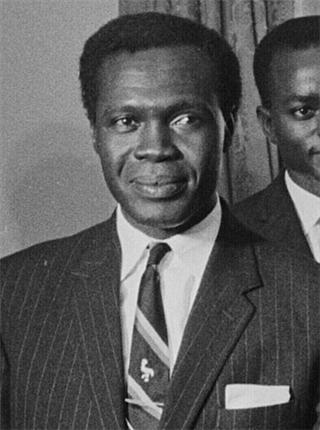
Nkore's independence ended amid the disasters of the 1890s. Rinderpest swept through the herds from about 1891, smallpox and other epidemics followed, and Ntare V died in 1895, leaving a contested succession that ended with the installation of the young Kahaya II, backed by Nuwa Mbaguta. British officers, expanding westward from Buganda, set up a post at Mbarara in the late 1890s, and the Ankole Agreement of 1901 confirmed the kingdom as part of the Uganda Protectorate. The agreement enlarged Ankole by adding Buhweju, Igara and much of Mpororo, but it also fixed boundaries, introduced taxation and land rules, and placed the mugabe under the supervision of British officials. Kahaya II reigned until 1944 and was succeeded by Charles Gasyonga II. At independence in 1962 Ankole kept its kingship under the new constitution, but many in the Bairu majority now saw the monarchy as a symbol of Bahima privilege, and support for it was divided. After the 1966 crisis between Prime Minister Milton Obote and Buganda, the republican constitution of 1967 abolished all of Uganda's kingdoms. When Buganda, Bunyoro and Toro were restored as cultural institutions in 1993, followed by Busoga in 1995, Ankole was not: an attempt to crown the heir, John Barigye, was annulled by the government, and the kingship has not been revived.
The Kingdom of Ankole, or Nkore, shows how a pastoral Great Lakes kingdom built power on cattle, the royal drum and the dominance of Bahima herders over Bairu farmers, expanded under British rule in 1901, and became the only major Ugandan kingdom not restored after the abolition of 1967.
Test yourself
5 questions on this page, from its key events and facts.
The questions open here once the page has loaded.
References
- Karugire, S.R. (1971) A History of the Kingdom of Nkore in Western Uganda to 1896. Oxford: Clarendon Press.
- Doornbos, M.R. (1978) Not All the King's Men: Inequality as a Political Instrument in Ankole, Uganda. The Hague: Mouton.
- Fortes, M. and Evans-Pritchard, E.E. (eds) (1940) African Political Systems. London: Oxford University Press.
- Reid, R.J. (2017) A History of Modern Uganda. Cambridge: Cambridge University Press.
Connections
Open the full connections map →