Sub-Saharan Africa
Kingdom of Dahomey
At a glance
- A Fon kingdom of the Abomey plateau in present-day Benin, founded in the seventeenth century by a branch of Allada's dynasty.
- It became a major supplier of the Atlantic slave trade after conquering the port of Whydah in 1727.
- Its women soldiers fought France in 1890–94, but Abomey fell in 1892 and the kingdom was absorbed by 1904.
Rise & Fall
- c. 1645Houegbadja founds the kingdom and builds the first palace at Abomey
- 1724Agaja conquers the Kingdom of Allada
- 1727Dahomey conquers Whydah, the leading slave-trading port of the coast
- c. 1730After Oyo invasions, Dahomey becomes a tributary of the Oyo Empire
- 1818Ghezo overthrows Adandozan and revives royal power
- 1851A Dahomean assault on Abeokuta is repulsed with heavy losses
- 1892French troops under Colonel Dodds take Abomey
- 1894Behanzin surrenders and is exiled to Martinique
Foundation
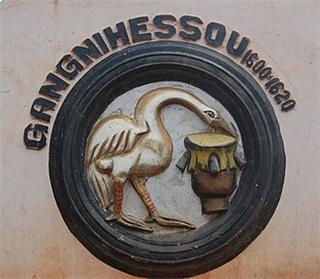
The Kingdom of Dahomey grew out of the Aja-speaking world of the Slave Coast, in the south of present-day Benin. According to its royal traditions, a succession dispute in the Kingdom of Allada early in the seventeenth century led one branch of the royal family to move north to the Abomey plateau, where it settled among the Fon and other local peoples. Do-Aklin and Dakodonou are remembered as early leaders, but Houegbadja, who probably reigned from around 1645 to 1685, is regarded as the true founder of the kingdom. He built the first royal palace at Abomey, and later tradition derived the name Dahomey, 'in the belly of Dan', from the story of a local chief buried beneath its foundations, a tale historians treat as legend. Under Akaba and above all Agaja, who came to the throne in 1708 or 1718 according to different chronologies, Dahomey turned from an inland state into a power on the coast. Agaja conquered Allada in 1724 and in 1727 the Kingdom of Whydah, the busiest slave-trading port of the region, giving Dahomey direct access to European traders. These conquests provoked repeated invasions by the cavalry of the Oyo Empire, and around 1730 Agaja accepted tributary status under Oyo, a relationship that lasted almost a century.
Socioeconomy
Dahomey's economy combined intensive farming on the Abomey plateau with the Atlantic trade. Farmers grew maize, yams, beans and cassava, and the oil palm supplied food and, later, the main export. In the eighteenth century the kingdom became one of the largest African suppliers of the Atlantic slave trade, selling war captives through Ouidah, as Europeans called Whydah, to French, English, Portuguese and Brazilian merchants. The crown claimed priority in the trade, collected customs at the port through a viceroy, the yovogan, and received firearms, cloth, tobacco, alcohol and cowrie shells, which served as currency. Brazilian merchants such as Francisco Félix de Souza, known as the Chacha, became powerful intermediaries in the early nineteenth century. When Britain pressed for an end to the slave trade, Dahomey adapted by expanding oil palm plantations, worked largely by enslaved labour, and exporting palm oil from the 1840s. Religion was based on the vodun, deities of nature and of the ancestors served by priests and initiates, and on Fa divination; the royal ancestors received particular honour. Craftsmen of Abomey, organised in families attached to the court, produced appliqué cloths, cast brass figures, iron sculpture and painted clay bas-reliefs that recorded royal victories on the palace walls.
Military
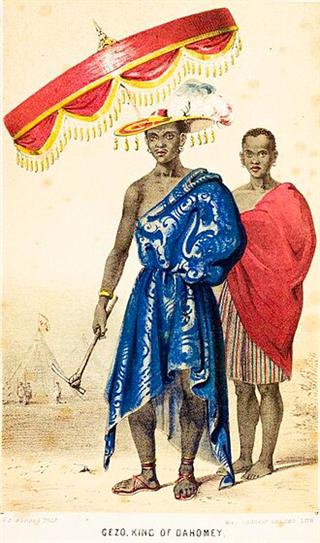
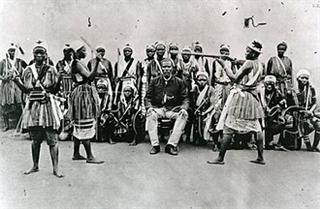
Dahomey was among the most militarised states of West Africa. War was waged almost every year in the dry season, and its aims were both political and economic, since captives supplied the Atlantic trade and the sacrifices of royal ceremonies. The army combined a standing core of royal troops with general levies, and by the eighteenth century it relied heavily on muskets bought from Europeans. Its most famous feature was a corps of women soldiers, called ahosi, 'king's wives', or mino, 'our mothers', and known to Europeans as the Dahomey Amazons. Its origins are debated and may lie in royal bodyguards or elephant hunters of the early eighteenth century, but under Ghezo it was expanded into a regular force of several thousand, organised in units of musketeers, archers and 'reapers' armed with long razors. Dahomey's armies destroyed Allada and Whydah, raided the Mahi to the north and the Yoruba-speaking towns to the east, and in 1886 sacked the Kingdom of Ketu. They also suffered heavy defeats: Oyo's cavalry invaded repeatedly in the 1720s, and the Egba stronghold of Abeokuta repulsed Dahomean assaults in 1851 and 1864 with severe losses. Against France in 1890–1894 the men and women of Dahomey fought with great determination, but repeating rifles and artillery prevailed.
Governance & Law
Dahomey was one of the most centralised kingdoms of pre-colonial Africa. The king, normally chosen by his predecessor from among the royal sons, held authority over land, trade, war and life and death, and princes were excluded from the highest offices to limit rivalry. The leading ministers were the migan, responsible for justice and executions, and the mehu, who managed finances, palace affairs and the princes, while the yovogan governed Ouidah and dealt with Europeans. Each male official had a female counterpart among the palace women, who kept watch on him and reported to the king, a system examined by Edna Bay in her study of royal wives. The palace at Abomey housed thousands of women, from royal wives and soldiers to officials and servants, and the queen mother, the kpojito, was a powerful institution. Royal power was renewed in the Annual Customs, ceremonies honouring the royal ancestors at which the king displayed his wealth, received tribute, distributed gifts and offered human sacrifices, whose scale European visitors often exaggerated but which were real. Later accounts describe a regular census of population and resources kept with tallies of pebbles. Ghezo overthrew his brother Adandozan in 1818, whose name was then struck from the official king list, and ended tribute to Oyo around 1823.
Global & Regional Impact

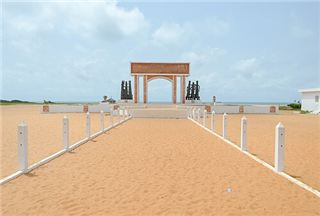
Dahomey's history is inseparable from the Atlantic slave trade, in which it was one of the major African participants during the eighteenth and nineteenth centuries. Hundreds of thousands of people, many of them captives of Dahomean wars, left the Bight of Benin through Ouidah and neighbouring ports, and their religious traditions shaped the Americas: the vodun of the Fon and their neighbours is a principal root of Haitian Vodou and of the Tambor de Mina tradition of northern Brazil. The kingdom's ties with Brazil were especially close, and returning Afro-Brazilians formed a distinct community on the coast. Dahomey's centralised government, royal ceremonies and women soldiers fascinated European observers, and the anthropologist Melville Herskovits and the economic historian Karl Polanyi made it a classic case in debates about African states and economies. Its art is among the best known in Africa. The Royal Palaces of Abomey, with their painted bas-reliefs, were inscribed as a World Heritage Site in 1985, and its iron sculpture and royal statues are celebrated works of African art. In 2021 France returned to Benin twenty-six royal treasures taken from Abomey by French troops in 1892. The memory of the kingdom, and especially of its women soldiers, remains central to the national identity of Benin.
Decline & Fall
Dahomey's decline began with the suppression of the Atlantic slave trade, which eroded the economic foundation of royal power. Ghezo signed a treaty with Britain in 1852 promising to end slave exports but continued the trade where he could, while palm oil, produced by many small farmers, spread wealth beyond the court's control. Defeats before Abeokuta in 1851 and 1864 damaged the army's prestige, and in the 1860s the slave trade to the Americas came to an end. Under Glele (r. 1858–1889) the kingdom faced growing French influence at Porto-Novo and disputes over Cotonou, which Dahomey had ceded in treaties of uncertain validity. His son Behanzin, who succeeded in 1889, rejected French claims, and the First Franco-Dahomean War of 1890 ended in a treaty that recognised French positions on the coast. In 1892 France sent a column of some two thousand men under Colonel Alfred-Amédée Dodds, which defeated the Dahomean army and entered Abomey in November 1892 as Behanzin withdrew. Behanzin surrendered in January 1894 and was exiled to Martinique, dying in Algeria in 1906. France installed his brother Agoli-agbo as king of a reduced Abomey but deposed and exiled him in 1900, and by 1904 the former kingdom had been fully absorbed into the colony of French Dahomey within French West Africa. The colony became independent in 1960 and took the name Benin in 1975.
The Kingdom of Dahomey built one of the most centralised and militarised states of pre-colonial Africa on the Abomey plateau, profited heavily from the Atlantic slave trade through Ouidah, fielded a famous corps of women soldiers and left palaces, art and religious traditions that shaped both Benin and the Americas.
References
- Akinjogbin, I.A. (1967) Dahomey and Its Neighbours, 1708–1818. Cambridge: Cambridge University Press.
- Law, R. (1991) The Slave Coast of West Africa, 1550–1750: The Impact of the Atlantic Slave Trade on an African Society. Oxford: Clarendon Press.
- Bay, E.G. (1998) Wives of the Leopard: Gender, Politics, and Culture in the Kingdom of Dahomey. Charlottesville: University Press of Virginia.
- Herskovits, M.J. (1938) Dahomey: An Ancient West African Kingdom. 2 vols. New York: J.J. Augustin.
- Alpern, S.B. (1998) Amazons of Black Sparta: The Women Warriors of Dahomey. London: Hurst.
- Polanyi, K. (1966) Dahomey and the Slave Trade: An Analysis of an Archaic Economy. Seattle: University of Washington Press.
Connections
Open the full connections map →