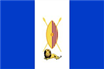
Sub-Saharan Africa
Kongo Empire
At a glance
- A Central African kingdom south of the lower Congo River, ruled from Mbanza Kongo by an elected manikongo.
- It was among the first African states to sustain diplomacy with Europe, adopting Christianity and Portuguese literacy.
- The Atlantic slave trade fuelled rivalries, and defeat at Mbwila in 1665 tipped it into civil war and long decline.
Rise & Fall
- 1483Portuguese navigator Diogo Cao reaches the mouth of the Congo
- 1491King Nzinga a Nkuwu is baptised as Joao I
- 1509Afonso I wins the throne by defeating his half-brother Mpanzu a Kitima
- 1526Afonso I writes to Joao III of Portugal protesting the abuses of the slave trade
- 1568Jaga invaders drive Alvaro I from his capital until Portuguese troops restore him
- 1665Portuguese forces defeat Kongo at Mbwila, killing King Antonio I
- 1706Beatriz Kimpa Vita, leader of the Antonian movement, is executed
- 1709Pedro IV reoccupies Sao Salvador and nominally reunifies the kingdom
Foundation
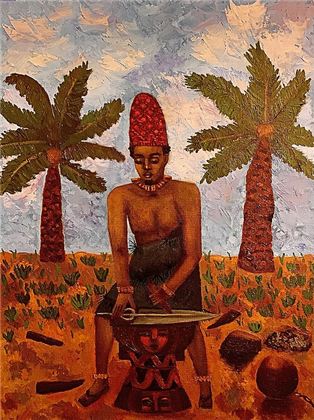
The Kingdom of Kongo emerged in the late fourteenth century in the region south of the lower Congo River, consolidating a series of Bantu-speaking communities into a centralised polity. Its foundation is traditionally attributed to Lukeni lua Nimi, who established the capital at Mbanza Kongo and unified territories through conquest and alliance. The kingdom's rise was facilitated by fertile agricultural land, access to riverine trade routes and its position between the Atlantic coast and the interior of Central Africa. By the late fifteenth century it had expanded to encompass provinces such as Soyo, Mbamba, Mpemba, Mbata and Nsundi under the authority of the manikongo, or king. A pivotal moment came in 1483 with the arrival of the Portuguese navigator Diogo Cão at the mouth of the Congo, which opened diplomatic and commercial relations that would profoundly shape Kongo's political trajectory. The baptism of King Nzinga a Nkuwu as João I in 1491 marked the beginning of a new ideological framework for royal government.
Socioeconomy
Kongo society was hierarchical, organised around kinship and provincial administration. It was divided into nobles, commoners and enslaved people, with lineage central to status and political influence. Agriculture formed the economic foundation, with millet and sorghum, and later the American crops cassava and maize, supporting both subsistence and surplus production. The kingdom used nzimbu shells, gathered on the royal fishery of Luanda Island, as currency, alongside squares of finely woven raffia cloth. Integration into Atlantic trade transformed the economy during the sixteenth century, as ivory, copper, raffia cloth and, above all, enslaved people were exchanged for European textiles, metalware and later firearms. Markets operated at local and regional levels, moving goods across provinces. Revenue came through tribute, with provincial governors remitting goods and labour to the court. The growing Atlantic demand for slaves intensified social stratification and caused demographic disruption, as warfare and raiding were increasingly directed towards capturing people for export.
Military
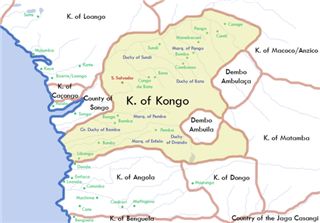
Kongo's military organisation combined provincial levies with royal forces, mobilised under the authority of the manikongo. Armies consisted of infantry armed with bows, spears, swords and shields; cavalry played no role, as tsetse fly made horses impractical. After contact with the Portuguese, firearms were introduced, though their distribution remained uneven and often controlled by elite factions, and Portuguese mercenaries sometimes served in royal armies. Campaigns were essential to the kingdom's expansion and consolidation, particularly during the reign of Afonso I (r. 1509–1543), who won the throne by defeating his half-brother Mpanzu a Kitima and then sought to strengthen central authority and suppress rebellion. The kingdom also fought neighbouring states and rival claimants to the throne, and in 1568 invaders known as the Jaga briefly drove King Álvaro I from his capital until Portuguese troops helped restore him. A critical turning point came in 1665 at the Battle of Mbwila, where Kongo forces confronted Portuguese troops from Angola and their African allies. The defeat, in which King António I was killed and beheaded, fragmented royal authority and exposed a military system dependent on internal cohesion it no longer possessed.
Governance & Law

Governance in Kongo combined a centralised monarchy with a network of provinces governed by appointed officials, usually drawn from noble lineages. The manikongo ruled with a royal council and controlled key administrative and judicial functions, while provincial governors handled local administration, taxation and military mobilisation and could be recalled by the court. Because the throne was elective among descendants of earlier kings rather than strictly hereditary, each succession invited competition. Christianity introduced new legal and ideological elements, including written correspondence, diplomatic protocol and ecclesiastical structures, and Mbanza Kongo was renamed São Salvador. Afonso I sought to formalise administration along Christian lines, establishing schools and promoting literacy, and in 1526 wrote to King João III of Portugal protesting the abuses of the slave trade. Customary law nonetheless remained important, particularly in rural areas. Without a fully institutionalised bureaucracy, central control depended on personal alliances and the loyalty of provincial elites, a flexible arrangement that proved vulnerable during succession disputes and external pressure.
Global & Regional Impact
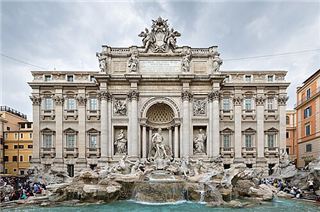
The Kingdom of Kongo occupied a central position in the early modern Atlantic world, serving as a key intermediary between the societies of the interior and European maritime powers. Its diplomatic engagement with Portugal was among the earliest sustained relationships between a sub-Saharan African state and a European kingdom, and it extended to the papacy: Afonso I's son Henrique was consecrated a bishop in 1518, and Kongo envoys reached Rome in the early seventeenth century. The adoption of Christianity, the use of Portuguese in royal correspondence and the integration of European goods into local economies illustrate the depth of this interaction. Regionally, Kongo exerted influence over neighbouring polities through trade, warfare and alliance. Its participation in the Atlantic slave trade had profound consequences within its own society and across the Atlantic, as enslaved people from Kongo became a major part of the African diaspora in the Americas. Kongo religious and cultural elements persist in Brazil, Cuba, Haiti and elsewhere in the Caribbean, reflecting its enduring global impact.
Decline & Fall
The decline of the Kingdom of Kongo was a protracted process driven by internal fragmentation and external pressure. The intensification of the Atlantic slave trade aggravated internal conflicts, as rival factions competed for control of trade routes and access to European goods, while the founding of Portuguese Angola at Luanda in 1576 created a hostile neighbour. The Battle of Mbwila in 1665 marked a decisive rupture, and in its aftermath the kingdom descended into civil war, with rival royal houses contesting the throne, São Salvador abandoned, and provinces such as Soyo asserting independence. Economic disruption, population loss and political fragmentation eroded the kingdom's capacity to function as a cohesive state. The prophetic Antonian movement led by Beatriz Kimpa Vita sought to restore the kingdom before her execution in 1706, and King Pedro IV reoccupied São Salvador and nominally reunified the kingdom in 1709. Yet real power remained with provincial lords, and Kongo never regained its former prominence; it survived as a diminished monarchy, increasingly under Portuguese control, until the title lost all political meaning in the early twentieth century.
The Kingdom of Kongo stands among the first sub-Saharan African states to sustain diplomatic relations with a European kingdom, adopting Christianity and Portuguese literacy while its growing entanglement in the Atlantic slave trade fed the internal conflicts that broke it apart after the Battle of Mbwila in 1665.
Test yourself
5 questions on this page, from its key events and facts.
The questions open here once the page has loaded.
References
- Heywood, L.M. and Thornton, J.K. (2007) Central Africans, Atlantic Creoles, and the Foundation of the Americas, 1585–1660. Cambridge: Cambridge University Press.
- Hilton, A. (1985) The Kingdom of Kongo. Oxford: Clarendon Press.
- MacGaffey, W. (1986) Religion and Society in Central Africa: The BaKongo of Lower Zaire. Chicago: University of Chicago Press.
- Proyart, L.-B. (1776) Histoire de Loango, Kakongo et autres royaumes d'Afrique. Paris: C.P. Berton.
- Thornton, J.K. (1983) The Kingdom of Kongo: Civil War and Transition, 1641–1718. Madison: University of Wisconsin Press.
- Vansina, J. (1966) Kingdoms of the Savanna. Madison: University of Wisconsin Press.
Connections
Open the full connections map →