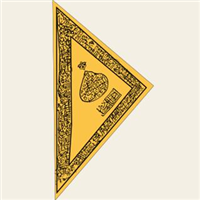
Islamic Caliphates & Middle East
Aq Qoyunlu
At a glance
- A Turkmen tribal confederation led by the Bayandur clan, based first at Diyarbakır and from 1469 at Tabriz.
- Under Uzun Hasan it destroyed the Qara Qoyunlu and the Timurid Abu Sa’id to rule Iran, Iraq and eastern Anatolia.
- Defeated by the Ottomans in 1473, it split after 1490 and gave way to the Safavid state of Uzun Hasan’s grandson Ismail.
Rise & Fall
- 1398Qara Yuluk Osman defeats and kills Kadi Burhan al-Din
- c. 1402Timur rewards Osman with Diyarbakır
- 1467Uzun Hasan defeats and kills the Qara Qoyunlu ruler Jahan Shah
- 1469Uzun Hasan defeats the Timurid Abu Sa’id and makes Tabriz his capital
- 1473Mehmed II defeats Uzun Hasan at the Battle of Otlukbeli
- 1490Death of Ya’qub opens a decade of succession wars
- 1501Ismail defeats Alvand at Sharur and takes Tabriz
- 1503Ismail defeats Murad near Hamadan, ending Aq Qoyunlu rule
Foundation
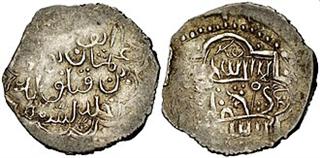
The Aq Qoyunlu, or ‘White Sheep’ Turkmens, were a confederation of Oghuz Turkmen tribes led by the Bayandur clan, whose flocks pastured around Diyarbakır and the upper Tigris in the fourteenth century. Their early chiefs, Tur Ali Beg and his son Qutlu Beg, first raided and then allied with the Empire of Trebizond, and Qutlu Beg married a princess of the Komnenos dynasty, beginning a long tradition of marriages between the Bayandur house and the Greek rulers of the Black Sea coast. The conventional starting date of 1378 marks the emergence of the confederation as a political force under Qutlu Beg’s son Qara Yuluk Osman, the real founder of Aq Qoyunlu power. Osman fought the Anatolian ruler Kadi Burhan al-Din, whom he defeated and killed in 1398, and the rival Qara Qoyunlu, the ‘Black Sheep’ Turkmens of Azerbaijan. When Timur invaded the region Osman sided with the conqueror, and around 1402 he was rewarded with Diyarbakır, which became the core of the confederation. For three decades he extended his authority over neighbouring emirs and fought the Qara Qoyunlu, until he was killed in battle against them near Erzurum in 1435. His death opened a long struggle among his sons and grandsons, which ended only when his grandson Uzun Hasan made himself master of Diyarbakır in 1453.
Socioeconomy

Aq Qoyunlu society joined two worlds. At its centre stood the Turkmen tribes, among them the Bayandur, Mawsillu and Purnak, who lived as mounted pastoralists, moving their herds between winter and summer pastures and supplying the confederation’s fighting men. Around and beneath them lived settled farmers and townspeople: Kurds, Armenians, Syriac Christians, Arabs and, after the conquests of the 1460s, the Persian-speaking population of the Iranian plateau. Agriculture in the river valleys of Mesopotamia and the plains of Azerbaijan and western Iran produced most of the state’s revenue, collected as land tax and as the tamgha, a tax on trade and urban crafts inherited from the Mongol period. The confederation also controlled important stretches of the caravan routes that carried Iranian raw silk westwards to Bursa and Aleppo, and Tabriz, its capital after 1469, was one of the great commercial cities of western Asia. The ruling house was Sunni Muslim, but it showed favour to Sufi orders, and Uzun Hasan married his sister to Shaykh Junayd and his daughter to Junayd’s son Haydar, leaders of the Safavid order of Ardabil. Christian communities kept their churches, and a Christian queen, the Trebizond princess Theodora Komnene, known as Despina Khatun, kept her faith at Uzun Hasan’s court.
Military

The Aq Qoyunlu army was a tribal force of mounted archers, raised by the chiefs of the Turkmen tribes and led by the ruler and his kinsmen. Its strength lay in mobility, which Uzun Hasan used to devastating effect. In November 1467 he surprised and killed the Qara Qoyunlu ruler Jahan Shah in eastern Anatolia, and in 1469 he trapped the Timurid sultan Abu Sa’id, who had invaded Azerbaijan, by cutting his supplies during the winter in the Qarabagh plain; Abu Sa’id was captured and put to death. These victories made Uzun Hasan ruler of Azerbaijan, Iraq and much of Iran. His ambitions then turned west, where the Ottoman sultan Mehmed II had annexed Trebizond in 1461 despite Aq Qoyunlu protests. Uzun Hasan allied with Venice, which sent envoys such as Caterino Zeno and Giosafat Barbaro and promised firearms and artillery. In 1473 Mehmed II marched east; after an initial Aq Qoyunlu success on the Euphrates, the Ottoman army, with its janissaries and field artillery, defeated Uzun Hasan decisively at the Battle of Otlukbeli on 11 August 1473. His son Ya’qub later defeated a Mamluk army near Urfa in 1480, and in 1488 his forces, together with those of the Shirvanshah, killed the militant Safavid leader Shaykh Haydar.
Governance & Law
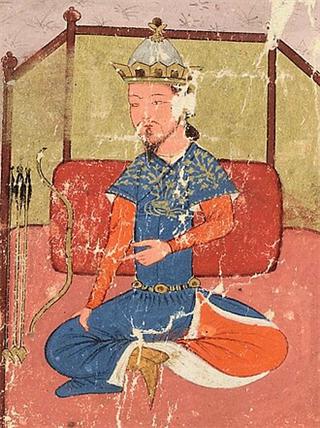
Aq Qoyunlu government combined the customs of a steppe confederation with the bureaucratic traditions of Persian Islamic statecraft. Supreme power belonged to the Bayandur house, whose head took the titles of sultan and padishah and claimed descent from Oghuz Khan, the legendary ancestor of the Turkmens, an ideology celebrated in Abu Bakr Tihrani’s court chronicle, the Kitab-i Diyarbakriyya. Real military power rested with the tribal emirs, who held lands and revenues in return for service and whose support was needed at every succession. Because there was no fixed rule of inheritance, the death of each ruler set brothers, sons and nephews against one another. Civil administration was run by a divan of mostly Persian viziers and secretaries, who kept registers, collected taxes and drafted correspondence in Persian. Uzun Hasan issued regulations on taxation and land, later remembered as the kanun of Hasan Padishah. Under Ya’qub (r. 1478–1490) the judge Qadi Isa Savaji attempted a reform that aimed to revoke hereditary tax immunities, known as soyurghal, and to bring taxation closer to Islamic law. The reform alarmed the emirs and religious notables who benefited from the grants, and it was abandoned after Ya’qub’s death, showing the limits of central authority within the confederation.
Global & Regional Impact
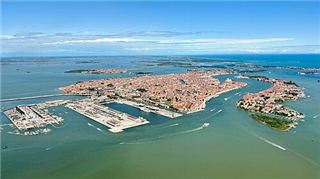
For a few decades the Aq Qoyunlu made western Iran and eastern Anatolia the seat of a major power that could challenge both the Ottomans and the Timurids. Their contacts with Venice formed one of the earliest attempts at an alliance between a European state and an Iranian ruler against the Ottomans, and the reports of Venetian envoys such as Ambrogio Contarini are important sources for the region. The confederation’s most lasting legacy was the Safavid state. Shah Ismail I was a grandson of Uzun Hasan through his daughter, and the Safavids took over the Aq Qoyunlu capital at Tabriz, much of their territory, their Turkmen tribal army, which became the core of the Qizilbash, and many of their Persian bureaucrats and administrative practices. In eastern Anatolia the Ottomans kept the Aq Qoyunlu tax regulations in force after their conquest of the region, citing the law of Hasan Padishah in their provincial law codes for Diyarbakır and neighbouring districts. The court of Tabriz was also a centre of Persian culture. The poet Jami dedicated his allegory Salaman and Absal to Ya’qub, and the Turkmen style of manuscript painting developed in Tabriz under Aq Qoyunlu patronage fed directly into the celebrated painting workshops of the early Safavid shahs.
Decline & Fall
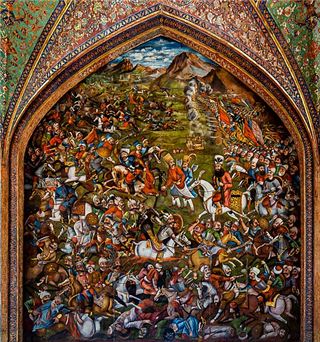
The weaknesses of the confederation surfaced after the death of Ya’qub in 1490. His young son Baysunghur was soon displaced by his cousin Rustam (r. 1492–1497), who in turn was overthrown by Ahmad, a grandson of Uzun Hasan who had grown up at the Ottoman court and who was killed within months after trying to curb the emirs. Tribal factions backed rival princes, and by about 1500 the realm was divided between Alvand, who held Azerbaijan and Diyarbakır, and Murad, who ruled central Iran and Fars. Years of civil war, plague and economic hardship eroded loyalty to the Bayandur house. Meanwhile the Safavid order of Ardabil, whose leader Haydar had been killed by Aq Qoyunlu forces in 1488, gathered Turkmen followers in Anatolia around Haydar’s son Ismail. In 1501 Ismail defeated Alvand at the Battle of Sharur, entered Tabriz and proclaimed himself shah. In 1503 he defeated Murad near Hamadan, and this victory is usually taken as the end of the Aq Qoyunlu state. Aq Qoyunlu partisans held Baghdad until 1508 and Murad died in exile some years later, while Diyarbakır passed to the Safavids and then, after the Ottoman victory at the Battle of Chaldiran in 1514, to the Ottoman Empire.
The Aq Qoyunlu turned a Turkmen tribal confederation from Diyarbakır into the dominant power of Iran and eastern Anatolia under Uzun Hasan, challenged the Ottomans in alliance with Venice, and handed their capital, army and administration to the Safavid dynasty founded by Uzun Hasan’s grandson Ismail.
References
- Woods, J.E. (1999) The Aqquyunlu: Clan, Confederation, Empire. Rev. edn. Salt Lake City: University of Utah Press.
- Jackson, P. and Lockhart, L. (eds) (1986) The Cambridge History of Iran, Volume 6: The Timurid and Safavid Periods. Cambridge: Cambridge University Press.
- Minorsky, V. (1957) Persia in A.D. 1478–1490: An Abridged Translation of Faḍlullāh b. Rūzbihān Khunjī’s Tārīkh-i ʿĀlam-ārā-yi Amīnī. London: Royal Asiatic Society.
- Babinger, F. (1978) Mehmed the Conqueror and His Time. Princeton: Princeton University Press.
Connections
Open the full connections map →