Islamic Caliphates & Middle East
Abbasid Caliphate
At a glance
- The Abbasids overthrew the Umayyads in 750 and ruled a multi-ethnic Islamic empire from their new capital, Baghdad.
- Baghdad's House of Wisdom translated Greek, Persian and Indian learning into Arabic and helped give the world algebra.
- Turkic slave soldiers, then Buyid and Seljuk overlords, hollowed out caliphal power long before the Mongols sacked Baghdad in 1258.
Rise & Fall
- 750Abbasid rebels defeat the Umayyads at the Battle of the Great Zab
- 762Al-Mansur founds the Round City of Baghdad on the Tigris
- c. 820Al-Khwarizmi writes the treatise that gives algebra its name
- 836Al-Mu'tasim moves the capital to Samarra to house his Turkic slave army
- 861Assassination of al-Mutawakkil begins the Anarchy at Samarra
- 945The Buyids take Baghdad, leaving the caliphs only religious authority
- 1258Hulagu Khan's Mongols sack Baghdad and execute Caliph al-Musta'sim
- 1517Selim I conquers Egypt, ending the Mamluk-sponsored shadow caliphate in Cairo
Foundation
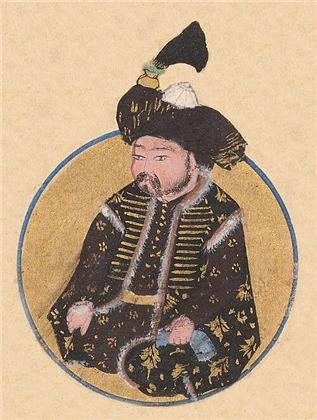
The Abbasid Caliphate was founded in 750 CE following the Abbasid Revolution, which overthrew the Umayyad dynasty at the decisive Battle of the Great Zab in January of that year. The revolution was driven by widespread discontent with Umayyad Arab exclusivism, a policy that marginalised non-Arab Muslims, particularly Persian converts known as mawali, and was catalysed by the charismatic generalship of Abu Muslim, a commander of obscure but probably Persian origin operating from Khorasan. The first caliph, Abu al-Abbas al-Saffah (r. 750–754), inherited the vast Umayyad territorial empire but faced immediate challenges: Shi'a supporters who had expected a dynasty descended from Ali felt betrayed, the Umayyad survivor Abd al-Rahman I escaped to establish a rival emirate in al-Andalus, and Abu Muslim himself remained a dangerous independent power. It was the second caliph, al-Mansur (r. 754–775), who served as the dynasty's true architect. He had Abu Muslim executed in 755, eliminating the most dangerous rival power centre, and in 762 founded the Round City of Baghdad, Madinat al-Salam or "City of Peace", on the western bank of the Tigris not far from the ruins of the Sasanian capital Ctesiphon, deliberately connecting Abbasid authority to Persian imperial prestige. Baghdad grew within decades into one of the largest cities in the world, and the Abbasids distinguished themselves from their predecessors by embracing Muslims of every ethnicity, welcoming Persian mawali into the bureaucracy, and presenting themselves as the legitimate inheritors of universal Islamic rule.
Socioeconomy

The Abbasid Caliphate was one of the most economically sophisticated polities of the medieval world. Baghdad sat at the intersection of transcontinental trade routes linking the Mediterranean, Central Asia, the Indian subcontinent and Tang China, making it the commercial hub of the known world at its peak. The caliphate's revenues derived from agricultural taxation across Mesopotamia's highly productive Sawad, customs duties on the Indian Ocean trade passing through the Persian Gulf, and remittances from provincial governors across an empire stretching from North Africa to Central Asia. The embrace of Persian administrative traditions brought with it a highly developed system of taxation, record-keeping and land assessment. Socially, the Abbasid state was far more cosmopolitan than its predecessor: Persian, Arab and Turkic elements coexisted within the court and administration, while a flourishing urban class of merchants, scholars and artisans gave Baghdad extraordinary cultural and intellectual vitality. The Barmakid family, Persian administrators who served the early caliphs and rose to the height of their power as viziers under Harun al-Rashid until their sudden fall in 803, exemplified this multicultural elite. Agricultural productivity in Mesopotamia remained high through the early period, sustained by a complex canal and irrigation network that had made the region fertile for millennia. The Zanj Rebellion (869–883), a massive revolt of enslaved labourers in southern Iraq, devastated the agricultural heartland and contributed materially to the caliphate's later economic decline.
Military

The Abbasid military underwent a fundamental transformation over the dynasty's lifetime. In the early period, the caliphate relied on the Khurasani armies that had won the revolution, a mixed Arab and Persian force loyal to the dynasty. Under Harun al-Rashid (r. 786–809), these forces were powerful enough to defeat the Byzantine Emperor Nikephoros I in 806, imposing humiliating tribute terms. The fateful turning point came under al-Mu'tasim (r. 833–842), who built up a professional slave army of Turkic soldiers, the ghilman, recruited from Central Asia, intending to give the caliph a loyal personal force independent of Arab and Khurasani factions, and moved the capital to Samarra in 836 to house it. This innovation, militarily effective in the short term, proved institutionally catastrophic: the Turkic commanders quickly learned to control the caliphate by murdering any caliph who resisted their demands. The Anarchy at Samarra (861–870) began with the assassination of al-Mutawakkil and saw four caliphs killed by the very army meant to protect them. Military power increasingly devolved to provincial commanders and then to outright successor dynasties: the Tahirids, Saffarids and Samanids in the east, and later the Buyids and Seljuks at the centre. The revival under al-Nasir (r. 1180–1225) partially rebuilt caliphal military capacity, enough to secure Baghdad and its hinterland, but the caliphate was never again a first-rank military power.
Governance & Law
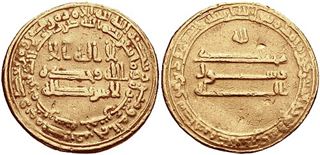
The Abbasid administrative system represented a significant advance over the Umayyad model. Al-Mansur centralised judicial administration, appointed loyal governors across the empire, and laid the foundations of the vizierate, a chief ministry drawn typically from the Persian bureaucratic tradition, as the primary instrument of imperial government. The Barmakid family served as viziers and secretaries under several caliphs, building a sophisticated chancery that managed correspondence, taxation and provincial oversight. The legal system was organised around the developing schools of Islamic jurisprudence (madhhabs), with the caliph claiming authority not only as temporal ruler but as Commander of the Faithful, the supreme religious and political sovereign. This dual legitimacy was central to Abbasid ideology, and al-Ma'mun (r. 813–833) pushed it furthest by adopting Mu'tazilism as state doctrine and launching the mihna, an inquisition asserting the caliph's right to define theological orthodoxy. The structural weakness of the system was its dependence on personal caliphal authority: once Turkic military commanders began placing and removing caliphs at will after 861, the bureaucracy continued to function but the political coherence it depended on was hollow. Under Buyid domination (945–1055), the caliphs retained religious prestige but exercised little or no political authority, serving in effect as a sanctifying institution for the rulers who held actual power.
Global & Regional Impact

The Abbasid Caliphate's global impact was disproportionate even to its enormous territorial scope, chiefly because of its role in generating, preserving and transmitting knowledge. The House of Wisdom (Bayt al-Hikma), traditionally associated with Harun al-Rashid and reaching its zenith under al-Ma'mun, sponsored the systematic translation of Greek, Persian, Indian and Syriac texts into Arabic, a project that preserved Aristotle, Euclid, Galen and Claudius Ptolemy for the medieval world. Al-Khwarizmi's treatise on calculation by completion and balancing (al-Kitāb al-mukhtaṣar fī ḥisāb al-jabr wal-muqābala, c. 820), the work that gave algebra its name, emerged from this environment and permanently transformed mathematics. The caliphate's trade and diplomatic networks reached Tang China, the East African coast and the court of Charlemagne, making Arabic a language of international commerce and scholarship. The Abbasid model of multi-ethnic Islamic government, embracing all Muslims under a single religious-political authority, became the template against which later Islamic states measured themselves. Even after the Mongol destruction of Baghdad in 1258, the shadow caliphate maintained by the Mamluks in Cairo (1261–1517) served as an important legitimising institution for Muslim rulers across North Africa and the Levant. The intellectual output of the Abbasid Golden Age, recovered through Arabic translations in Sicily and Spain, helped lay the foundations of later European science.
Decline & Fall

The Abbasid Caliphate's decline was the product of a structural contradiction embedded in its own founding success. By opening the empire to Muslims of all ethnicities, the Abbasids enabled the rise of Persian, Turkic and other non-Arab power centres that eventually eclipsed the caliphs themselves. The Turkic ghilman army built up by al-Mu'tasim began the military subjugation of the caliphate; the Anarchy at Samarra (861–870) made it irreversible. The Zanj Rebellion (869–883) wrecked the agricultural economy of southern Iraq. The Buyid takeover of Baghdad in 945 eliminated the last vestiges of caliphal political authority, reducing the institution to a religious symbol, and the Seljuks who replaced the Buyids in 1055 maintained the same arrangement. A partial revival under al-Nasir (r. 1180–1225) raised brief hopes of genuine restoration, but the Mongol invasion ended the Baghdad caliphate entirely: Hulagu Khan's forces took the city in February 1258, executed Caliph al-Musta'sim, and sacked its libraries, including the House of Wisdom. The shadow caliphate continued in Cairo under Mamluk patronage until 1517, when the Ottoman Sultan Selim I's conquest of Egypt brought even that ceremonial institution to an end.
The Abbasid Caliphate endured in one form or another for 767 years, a testament to the remarkable resilience of its religious legitimacy even as its political substance was repeatedly hollowed out. Its fall marked the definitive end of a unified caliphal authority and the permanent fragmentation of the caliphal institution. It survives in historical memory as the civilisation that gave the medieval world algebra, advances in astronomy and medicine, and the preservation of classical learning, an intellectual legacy that outlasted by centuries the political empire that produced it.
References
- Al-Tabari (1985–2007) The History of al-Tabari. Translated by various. Albany: State University of New York Press.
- Crone, P. and Hinds, M. (1986) God's Caliph: Religious Authority in the First Centuries of Islam. Cambridge: Cambridge University Press.
- Encyclopaedia Britannica (2024) Abbasid Dynasty. Available at: https://www.britannica.com/topic/Abbasid-dynasty (Accessed: 1 January 2024).
- Kennedy, H. (1986) The Early Abbasid Caliphate: A Political History. London: Croom Helm.
- Kennedy, H. (2004) The Prophet and the Age of the Caliphates: The Islamic Near East from the Sixth to the Eleventh Century. 2nd edn. London: Longman.
- Lassner, J. (1980) The Shaping of Abbasid Rule. Princeton: Princeton University Press.
- Sourdel, D. (1959–1960) Le vizirat 'Abbaside de 749 à 936. Damascus: Institut Français de Damas.
Connections
Open the full connections map →