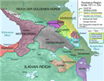
Islamic Caliphates & Middle East
Ilkhanate
At a glance
- The Mongol khanate founded by Hulagu in Persia and Iraq after he destroyed the Abbasid Caliphate at Baghdad in 1258.
- Under Ghazan it became a Persianised Islamic state whose reforms, trade and court scholarship linked China and the Mediterranean.
- When Abu Said died without an heir in 1335 it broke into rival successor states such as the Jalayirids and Chupanids.
Rise & Fall
- 1256Hulagu destroys the Nizari Ismaili state and takes Alamut
- 1258Mongol forces capture Baghdad and execute the Abbasid caliph al-Mustasim
- 1260The Mamluks defeat Kitbuqa's Mongol army at Ain Jalut in Galilee
- 1287The monk Rabban Sauma begins an embassy to Europe seeking an alliance against the Mamluks
- 1295Ghazan converts to Islam and begins sweeping reforms with Rashid al-Din
- 1299Ghazan wins at Wadi al-Khaznadar, briefly taking Damascus
- 1318Rashid al-Din, the state's ablest administrator, is executed
- 1335Abu Said dies without an heir and the Ilkhanate fragments
Foundation

The Ilkhanate emerged from the westward expansion of the Mongol Empire under the command of Hulagu Khan, a grandson of Genghis Khan. In 1253 the Great Khan Möngke, Hulagu's brother, ordered him to subdue the remaining Muslim powers of western Asia, assembling one of the largest Mongol armies ever fielded. Hulagu destroyed the Nizari Ismaili state in 1256, securing the surrender of its imam and, after the Siege of Alamut, the fortress itself, then advanced into Mesopotamia. In February 1258 Mongol forces captured Baghdad and executed the Abbasid caliph al-Mustaʿsim, ending the Abbasid Caliphate of Baghdad that had ruled since 750. The conquest established Mongol authority across Persia and Iraq, with the Seljuks of Anatolia reduced to vassals. Hulagu made Maragha in Azerbaijan his capital, later supplanted by Tabriz, and adopted the title “Ilkhan”, usually understood as a subordinate khan acknowledging the supremacy of the Great Khan. The new state rested on Mongol military dominance but relied heavily on the administrative traditions of the conquered Persian lands, a tension that would shape its development.
Socioeconomy
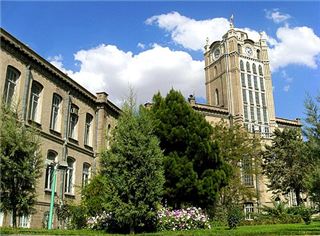
The Ilkhanate governed a vast and diverse population, composed largely of Persian agricultural communities, urban artisans and merchants integrated into Eurasian trade networks. Mongol elites formed a small ruling minority, often living as nomadic aristocrats while Persian bureaucrats administered taxation. Agriculture in Iran and Mesopotamia suffered severe disruption from the Mongol campaigns and the spread of pastoral land use, which damaged irrigation systems and depopulated rural districts. Recovery began around the turn of the fourteenth century under Ghazan Khan (r. 1295–1304), whose fiscal reforms stabilised revenue collection and protected peasants from arbitrary exactions by nomadic elites. Trade flourished along the Silk Road, linking China, Central Asia and the Mediterranean, and the Ilkhanate also benefited from diplomatic and commercial contacts with European powers seeking allies against the Mamluks. Tabriz and Sultaniyya became major commercial hubs where Mongol, Persian, Armenian, Genoese and Venetian merchants met within a revitalised transcontinental economy.
Military

The Ilkhanid military inherited the highly mobile cavalry structure of the Mongol Empire, built around disciplined units of mounted archers capable of rapid manoeuvre and co-ordinated battlefield tactics. Hulagu's army demonstrated overwhelming effectiveness in the initial conquests, above all at the siege of Baghdad in 1258. Mongol expansion met a decisive limit, however, at the Battle of Ain Jalut in 1260, when the Mamluk army under Sultan Qutuz and the general Baybars defeated a Mongol force commanded by Kitbuqa in Galilee. The defeat fixed a western frontier along the Euphrates that the Ilkhanate never overcame. The Ilkhans launched repeated campaigns against the Mamluk Sultanate, and Ghazan's victory at the Battle of Wadi al-Khaznadar in 1299, which briefly delivered Damascus, was their only major field victory in the conflict; it was reversed at Marj al-Saffar in 1303. Logistical difficulties and the resilience of Mamluk military institutions prevented lasting gains, and military power, though central to Ilkhanid legitimacy, gradually shifted from conquest to defence and internal control.
Governance & Law

Governance in the Ilkhanate reflected a synthesis of Mongol imperial tradition and Persian bureaucratic administration. Early rulers maintained Mongol legal customs derived from the Yasa while relying on experienced Persian officials to manage taxation, land surveys and record keeping. The most significant transformation came under Mahmud Ghazan, who converted to Islam in 1295 and implemented extensive reforms with his vizier Rashid al-Din Hamadani. These reforms standardised coinage, weights and measures, regulated taxation, curbed abuses by military elites and reorganised provincial administration. Ghazan also built caravanserais and postal relay stations to facilitate trade and communication. The bureaucracy became increasingly Persianised, reflecting the demographic reality of the realm. Rashid al-Din's Jamiʿ al-Tawarikh, produced at the Ilkhanid court, is often described as the first universal history of Eurasia, drawing on Mongol, Chinese, Persian and European informants. Governance thus evolved from a conquest regime into a structured state apparatus integrating Mongol authority with Persian administrative expertise.
Global & Regional Impact
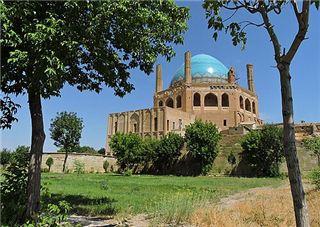
The Ilkhanate played a significant role in connecting the Islamic world with the wider Mongol imperial system spanning Eurasia. Embassies to European monarchs and the papacy, including the mission of the monk Rabban Sauma in 1287–1288, sought a Franco-Mongol alliance against the Mamluks, though these efforts never produced effective military co-operation. Trade along the Silk Road facilitated the movement of goods, technologies and artistic influences between China, Persia and the Mediterranean. Ilkhanid culture blended Mongol, Persian and Chinese traditions, particularly in manuscript illumination and architecture, a synthesis exemplified by the great domed mausoleum at Sultaniyya built for Öljeitü, completed around 1313. The Ilkhanate also influenced the religious landscape of Persia: Öljeitü's conversion to Twelver Shiʿism briefly promoted the sect within state structures, an early precedent for the Safavid establishment of Shiʿism as Persia's official religion in 1501. Through these cultural and economic exchanges, the Ilkhanate served as a conduit linking several major civilisations.
Decline & Fall
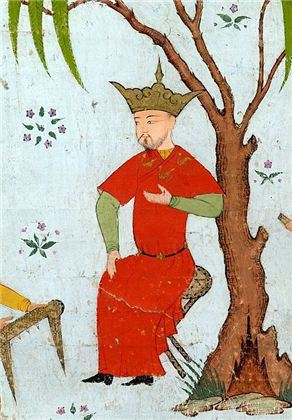
The Ilkhanate's decline resulted primarily from dynastic instability and political fragmentation. After Ghazan's death in 1304 the empire retained much of its administrative structure, but successive rulers struggled to maintain centralised authority. Öljeitü's conversion to Shiʿism created religious tensions within a largely Sunni population and Mongol elite. His successor Abu Saʿid Bahadur Khan came to the throne as a minor in 1317, leaving effective power with powerful military emirs such as Amir Chupan, whom he eventually overthrew in 1327. Court factions competed for influence throughout the reign, weakening institutional stability, and the execution of Rashid al-Din in 1318 removed the state's most capable administrator. When Abu Saʿid died in 1335 without an heir, the Ilkhanate fragmented into rival successor states controlled by regional dynasties, including the Jalayirids and the Chupanids, who ruled through puppet khans. The Black Death further weakened the region, and by the mid-fourteenth century effective Mongol political authority in Persia had disappeared.
The Ilkhanate stands as a striking example of how a Mongol conquest state evolved into a Persianised Islamic empire whose enduring influence lay less in territorial expansion than in the cultural and administrative synthesis it created across Eurasia.
Test yourself
5 questions on this page, from its key events and facts.
The questions open here once the page has loaded.
References
- Amitai-Preiss, R. (1995) Mongols and Mamluks: The Mamluk-Ilkhanid War, 1260–1281. Cambridge: Cambridge University Press.
- Boyle, J.A. (ed.) (1968) The Cambridge History of Iran. Vol. 5: The Saljuq and Mongol Periods. Cambridge: Cambridge University Press.
- Lane, G. (2003) Early Mongol Rule in Thirteenth-Century Iran: A Persian Renaissance. London: RoutledgeCurzon.
- Melville, C. (1999) 'Padshah-i Islam: The Conversion of Sultan Mahmud Ghazan Khan', Pembroke Papers, 1, pp. 159–177.
- Melville, C. (ed.) (1990) Safavid Persia: The History and Politics of an Islamic Society. London: I.B. Tauris.
- Morgan, D. (1986) The Mongols. Oxford: Blackwell.
Connections
Open the full connections map →