Islamic Caliphates & Middle East
Delhi Sultanate
At a glance
- Five dynasties of Turkic and Afghan origin ruled northern India from Delhi for 320 years, from 1206 to 1526.
- It repelled repeated Mongol invasions and fostered the Indo-Islamic culture of the Qutb Minar and Amir Khusrau.
- Overreach, provincial breakaways and Timur's sack of Delhi weakened it before Babur won at Panipat in 1526.
Rise & Fall
- 1206Qutb ud-Din Aibak founds the Mamluk or Slave Dynasty after Muhammad of Ghor's murder
- 1229Abbasid caliph sends Iltutmish a diploma recognising him as sultan
- 1299Alauddin Khalji's forces turn back a Mongol army that reaches Delhi's outskirts
- 1311Malik Kafur plunders the Pandya lands around Madurai
- 1327Muhammad bin Tughlaq forcibly moves the capital to Daulatabad
- 1347The Bahmani Sultanate breaks away in the Deccan
- 1398Timur sacks Delhi and carries off its artisans to Samarkand
- 1526Babur defeats Ibrahim Lodi at the First Battle of Panipat
Foundation
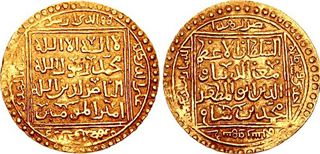
The Delhi Sultanate emerged from the fragmentation of the Ghurid Empire after the assassination of Muhammad of Ghor in 1206. Qutb ud-Din Aibak, a Turkic slave-general who had governed the Ghurid conquests in northern India from Delhi since the victory at Tarain in 1192, assumed independent power at Lahore, founding the Mamluk or Slave Dynasty. The new state was fragile, contested by rival Ghurid successors such as Taj al-Din Yildiz of Ghazni and Nasir al-Din Qabacha of Multan, by resistant Rajput rulers, and by the instability of an administration built on personal loyalty rather than institutions. Consolidation accelerated under Iltutmish, who seized the throne in 1211, defeated Yildiz at the third Battle of Tarain in 1216, introduced the silver tanka as the standard coin, and organised the iqta system of revenue assignments. The critical moment of external legitimation came in 1229, when the Abbasid caliph al-Mustansir Billah sent Iltutmish a formal diploma of investiture (manshur), recognising him as sultan of the lands he ruled in India. This investiture ended the sultanate's symbolic dependence on Central Asian overlords and established Delhi as an independent imperial centre, providing the ideological foundation on which later dynasties built their authority.
Socioeconomy
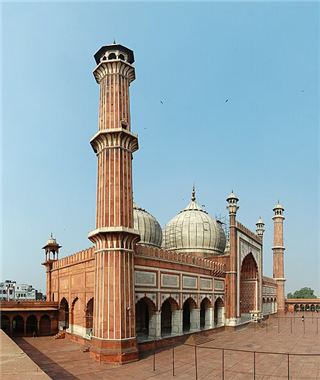
The sultanate ruled one of the most populous and diverse territories of the medieval world, governing a predominantly Hindu agrarian population through a Muslim ruling elite of Turkic, Afghan and Persian origin. The iqta system, under which the right to collect revenue from designated territories was assigned to military officers in lieu of salary, formed the backbone of both economic organisation and military mobilisation. Alauddin Khalji (r. 1296–1316) intervened radically in this system, paying much of his army in cash, raising the land tax to half the produce in the core provinces, and imposing fixed prices enforced through state-controlled markets in Delhi for grain, cloth, horses, cattle and slaves — the most ambitious experiment in centralised economic management in medieval Indian history. It worked during his reign, keeping grain prices stable even in times of drought, but lapsed soon after his death in 1316 because it depended on his personal enforcement. Muhammad bin Tughlaq's token currency experiment of around 1329–1330, which introduced brass and copper tokens to be accepted at the value of silver, led to mass counterfeiting and financial chaos and had to be withdrawn, illustrating how the sultanate's economic innovations repeatedly outran its administrative capacity to sustain them.
Military

Military power in the Delhi Sultanate was predominantly cavalry-based, drawing on successive waves of Turkic and Afghan martial traditions, supplemented by war elephants. Alauddin Khalji built the largest standing army the sultanate ever fielded — 475,000 horsemen according to the later chronicler Firishta, a figure that is certainly inflated — paid directly by the state rather than through iqta assignments. His general Malik Kafur led the most spectacular campaigns in the sultanate's history, compelling the submission of the Kakatiyas at Warangal (1310), extracting enormous tribute from the Hoysala capital at Dwarasamudra and plundering the Pandya lands around Madurai (1311), bringing nearly every major southern Indian power into tributary submission. Equally significant was the sultanate's repeated success against Mongol invasions: Alauddin's forces repelled a series of large-scale Chagatai incursions between 1297 and 1306, including the great invasion under Qutlugh Khwaja that reached the outskirts of Delhi in 1299, sparing northern India the devastation suffered by Persia and Central Asia. The army's final failure came at the First Battle of Panipat on 21 April 1526, where Ibrahim Lodi's much larger army, reportedly some 100,000 strong, was destroyed by Babur's combination of field guns and matchlocks behind a barrier of linked carts and the flanking tulughma manoeuvre — among the first decisive uses of gunpowder artillery in north Indian warfare.
Governance & Law
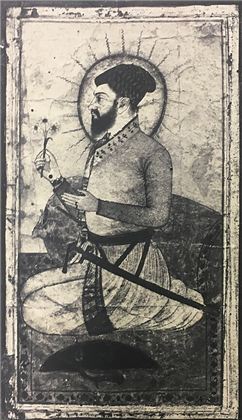
Five successive dynasties — the Mamluk, Khalji, Tughlaq, Sayyid and Lodi — governed the sultanate across 320 years, each with distinct administrative emphases but all facing the same tension between centralising royal authority and the power of the military nobility. Balban, who became sultan in 1266 after some two decades as the dominant minister under Nasir ud-Din Mahmud, confronted this tension most directly by breaking the power of the Forty (the Chihalgani), the circle of Turkic nobles who had dominated the court, introducing Persian court ceremonial to raise the ruler far above the nobility, and building an extensive network of spies. Islamic law provided the formal legal framework, administered through the courts of qazis, while Persian served as the language of administration and high culture. The Transfer of capital to Daulatabad in the Deccan in 1327, Muhammad bin Tughlaq's forced relocation of much of Delhi's elite population, intended to improve control of the southern provinces, instead devastated the capital, was soon reversed, and accelerated provincial rebellion. Firuz Shah Tughlaq (r. 1351–1388) later made iqtas hereditary, further strengthening the nobility. The Lodi dynasty's failure to manage its Afghan nobles, who expected to be treated as peers rather than subjects, ultimately produced the invitations to Babur that ended the sultanate from within as much as from without.
Global & Regional Impact

The Delhi Sultanate was the principal conduit through which Islamic legal, architectural and administrative culture became deeply rooted in the Indian subcontinent. Persian literary and artistic traditions fused with Indian forms to produce a distinctive Indo-Islamic synthesis, visible in architecture from the Qutb Minar complex and Alauddin's Alai Darwaza to the Tughlaq tombs, in the poetry of Amir Khusrau, and in the emergence of the Hindavi vernacular that would later give rise to Urdu. The sultanate's successful resistance to Mongol invasion preserved northern India as a functioning centre of civilisation during the thirteenth and fourteenth centuries, when much of Eurasia was devastated, and made Delhi a refuge for scholars, artisans and Sufis fleeing the Mongols; the Chishti Sufi order, led in Delhi by Nizamuddin Auliya, flourished under its rule. The Moroccan scholar Ibn Battuta's service as a qazi at Muhammad bin Tughlaq's court from 1334 reflects the sultanate's place in the wider world of Islamic scholarship and its ambition to project cosmopolitan legitimacy. The fragmentation of the subcontinent into regional sultanates after the Tughlaq decline permanently altered South Asian political geography, creating the multi-state landscape that the Mughal Empire would later struggle to overcome.
Decline & Fall

The sultanate's disintegration was set in motion by the very expansion that marked its territorial peak. Muhammad bin Tughlaq's overextension across the south generated rebellions faster than they could be suppressed: the Madurai Sultanate broke away in 1335, the Vijayanagara Empire was founded around 1336, Bengal became independent in 1338, and the Bahmani Sultanate was established in the Deccan in 1347. Timur's sack of Delhi in December 1398 delivered a catastrophic physical blow: tens of thousands were killed, by some accounts many more, many of the city's artisans were carried off to Samarkand, and the treasury was emptied. The Sayyid dynasty that followed (1414–1451) ruled as nominal vassals of the Timurids over a much-reduced territory around Delhi. The Lodi recovery under Bahlul and Sikandar was genuine but limited, never regaining the Deccan or Bengal, though Sikandar founded Agra as a new capital in 1504. Ibrahim Lodi's alienation of his own Afghan nobility proved fatal, as Daulat Khan Lodi, his governor of the Punjab, and his uncle Alam Khan invited Babur to invade, ensuring that the sultanate was destroyed by its own internal contradictions as much as by external force.
The Delhi Sultanate's enduring significance lies in its creation of the Indo-Islamic cultural and administrative synthesis that shaped South Asian civilisation through the centuries of Muslim-ruled states, above all the Mughal Empire, that followed it.
References
- Habib, I. (ed.) (1997) Medieval India 1: Researches in the History of India, 1200–1750. Delhi: Oxford University Press.
- Iqtidar Alam Khan (2004) Gunpowder and Firearms: Warfare in Medieval India. New Delhi: Oxford University Press.
- Jackson, P. (1999) The Delhi Sultanate: A Political and Military History. Cambridge: Cambridge University Press.
- Kumar, S. (2007) The Emergence of the Delhi Sultanate, 1192–1286. Delhi: Permanent Black.
- Lal, K.S. (1967) History of the Khaljis, 1290–1320. 2nd edn. Bombay: Asia Publishing House.
- Wink, A. (1990–2004) Al-Hind: The Making of the Indo-Islamic World. 3 vols. Leiden: Brill.
Connections
Open the full connections map →