Europe
Principality of Achaea
At a glance
- Founded in 1205 by French crusaders, it was the most durable Latin state created in Greece after the Fourth Crusade.
- A model feudal society of twelve baronies, its customs were codified in the Assizes of Romania.
- Defeat at Pelagonia in 1259 cost it Mistras, the base from which Byzantium reconquered the Peloponnese by 1432.
Rise & Fall
- 1205Crusaders defeat the Greeks at the Olive Grove of Koundouros
- 1209Geoffrey I is recognised as a vassal of the Latin emperor at Ravennika
- 1248William II takes Monemvasia, completing the conquest of the Peloponnese
- 1259William II is captured at the Battle of Pelagonia
- 1262Mistras, Monemvasia and Grand Magne are ceded to Byzantium
- 1267The Treaty of Viterbo places Achaea under Charles of Anjou
- 1316Ferdinand of Majorca is killed at the Battle of Manolada
- 1432Thomas Palaiologos annexes the last of the principality
Foundation

The Principality of Achaea was born of the Fourth Crusade. After the crusaders sacked Constantinople in 1204, Geoffrey of Villehardouin, nephew of the chronicler of the crusade, was driven by storms to the Peloponnese and joined forces with William of Champlitte, a Burgundian knight who had followed Boniface of Montferrat into Greece. In 1205 they conquered the western Peloponnese, defeating a much larger Greek force at the Olive Grove of Koundouros in Messenia with a small army that the Chronicle of the Morea puts at about 700 men. Champlitte took the title Prince of Achaea, but when he left for France in 1208 to claim an inheritance and died on the journey, Geoffrey I of Villehardouin took control, and at the Parliament of Ravennika in 1209 he was recognised as a vassal of the Latin Emperor Henry. The conquest of the peninsula took four decades. Leo Sgouros held Acrocorinth until his death in 1208, Corinth fell in 1210 and Argos and Nauplia in 1212, while Venice kept the ports of Modon and Coron in the south-west. Geoffrey’s younger son William II of Villehardouin completed the conquest by taking Monemvasia in 1248 after a long siege, and built the fortresses of Mistras, Grand Magne and Beaufort to control the Mani and the Slavic Melingoi of the Taygetus range.
Socioeconomy

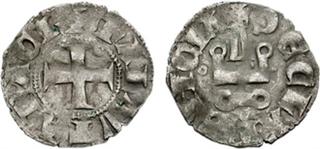
Achaea was a society of conquest in which a small Frankish elite ruled a large Greek Orthodox population. The French knights who settled in the castles of the Peloponnese were few, and they relied on the Greek landowning archons, who kept their estates and status in return for service and loyalty to the prince, while the peasants, the paroikoi, continued to work the land under obligations much like those of Byzantine times. A Latin hierarchy headed by the Archbishop of Patras replaced the Orthodox bishops, and Cistercian, Franciscan and Dominican houses, along with estates of the Templars, Hospitallers and Teutonic Knights, were founded, but Orthodox priests kept their parishes and most of the population remained Orthodox. In time intermarriage produced a population of mixed descent, called gasmouloi by the Greeks. The economy rested on grain, wine, olive oil, livestock and silk, much of it exported through Clarentza, the principality’s main port, where Venetian, Genoese and later Florentine merchants did business. From the mid-thirteenth century a mint at Clarentza struck deniers tournois on the French model, which circulated throughout Latin Greece. The court at Andravida was famous for its French culture: the Venetian Marino Sanudo Torsello wrote that French was spoken there as well as in Paris, and tournaments, such as the one held at the Isthmus of Corinth in 1305, were part of aristocratic life.
Military

The principality’s strength rested on mounted knights who held fiefs in return for military service, on a network of castles and on the support of Venice, the Latin Empire and later the Angevin kings of Naples. Geoffrey I built the great castle of Chlemoutsi, or Clermont, in about 1220–1223, reputedly with church revenues he had seized, and strongholds such as Karytaina, Akova and Kalavryta guarded the baronies. Under William II Achaea was the leading military power of Latin Greece, and in the War of the Euboeote Succession he defeated Guy I de la Roche, lord of Athens, at the Battle of Karydi in 1258. The following year, allied with Michael II of Epirus and Manfred of Sicily against the Empire of Nicaea, William was defeated and captured at the Battle of Pelagonia. To win his release in 1262 he ceded Monemvasia, Mistras and Grand Magne to Michael VIII Palaiologos, giving the Byzantines a foothold from which they waged a long war of reconquest. The Franks won notable victories at Prinitza in 1263 and Makryplagi in 1264, but the frontier moved steadily westward. Later conflicts included the invasion of Ferdinand of Majorca, who was killed at the Battle of Manolada in 1316, and the rise of the Navarrese Company, a band of mercenaries that seized much of the principality around 1380. From the 1390s Ottoman raids devastated the Peloponnese.
Governance & Law

Achaea is often described as a model feudal state. The prince ruled with a council of his great vassals and prelates, which acted as the High Court, and the land was divided among twelve baronies, among them Akova, Karytaina, Patras, Vostitsa, Kalavryta, Chalandritsa and Passavant, whose lords held lesser fiefs of their own and owed military service. Under the Villehardouins the lords of Athens and Euboea, the Duke of the Archipelago and the Marquis of Bodonitsa recognised the Prince of Achaea as their suzerain. Custom was eventually codified in the Assizes of Romania, compiled in the second quarter of the fourteenth century, which combined French feudal law with Byzantine practice and was later adopted in Venetian territories. Greek archons could hold fiefs and sometimes rose into the nobility, and Byzantine fiscal practices survived at the local level. After William II accepted the suzerainty of Charles of Anjou in the Treaty of Viterbo in 1267, the principality passed on his death in 1278 to the Angevin kings of Naples, who governed through bailiffs and granted it to members of their family or to the husbands of William’s heiress, Isabella of Villehardouin. Absentee rule, disputed claims and the growing power of the barons and mercenary captains weakened central authority, until in 1396 the Navarrese captain Pedro de San Superano was recognised as prince.
Global & Regional Impact

The Principality of Achaea was the most enduring and successful of the crusader states created in Greece after 1204, and for more than two centuries it brought Western feudal institutions, the French language and Latin Christianity into the heart of the Byzantine world. Its history is preserved in the Chronicle of the Morea, which survives in Greek, French, Aragonese and Italian versions and is a principal source for Frankish Greece; the Greek version, written in vernacular political verse, is also an important work of medieval Greek literature. The Assizes of Romania remained in use in Venetian possessions in Greece long after the principality had vanished. The castles of Chlemoutsi, Karytaina and Glarentza still mark the landscape of the Peloponnese, and the ruined Gothic church of Saint Sophia at Andravida shows the Western architecture the Franks introduced. The principality’s greatest legacy for Greece, however, was unintended. Mistras, the fortress William II built in 1249 and ceded in 1262, became the capital of the Byzantine Despotate of the Morea, a centre of late Byzantine art and learning associated with the philosopher George Gemistos Plethon. The long coexistence of Franks and Greeks also left marks on the law, language and culture of the Morea, and fed later Western images of chivalry in the East.
Decline & Fall
The principality’s decline began with Pelagonia and the cession of the fortresses in 1262, which planted a Byzantine province in the south-east of the peninsula. From Mistras the Byzantines advanced steadily, while the Franks, having lost the Latin Empire in 1261, depended on the distant Angevin kings of Naples. After the Villehardouin line ended with Isabella’s daughter Matilda of Hainaut, rival Angevin, Majorcan and Savoyard claimants divided the barons. In 1377 Queen Joanna I of Naples leased the principality to the Knights Hospitaller, who brought in the Navarrese Company, and its captains made themselves masters of much of the country, with Pedro de San Superano as prince from 1396. In 1404 Centurione II Zaccaria, a Genoese baron of Chalandritsa and nephew of Pedro’s widow Maria Zaccaria, became prince. Squeezed between the Despotate of the Morea, Venice, the Tocco rulers of Epirus and Ottoman raiders, he lost ground steadily. In 1428 Constantine Palaiologos, the future last Byzantine emperor, gained Glarentza by marrying a niece of Carlo I Tocco, and in 1429–1430 he took Patras from its Latin archbishop. In 1430 Centurione agreed to marry his daughter Catherine to Thomas Palaiologos, with the principality as her dowry, keeping only his castle of Arcadia (Kyparissia) in Messenia. On his death in 1432 Thomas annexed the remainder, ending Frankish rule in the Peloponnese outside the Venetian ports; the Ottomans conquered the Despotate in 1460.
The Principality of Achaea, founded by French knights after the Fourth Crusade, was the most durable crusader state in Greece, a model feudal society whose court rivalled those of France, and its loss of Mistras in 1262 gave Byzantium the base from which it reconquered the Peloponnese by 1432.
Test yourself
5 questions on this page, from its key events and facts.
The questions open here once the page has loaded.
References
- Bon, A. (1969) La Morée franque: recherches historiques, topographiques et archéologiques sur la principauté d’Achaïe (1205–1430). Paris: De Boccard.
- Lurier, H.E. (trans.) (1964) Crusaders as Conquerors: The Chronicle of Morea. New York: Columbia University Press.
- Longnon, J. (1949) L’empire latin de Constantinople et la principauté de Morée. Paris: Payot.
- Topping, P. (1949) Feudal Institutions as Revealed in the Assizes of Romania, the Law Code of Frankish Greece. Philadelphia: University of Pennsylvania Press.
- Lock, P. (1995) The Franks in the Aegean, 1204–1500. London: Longman.
Connections
Open the full connections map →