Europe
Republic of Venice
At a glance
- A merchant republic on the lagoon, led by an elected doge and a closed hereditary nobility for about eleven centuries.
- Its fleets and colonies, from Dalmatia to Crete and Cyprus, made it the main link between Latin Europe and the East.
- Ottoman advances and new ocean routes eroded its power, and Napoleon ended the republic in 1797.
Rise & Fall
- 697Traditional date of the election of Paolo Lucio Anafesto as first doge
- 828Venetian merchants bring the relics of Saint Mark from Alexandria
- 1082Alexios I Komnenos grants Venice tax-free trade in the Byzantine Empire
- 1204The Fourth Crusade, led by Doge Enrico Dandolo, takes Constantinople
- 1297The Serrata closes the Great Council to a hereditary nobility
- 1381The Peace of Turin ends the War of Chioggia against Genoa
- 1571Cyprus falls to the Ottomans; the Holy League wins at Lepanto
- 1797Doge Ludovico Manin abdicates and the Great Council dissolves the republic
Foundation

Venice grew out of the settlements that mainland Venetians founded on the islands of their lagoon from the fifth and sixth centuries, as Huns, Ostrogoths and above all the Lombards, who invaded Italy in 568, made the old Roman cities of the region unsafe. The lagoon communities formed part of the Byzantine province centred on the Exarchate of Ravenna, governed by tribunes and later by a dux, or doge. Venetian tradition places the election of the first doge, Paolo Lucio Anafesto, in 697, though his existence is doubtful and Orso Ipato, elected in 726, is the first doge securely attested. When the Lombard kingdom fell to the Franks, Venice lay on the frontier between the Carolingian and Byzantine worlds. In 810 Pepin of Italy, son of Charlemagne, attacked the lagoon and overran Chioggia and Pellestrina but failed to subdue the central islands, and the Peace of Aachen of 812 left Venice under nominal Byzantine sovereignty. The seat of government then moved to the more defensible Rialto islands under Doge Agnello Participazio. In 828 two Venetian merchants smuggled the relics of Saint Mark the Evangelist out of Alexandria, and the saint became the symbol of a city that increasingly acted as an independent state, recognised in the Pactum Lotharii of 840.
Socioeconomy
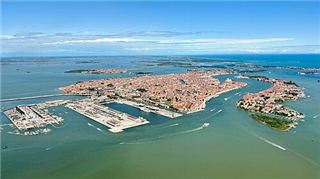
Venice lived by trade. Its merchants carried grain, salt, timber and slaves in the early Middle Ages and later became the principal intermediaries between western Europe and the eastern Mediterranean, importing spices, silk, cotton and alum from Constantinople, Alexandria, Beirut and the Black Sea, and selling them on through the Fondaco dei Tedeschi to merchants from Germany. A chrysobull of the Byzantine emperor Alexios I Komnenos in 1082 granted Venetians tax-free trade throughout the empire. From the fourteenth century the state auctioned the use of its own merchant galleys, which sailed in regulated convoys called mude to Romania, Alexandria, Flanders and elsewhere. The gold ducat, first minted in 1284, became one of the standard coins of the Mediterranean. Industry flourished: shipbuilding at the Arsenal, glass-making, concentrated on Murano from 1291, silk weaving, soap, and from 1469 printing, with Aldus Manutius making Venice the leading centre of the European book trade around 1500. The city probably held more than 100,000 people before the Black Death of 1348 and again in the sixteenth century. Society was divided into the hereditary nobility, the privileged cittadini who staffed the chancery, and the popolani, organised in guilds and confraternities called scuole.
Military
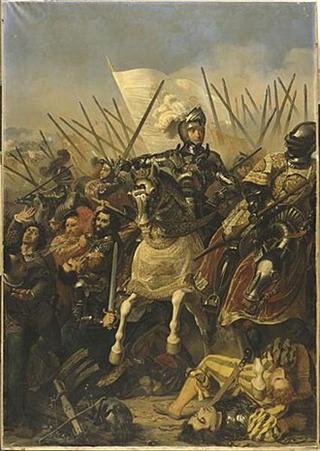
Venetian power rested on the fleet. Around 1000 Doge Pietro II Orseolo led an expedition that brought the Dalmatian coast under Venetian protection, an event commemorated in the annual ceremony of the marriage of the sea. The Arsenal, traditionally founded in 1104 and greatly enlarged in the fourteenth and fifteenth centuries, became one of the largest industrial complexes in Europe, able to build and fit out war galleys in a standardised sequence. In the Fourth Crusade the Venetians transported the crusading army, diverted it to Zara in 1202 and to Constantinople, which fell in 1204; Doge Enrico Dandolo secured Venice a claim to three-eighths of the Byzantine Empire. Long rivalry with Genoa culminated in the War of Chioggia of 1378–1381, when a Genoese fleet occupied Chioggia inside the lagoon before being blockaded and forced to surrender. On land the republic relied on hired condottieri such as Francesco Bussone, called Carmagnola, and Bartolomeo Colleoni. The League of Cambrai crushed its army at the Battle of Agnadello in 1509, though Venice recovered most of its mainland. Against the Ottoman Empire it fought a series of wars from 1463, contributed about half the galleys of the Holy League at the Battle of Lepanto in 1571, defended Candia for over twenty years until 1669, and conquered the Morea under Francesco Morosini in 1684–1687.
Governance & Law
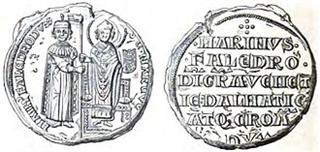
Venice was an aristocratic republic. The doge, elected for life, was surrounded from the twelfth century by councils that steadily reduced him to a dignified chief magistrate bound by an oath of office, the promissione; Doge Marino Faliero was beheaded in 1355 for plotting to seize power. Sovereignty lay with the Great Council, which the reform known as the Serrata of 1297 restricted to families already represented in it, creating a closed hereditary patriciate whose members were later registered in the Golden Book. The Senate directed foreign policy, trade and war; the Collegio prepared business; and the Council of Ten, set up after the conspiracy of Bajamonte Tiepolo in 1310, guarded state security with secret procedures. Doges were chosen by an elaborate sequence of lot and election designed to prevent faction. Offices were short and rotated among nobles, and an extensive chancery staffed by cittadini kept the records, while Venetian ambassadors’ reports, the relazioni, became famous for their detail. Overseas, the Stato da Mar was ruled by appointed governors in Crete, Corfu, Dalmatia and, from 1489, Cyprus. The mainland Terraferma, conquered between 1339 and 1428, including Treviso, Padua, Vicenza, Verona, Brescia and Bergamo, kept its own statutes and local councils under Venetian rectors. The stability of this system impressed political writers across Europe.
Global & Regional Impact

For several centuries Venice was the main commercial link between Latin Europe and the Byzantine and Islamic East, and its merchants shaped the trade of the whole Mediterranean. Venetian commercial practice, including partnership contracts, state-regulated shipping, double-entry bookkeeping and the public debt, influenced business across Europe, and the city produced travellers such as Marco Polo, whose account of Asia was widely read. The Fourth Crusade, steered in part by Venetian interests, gravely weakened the Byzantine Empire and spread Venetian colonies and Italian culture across the Greek world, where Venetian fortresses and architecture still stand from Kotor to Crete. Venice was also one of the great artistic centres of Europe: its school of painting included Giovanni Bellini, Giorgione, Titian, Tintoretto and Paolo Veronese, Andrea Palladio built churches and villas that were copied for centuries, and composers from Claudio Monteverdi to Antonio Vivaldi worked in the city, which opened the first public opera house in 1637. Venetian printers spread Greek and Latin classics in affordable editions. The republic’s mixed constitution was admired by political thinkers in Florence, England and the Netherlands as a model of stable, law-bound government, the ‘myth of Venice’. In its long decline it became a centre of tourism and pleasure, and the city remains one of the most visited places in the world.
Decline & Fall
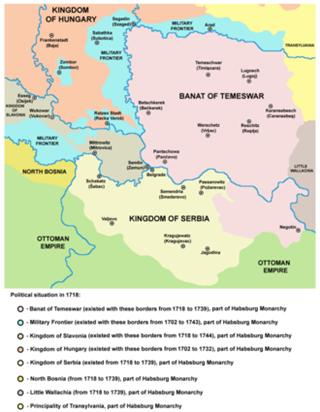
The decline of Venice was gradual. The advance of the Ottoman Empire cost it Negroponte in 1470, Modon and Coron in 1500, Cyprus in 1571 and Crete in 1669, while the opening of the Portuguese sea route to India after 1498 and the later rise of Dutch and English shipping eroded its position in the spice trade. The Peace of Passarowitz of 1718 confirmed the loss of the Morea and left the republic with only the Ionian Islands and parts of Dalmatia and Albania overseas. In the eighteenth century Venice pursued a policy of strict neutrality, maintained a reduced fleet and remained wealthy, but it no longer counted as a major power. When Napoleon Bonaparte’s army invaded northern Italy in 1796, the republic tried to stay neutral, but after anti-French risings on the mainland and the firing on a French ship at the Lido, Napoleon declared war. On 12 May 1797 the Great Council voted to dissolve the republic, and the last doge, Ludovico Manin, abdicated. A short-lived provisional municipality followed, but by the Treaty of Campo Formio in October 1797 France handed Venice, Istria and Dalmatia to the Habsburg Monarchy. After further changes of ruler under Napoleon and Austria, Venice joined the Kingdom of Italy in 1866.
The Republic of Venice built a thousand-year state on trade and sea power, linking Latin Europe with Byzantium and the Islamic East, ruling a chain of colonies from Dalmatia to Cyprus, and offering Europe both a celebrated model of stable aristocratic government and one of its richest artistic cultures.
References
- Lane, F.C. (1973) Venice: A Maritime Republic. Baltimore: Johns Hopkins University Press.
- Norwich, J.J. (1982) A History of Venice. London: Allen Lane.
- Madden, T.F. (2012) Venice: A New History. New York: Viking.
- Chambers, D.S. (1970) The Imperial Age of Venice, 1380–1580. London: Thames and Hudson.
Connections
Open the full connections map →