Europe
Habsburg Monarchy
At a glance
- A union of Austria, Bohemia and Hungary formed in 1526 and held together by the Habsburg dynasty, army and Catholic Church.
- It stopped Ottoman expansion at Vienna in 1529 and 1683 and reconquered Hungary by the Treaty of Karlowitz in 1699.
- Maria Theresa and Joseph II made it a model of enlightened absolutism before it became the Austrian Empire in 1804.
Rise & Fall
- 1526Louis II dies at Mohács; Ferdinand of Austria is elected king of Bohemia and Hungary
- 1529First Ottoman siege of Vienna is repulsed
- 1620Bohemian revolt crushed at the Battle of White Mountain
- 1683Second Ottoman siege of Vienna broken at the Battle of Kahlenberg
- 1699Treaty of Karlowitz returns almost all of Hungary to Habsburg rule
- 1713Charles VI issues the Pragmatic Sanction, making the lands indivisible
- 1781Joseph II issues the Patent of Toleration and abolishes personal serfdom
- 1804Francis II proclaims himself hereditary Emperor of Austria
Foundation

The Habsburg Monarchy was born of a dynastic accident on the battlefield. Archduke Ferdinand of Austria, younger brother of the Emperor Charles V, had received the Austrian hereditary lands in the partition agreements of Worms (1521) and Brussels (1522), and in 1521 he married Anna of Bohemia and Hungary, while his sister Mary married her brother, King Louis II. When Louis drowned in flight from the Battle of Mohács on 29 August 1526, Ferdinand claimed both his crowns. The Bohemian estates elected him king in October 1526, bringing Bohemia, Moravia, Silesia and the two Lusatias under Habsburg rule. Hungary was contested: one diet chose the magnate John Zápolya in November, and a rival diet at Pozsony elected Ferdinand in December. The Ottoman Sultan Suleiman the Magnificent backed Zápolya, besieged Vienna in 1529 and occupied Buda in 1541, leaving Hungary divided between a Habsburg ‘Royal Hungary’ in the north and west, an Ottoman province in the centre and an autonomous Principality of Transylvania in the east. The new union therefore began as a defensive alliance of very different realms, held together by one ruler and by fear of the Ottomans. On Ferdinand’s death in 1564 the lands were divided among his three sons, and they were only fully reunited under Leopold I in 1665.
Socioeconomy
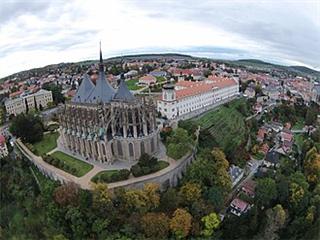
The monarchy was overwhelmingly agrarian. In Bohemia, Moravia and Hungary large noble estates relied increasingly on the forced labour of peasants, the robot, a pattern often called the second serfdom, while the Alpine lands kept a freer peasantry. Mining brought exceptional revenues: silver from Kutná Hora and from Joachimsthal (Jáchymov), whose coins gave the thaler and eventually the dollar its name, mercury from Idrija, copper and gold from the mining towns of Upper Hungary, and salt from the Salzkammergut. Vienna, Prague and later Pest grew as court, administrative and commercial centres, and Charles VI declared Trieste and Fiume free ports in 1719 to open an outlet to the Adriatic. Religion shaped society profoundly. Protestantism spread widely in the sixteenth century, but after 1620 the dynasty enforced Catholicism in Bohemia and Austria, confiscated rebel estates and drove tens of thousands of Protestants into exile, while the Jesuits took over schools and universities. Hungary and Transylvania, by contrast, retained substantial Calvinist and Lutheran communities. The Counter-Reformation produced a pervasive Baroque piety of pilgrimages, monasteries and brotherhoods. In the eighteenth century Maria Theresa’s Urbarium of 1767 regulated Hungarian peasant obligations, and Joseph II abolished personal serfdom in the Bohemian lands in 1781 and in Austria in 1782, though labour dues on the land remained.
Military
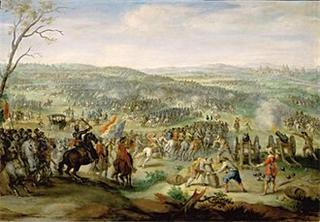
War with the Ottoman Empire dominated the monarchy’s first two centuries. After surviving the siege of Vienna in 1529, the Habsburgs built the Military Frontier, a fortified belt along the Croatian and Hungarian border settled by soldier-farmers, many of them Serb and Vlach refugees, and directed after 1556 by the Aulic War Council (Hofkriegsrat) in Vienna. The inconclusive Long Turkish War of 1593–1606 ended with the Peace of Zsitvatorok. In the Thirty Years’ War the Bohemian revolt was crushed at the Battle of White Mountain on 8 November 1620, and imperial armies raised by Albrecht von Wallenstein fought across Germany until the Peace of Westphalia in 1648. The decisive turn came in 1683, when a relief army led by John III Sobieski of Poland broke the second Ottoman siege of Vienna at the Battle of Kahlenberg. The Holy League retook Buda in 1686, and Prince Eugene of Savoy destroyed the Ottoman army at the Battle of Zenta in 1697, leading to the Treaty of Karlowitz in 1699. Eugene shared victory at Blenheim in 1704 and took Belgrade in 1717. The monarchy then lost Silesia to Frederick II of Prussia in the War of the Austrian Succession, failed to recover it in the Seven Years’ War despite victory at Kolín in 1757, and suffered repeated defeats by revolutionary France after 1792.
Governance & Law
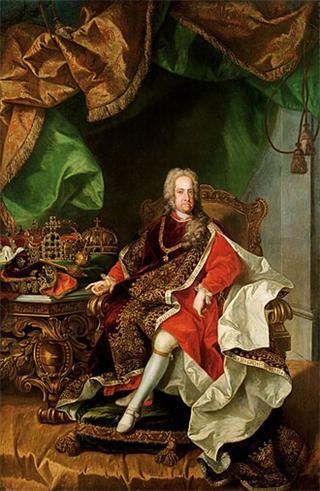
The Habsburg Monarchy was never a single state with one constitution. Each kingdom and duchy kept its own estates, diet, laws and nobility, and the ruler was separately archduke of Austria, king of Bohemia and king of Hungary; from 1558 the head of the house almost always also held the elective title of Holy Roman Emperor. Ferdinand I created central bodies in 1527, a Privy Council, a Court Chancellery and a Court Chamber for finance, but these sat on top of provincial institutions rather than replacing them. After 1620 the Renewed Land Ordinance of 1627 made the Bohemian crown hereditary and weakened its estates, while Hungary’s diet retained wide powers and in 1687 accepted hereditary Habsburg succession in the male line. To prevent partition, Charles VI issued the Pragmatic Sanction of 1713, declaring the lands indivisible and allowing a daughter to inherit; he spent years securing its acceptance at home and abroad. Maria Theresa (r. 1740–1780) and her minister Friedrich Wilhelm von Haugwitz merged the Austrian and Bohemian chancelleries, created a permanent tax-funded army and a Council of State in 1760, and introduced compulsory elementary schooling in 1774. Her son Joseph II pushed further, with the Patent of Toleration of 1781, the dissolution of contemplative monasteries and German as the language of administration, provoking revolts in Hungary and the Austrian Netherlands.
Global & Regional Impact
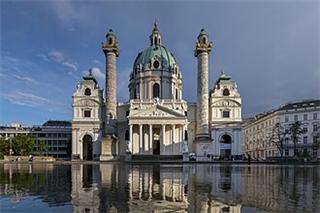
For contemporaries the monarchy was above all the bulwark of Christian Europe against the Ottomans, and its reconquest of Hungary after 1683 redrew the map of south-eastern Europe, opening the Danube basin to resettlement by German, Serb, Romanian and other colonists whose descendants shaped the region’s ethnic mosaic. Its Catholic Counter-Reformation set the religious character of Austria, Bohemia and much of Hungary for centuries. The Habsburg court made Vienna a cultural capital: the Baroque architecture of Johann Bernhard Fischer von Erlach and Johann Lukas von Hildebrandt, the Karlskirche, the Belvedere and the abbey of Melk defined a Central European style, and in the later eighteenth century Christoph Willibald Gluck, Joseph Haydn and Wolfgang Amadeus Mozart created the Viennese Classical style in music. The Theresian and Josephine reforms became a model of enlightened absolutism, and the bureaucratic tradition of Josephinism, with its educated, state-minded civil service, outlived its founder. The monarchy also took part in the First Partition of Poland in 1772, acquiring Galicia, and gained Bukovina in 1775. Its central problem, how to govern many peoples with distinct laws and languages under one dynasty, passed to the Austrian Empire and Austria-Hungary, and still informs debates about federalism and nationality in Central Europe.
Decline & Fall

The Habsburg Monarchy did not collapse in 1804; it was renamed and reorganised. The wars against revolutionary France from 1792 cost it heavily. At the Treaty of Campo Formio in 1797 Francis II gave up the Austrian Netherlands and Lombardy in return for Venice, and after defeats at Marengo and Hohenlinden in 1800 the Treaty of Lunéville of 1801 confirmed French control of the left bank of the Rhine and set in motion the secularisation of the German church states, which undermined the Holy Roman Empire on which Habsburg prestige rested. When Napoleon Bonaparte proclaimed himself Emperor of the French in May 1804, Francis feared that the elective imperial title might pass from his house and that he would rank below the Corsican and the Russian tsar. By a patent of 11 August 1804 he declared himself hereditary Emperor of Austria, as Francis I, giving all his lands a single imperial title while leaving the rights of Hungary and the other kingdoms formally intact. After the defeat at Austerlitz and the formation of the Confederation of the Rhine, he dissolved the Holy Roman Empire on 6 August 1806. The monarchy continued as the Austrian Empire, became the Dual Monarchy of Austria-Hungary in 1867 and broke apart into successor states in 1918.
The Habsburg Monarchy united Austria, Bohemia and Hungary under one dynasty for nearly three centuries, halted Ottoman expansion in Central Europe, imposed the Catholic Counter-Reformation, produced Viennese Baroque and Classical culture and pioneered enlightened absolutism, before becoming the Austrian Empire in 1804.
Test yourself
5 questions on this page, from its key events and facts.
The questions open here once the page has loaded.
References
- Evans, R.J.W. (1979) The Making of the Habsburg Monarchy 1550–1700: An Interpretation. Oxford: Clarendon Press.
- Ingrao, C.W. (2000) The Habsburg Monarchy 1618–1815. 2nd edn. Cambridge: Cambridge University Press.
- Kann, R.A. (1974) A History of the Habsburg Empire, 1526–1918. Berkeley: University of California Press.
- Judson, P.M. (2016) The Habsburg Empire: A New History. Cambridge, MA: Belknap Press of Harvard University Press.
- Dickson, P.G.M. (1987) Finance and Government under Maria Theresia, 1740–1780. Oxford: Clarendon Press.
- Wilson, P.H. (2009) Europe’s Tragedy: A History of the Thirty Years War. London: Allen Lane.
Connections
Open the full connections map →