Europe
Holy Roman Empire
At a glance
- A loose union of princes, bishops and free cities in central Europe, under an elected emperor from 962 to 1806.
- Its fragmentation let the Reformation survive and produced religious settlements that shaped the modern idea of state sovereignty.
- Napoleon's Confederation of the Rhine made the title meaningless, and Francis II quietly dissolved the empire in 1806.
Rise & Fall
- 800Pope Leo III crowns Charlemagne emperor in Rome on Christmas Day
- 962Otto I is crowned emperor by Pope John XII, the empire's functional founding
- 1176The Lombard League defeats Frederick Barbarossa at Legnano
- 1356Charles IV's Golden Bull fixes the election of the emperor by seven electors
- 1517Martin Luther launches the Reformation at Wittenberg
- 1555The Peace of Augsburg lets rulers choose Catholicism or Lutheranism for their lands
- 1648The Peace of Westphalia ends the Thirty Years' War and lets princes make foreign alliances
- 1806Francis II abdicates and declares the Holy Roman Empire dissolved
Foundation
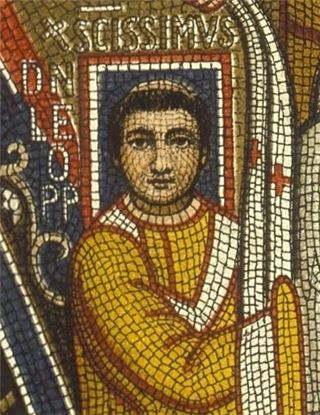
The Holy Roman Empire traced its origin to the coronation of Charlemagne by Pope Leo III in Rome on Christmas Day 800 CE, an act that deliberately invoked the legacy of the western Roman Empire to legitimise Frankish dominance over Latin Christendom. After the fragmentation of the Carolingian realm the imperial succession lapsed and was contested until Otto I of Saxony, having defeated the Magyars at the Battle of Lechfeld in 955 CE, was crowned emperor by Pope John XII in 962 CE, the date most historians treat as the functional founding. Otto's coronation established the structural tension that would govern the empire for eight centuries: the relationship between imperial and papal authority, each claiming supremacy within Christian society. Centred on German-speaking central Europe and encompassing at various times modern Germany, Austria, Switzerland, the Czech lands, northern Italy and the Low Countries, the empire was never a unitary state. From its earliest decades it functioned as a confederation of territorial princes, ecclesiastical lords and, later, free cities whose collective consent the emperor required in order to govern, distinguishing it fundamentally from every other imperial entity in this dataset.
Socioeconomy
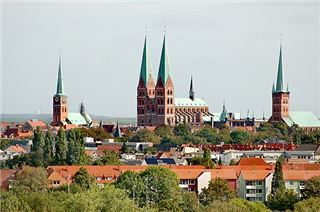
The empire's economy was as fragmented as its political structure. With no common currency, no unified commercial law and hundreds of internal toll points on rivers and roads, long-distance trade flourished despite the imperial structure rather than because of it. Northern cities of the Hanseatic League, led by Lübeck, Hamburg and Bremen, developed sophisticated commercial economies largely independent of imperial direction, linking the North Sea and Baltic to wider European markets. Serfdom and manorial obligation predominated across rural territories, with peasant burdens varying enormously by region and lord. Cities such as Frankfurt, Augsburg and Nuremberg grew wealthy as commercial entrepôts exploiting the empire's central European transit position. The Fugger banking house of Augsburg, under Jakob Fugger, became the most powerful financial enterprise in Europe in the early sixteenth century, funding the election of Charles V in 1519 and lending to the papacy. Taxation was perpetually contested, the emperor depending on grants from the Imperial Diet rather than any reliable revenue stream, which made sustained military campaigns financially precarious without princely co-operation.
Military

The empire possessed no standing army for most of its existence. Military power resided with the territorial princes, who owed the emperor contingents whose reliability depended entirely on political alignment at any given moment. The emperor's real military capacity was therefore a function of his personal dynastic resources rather than imperial institutions. Frederick Barbarossa's Italian campaigns of the twelfth century demonstrated both the potential and the limits of this arrangement: he could assemble formidable armies but could not sustain them against the organised resistance of the Lombard League, which defeated him at Legnano in 1176. The Thirty Years' War of 1618 to 1648 reduced imperial military pretensions almost to nothing, as Swedish, French and Spanish armies operated across German territory while imperial forces relied on Habsburg dynastic troops and contractors such as Albrecht von Wallenstein. The Peace of Westphalia in 1648 formally recognised the princes' right to conclude alliances with foreign powers, confirming that the empire's military coherence had been a fiction long before it was acknowledged as such.
Governance & Law
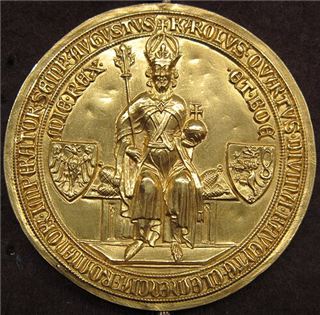
The empire's constitutional structure evolved from feudal monarchy towards an increasingly formalised oligarchy of territorial princes. The Golden Bull of 1356, issued by Emperor Charles IV, codified the election of the King of the Romans by seven designated electors: the archbishops of Mainz, Trier and Cologne, the King of Bohemia, the Count Palatine of the Rhine, the Duke of Saxony and the Margrave of Brandenburg, institutionalising the empire's elective rather than hereditary character. The Imperial Diet brought together electors, princes, ecclesiastical lords and free cities in a deliberative assembly whose consent was required for imperial taxation and legislation. The Imperial Chamber Court, established in 1495 as part of the reforms under Maximilian I, provided a common legal forum for disputes between territorial entities and remains the empire's most significant institutional contribution to European legal development. The paradox of Habsburg rule, almost unbroken from 1438, was that the dynasty's real power derived from its hereditary Austrian, Bohemian, Hungarian and, under Charles V, Spanish possessions rather than from the imperial office, so that the emperor governed through dynastic leverage rather than institutional authority.
Global & Regional Impact
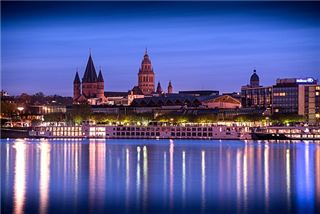
The empire's most significant contribution to world history was inadvertent: its constitutional fragmentation created the conditions for European religious and intellectual pluralism. The Peace of Augsburg in 1555 allowed territorial rulers to choose between Catholicism and Lutheranism for their domains, and the Peace of Westphalia in 1648 extended recognition to Calvinism, producing a patchwork of confessional territories that made religious uniformity across Europe permanently impossible. This fragmentation allowed the Reformation, launched by Martin Luther at Wittenberg in 1517, to survive where a centralised monarchy might have crushed it, and fostered a competitive intellectual environment across rival courts and universities. Westphalia is often credited with articulating the principle of territorial sovereignty that shaped the modern international state system. Printing, pioneered by Johannes Gutenberg at Mainz around 1450, together with German scholarship and craft traditions flourishing in the commercially vibrant free cities, disseminated innovation across Europe more effectively than any centralised cultural programme could have achieved.
Decline & Fall
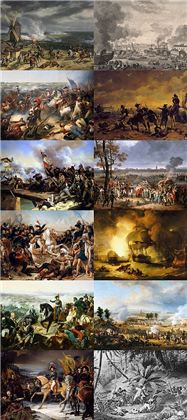
The empire's terminal decline was precipitated by the French Revolutionary Wars and Napoleon's reorganisation of European politics. French victories stripped away the empire's territories west of the Rhine, and Napoleon's creation of the Confederation of the Rhine in July 1806, drawing sixteen German princes into a French-aligned bloc, rendered the imperial title meaningless. Emperor Francis II, who had already proclaimed himself Emperor of Austria in 1804, abdicated and declared the Holy Roman Empire dissolved on 6 August 1806, ending an institution that had claimed continuity for a thousand years. The dissolution of the Holy Roman Empire was characteristically quiet: no battle, no siege, no conquest, simply an emperor acknowledging that the constitutional fiction could no longer be maintained. Most of the empire's German successor states were eventually unified under Prussian leadership in 1871, while the Austrian Habsburg monarchy continued as a separate empire until 1918.
The Holy Roman Empire's historical significance lies in its demonstration that political survival does not require institutional coherence, having persisted for roughly a millennium precisely because its structural weakness prevented any single power from finding it worth the effort of destroying.
References
- Arnold, B. (1997) Medieval Germany, 500–1300: A Political Interpretation. London: Macmillan.
- Bryce, J. (1904) The Holy Roman Empire. New edn. London: Macmillan.
- Evans, R.J.W. (1979) The Making of the Habsburg Monarchy, 1550–1700. Oxford: Clarendon Press.
- Hampe, K. (1973) Germany under the Salian and Hohenstaufen Emperors. Translated by R. Bennett. Oxford: Blackwell.
- Heer, F. (1968) The Holy Roman Empire. Translated by J. Sondheimer. London: Weidenfeld and Nicolson.
- Wilson, P.H. (2016) Heart of Europe: A History of the Holy Roman Empire. Cambridge, MA: Harvard University Press.
Connections
Open the full connections map →