Europe
Kingdom of Navarre
At a glance
- A Basque kingdom of the western Pyrenees, ruled from Pamplona, which emerged around 824 between the Franks and the Muslim Ebro valley.
- Under Sancho III the Great (1004–1035) it dominated Christian Iberia, and his sons founded the royal lines of Castile and Aragon.
- Castile conquered its southern part in 1512, but Navarre kept its own laws until 1841, while its northern kings became kings of France.
Rise & Fall
- c. 824Íñigo Arista becomes ruler of Pamplona after a Frankish defeat at Roncevaux
- 905Sancho Garcés I founds the Jimena dynasty
- 1034Sancho III the Great occupies León, the height of his power
- 1076Murder of Sancho IV at Peñalén; Pamplona passes to the king of Aragon
- 1134García Ramírez restores an independent kingdom
- 1212Sancho VII fights at Las Navas de Tolosa
- 1512Ferdinand the Catholic conquers Upper Navarre
- 1841The Ley Paccionada makes Navarre a province of Spain
Foundation
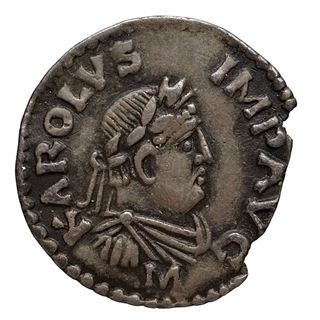
The kingdom of Pamplona, later called Navarre, arose among the Basques of the western Pyrenees, a people who had long resisted both the Visigoths and the Franks. After the Muslim conquest of Iberia, Pamplona was disputed between Córdoba and the Carolingians, and the Basques ambushed Charlemagne’s rearguard at Roncevaux in 778. Around 824 a second Frankish expedition was destroyed in the same passes, and Íñigo Arista emerged as ruler of Pamplona. His power rested on an alliance with the Banu Qasi, a Muslim family of Hispano-Gothic descent ruling Tudela and the middle Ebro, whose leader Musa ibn Musa was Íñigo’s half-brother through their mother. The early rulers sometimes paid tribute to Córdoba, and their lands were small, centred on Pamplona and the valleys around it. In 905 a rival family took power, and Sancho Garcés I, founder of the Jimena dynasty, broke with the Banu Qasi and expanded southward. With Ordoño II of León he took Nájera and La Rioja in the 920s, although Abd al-Rahman III of Córdoba defeated the Christians at Valdejunquera in 920 and sacked Pamplona in 924. Through marriage the Jimena kings also gained the neighbouring county of Aragon, laying the foundations for later expansion across the Pyrenees.
Socioeconomy
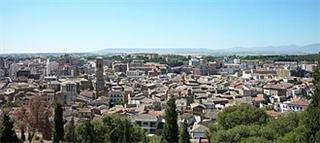
Navarre was a land of contrasts. Its northern valleys were mountain country of herders who moved flocks between Pyrenean summer pastures and the lowlands, while the southern Ribera along the Ebro, around Tudela, produced grain, wine and olive oil with irrigation systems inherited from the Muslim period. Most of the population spoke Basque, which a twelfth-century document calls the lingua navarrorum, the language of the Navarrese, while Latin and a local Romance were used in writing, and Occitan by communities of settlers from France. These francos came with the pilgrimage to Santiago de Compostela, which crossed the kingdom from Roncesvalles through Pamplona, Puente la Reina and Estella; kings granted them charters and privileges, and towns such as Estella, founded around 1090, grew on the trade of the pilgrim road. After Alfonso I the Battler took Tudela in 1119, the kingdom included substantial Muslim and Jewish communities. Tudela’s Jewish community produced the twelfth-century traveller Benjamin of Tudela, whose account describes Jewish communities from Spain to Baghdad. Monasteries such as Leire and Irache were major landholders, and royal revenue came from crown estates, tolls on the Pyrenean routes and taxes granted by the cortes. Navarre always remained a small, largely rural realm.
Military
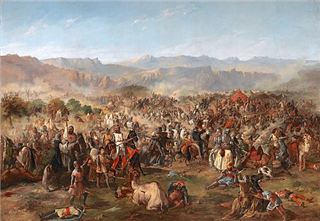
Navarre’s armies were drawn from the nobility, the free peasants of the mountain valleys and town militias, and in the early centuries they fought mostly in raids and frontier campaigns against the Muslim Ebro valley, often suffering heavy reprisals from Córdoba. The kingdom’s greatest expansion came under Sancho III the Great (1004–1035), who through war, marriage and diplomacy extended his authority over Aragon, Sobrarbe, Ribagorza and, from 1029, Castile, and in 1034 occupied León. After his death the dynasties of his sons fought each other: García Sánchez III of Pamplona was killed in 1054 at the Battle of Atapuerca by the army of his brother Ferdinand I of Castile. Partition followed the murder of Sancho IV at Peñalén in 1076, and in 1200 Navarre lost Álava and Gipuzkoa, and with them its coast, to Alfonso VIII of Castile. Sancho VII the Strong led a Navarrese contingent at the Battle of Las Navas de Tolosa in 1212, where the Christian kings broke the Almohad army; later tradition credited him with breaking through the chains around the caliph’s camp. The kingdom’s last wars were defensive. In 1512 a Castilian army under the Duke of Alba took Pamplona, and in 1521 a Franco-Navarrese army briefly retook the city, where the young Ignatius of Loyola was wounded defending the citadel, before its defeat at Noáin.
Governance & Law
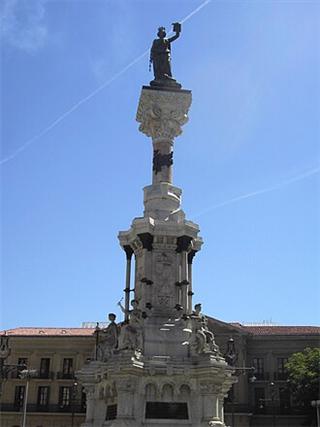
The early rulers styled themselves kings of Pamplona; Sancho VI the Wise (1150–1194) was the first to use the title king of Navarre consistently. Kings ruled with the support of the bishop of Pamplona, the great abbeys and a high nobility of ricoshombres, but the kingdom’s distinctive feature was the strength of its customary law, the fueros. Sancho VI granted fueros to towns such as Vitoria, which he founded in 1181, and in the thirteenth century the Fuero General de Navarra was compiled, defining the mutual obligations of king and subjects; it required each new king to swear to uphold the kingdom’s laws before receiving his subjects’ oath of loyalty. The cortes, bringing together clergy, nobility and towns, emerged as a regular assembly in the thirteenth and fourteenth centuries and voted taxation. After 1234 the crown passed to the counts of Champagne, then in 1274 to Joan I, whose marriage to Philip IV joined Navarre to France until 1328, and later to the houses of Évreux, Foix and Albret. Absent kings governed through governors, a royal council and a high court. Charles III the Noble (1387–1425) built the palace of Olite and in 1423 united the three rival boroughs of Pamplona by the Privilege of the Union.
Global & Regional Impact
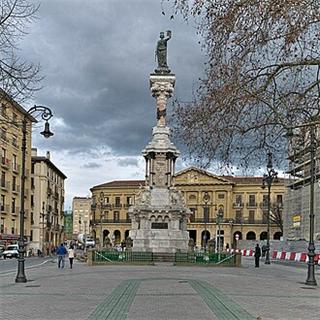
For a small kingdom Navarre had a large influence on the shape of Christian Iberia. Sancho III the Great’s division of his realms among his sons created separate kingdoms of Castile and Aragon under his descendants, so that the ruling houses of medieval Castile, León and Aragon all traced their royal line to the Jimena kings of Pamplona. By favouring the pilgrimage route to Santiago and its Frankish settlers, Navarre helped tie northern Spain to the Romanesque culture and church reform of France; the route, the Camino Francés, remains one of the most travelled pilgrim roads in Europe. Its rulers were closely linked to French courts: Theobald I of Champagne was among the best known trouvères of his day, and through Jeanne d’Albret and her son Henry III of Navarre, who became Henry IV of France in 1589, Navarre gave France its Bourbon dynasty. French kings styled themselves kings of France and Navarre for most of the period until 1830. The kingdom’s most durable legacy, however, is constitutional. Its fueros and institutions survived the conquest of 1512 and the end of the kingdom in 1841, and the modern Foral Community of Navarre, with its own fiscal regime agreed with the Spanish state, descends directly from them.
Decline & Fall

The kingdom was weakened in the fifteenth century by a long civil war. When Queen Blanche I died in 1441, her husband John, later John II of Aragon, kept the crown instead of yielding it to their son Charles, Prince of Viana, and the nobility split into the Agramontese faction supporting John and the Beaumontese supporting Charles. The conflict outlived Charles’s death in 1461 and left Navarre dependent on its powerful neighbours. In 1512, during the Italian Wars, Ferdinand the Catholic accused the Albret monarchs, John III and Catherine of Foix, of siding with France and sent the Duke of Alba to seize Pamplona. Upper Navarre, south of the Pyrenees, was incorporated into the Crown of Castile by the cortes of Burgos in 1515, keeping its own laws, cortes and coinage under a viceroy. Lower Navarre, north of the mountains, remained with the Albrets, whose heir Henry III became King Henry IV of France; Louis XIII formally united it to the French crown in 1620. Spanish Navarre kept its separate status for more than three centuries, but after the First Carlist War, in which many Navarrese fought for the Carlist cause, the law of 16 August 1841, known as the Ley Paccionada, turned the kingdom into a province with a special fiscal regime.
Navarre, the Basque kingdom of Pamplona, gave the royal houses of Castile and Aragon their line through Sancho III the Great, carried the pilgrim road to Santiago and gave France its Bourbon king Henry IV, while its fueros survived conquest to shape the self-government of modern Navarre.
References
- Collins, R. (1986) The Basques. Oxford: Basil Blackwell.
- Kennedy, H. (1996) Muslim Spain and Portugal: A Political History of al-Andalus. London: Longman.
- O’Callaghan, J.F. (1975) A History of Medieval Spain. Ithaca: Cornell University Press.
- Reilly, B.F. (1992) The Contest of Christian and Muslim Spain, 1031–1157. Oxford: Blackwell.
- Woodacre, E. (2013) The Queens Regnant of Navarre: Succession, Politics, and Partnership, 1274–1512. New York: Palgrave Macmillan.
Connections
Open the full connections map →