Institution
Prince-elector
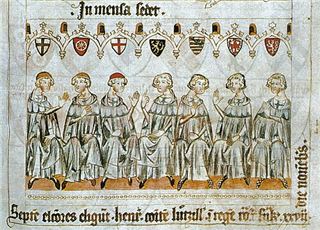
A prince-elector was one of the princes entitled to elect the King of the Romans, the future Holy Roman Emperor. The Golden Bull of 1356 fixed their number at seven: the archbishops of Mainz, Trier and Cologne, the King of Bohemia, the Count Palatine, the Duke of Saxony and the Margrave of Brandenburg. The electoral system institutionalised the elective character of the Holy Roman Empire.
Mentioned in 8 profiles
Holy Roman EmpireGovernanceElectoral PalatinateSocioeconomy, Military, Governance, Decline, SummaryMargraviate of BrandenburgMilitary, Governance, Impact, Decline, SummaryKingdom of BohemiaGovernance, SummaryState of the Teutonic OrderImpactElectorate of SaxonyFoundationKingdom of PrussiaFoundationGrand Duchy of HesseFoundation
Mentioned in 16 state histories
See also







Cite this entry
- APA
- The Epoch Institute. (2026). Prince-elector. In The Epoch Institute Encyclopedia. https://the-epoch-institute.org/encyclopedia/prince-elector
- MLA
- “Prince-elector.” The Epoch Institute Encyclopedia, The Epoch Institute, 2026, https://the-epoch-institute.org/encyclopedia/prince-elector. Accessed .
- Chicago
- The Epoch Institute. “Prince-elector.” The Epoch Institute Encyclopedia. 2026. https://the-epoch-institute.org/encyclopedia/prince-elector.
- Harvard
- The Epoch Institute (2026) ‘Prince-elector’, The Epoch Institute Encyclopedia. Available at: https://the-epoch-institute.org/encyclopedia/prince-elector (Accessed: ).
Last reviewed October 2026Random entry ↻