Europe
Electoral Palatinate
At a glance
- The counts palatine of the Rhine ruled scattered Rhineland lands from Heidelberg and were imperial electors from 1356.
- It was the leading Reformed Protestant state of the Empire and the home of the Heidelberg Catechism of 1563.
- Frederick V's acceptance of the Bohemian crown in 1619 began its ruin; in 1803 its last lands were divided among Baden and others.
Rise & Fall
- 1214Emperor Frederick II grants the Palatinate to the Wittelsbach Louis I of Bavaria
- 1356The Golden Bull confirms the count palatine as an imperial elector
- 1386Rupert I founds the University of Heidelberg
- 1400Elector Rupert III is elected King of the Romans
- 1563Frederick III issues the Heidelberg Catechism
- 1619Frederick V accepts the crown of Bohemia
- 1689French troops burn Heidelberg and Mannheim in the Nine Years' War
- 1803The Imperial Recess divides the remaining lands among Baden and others
Foundation
The office of count palatine began as that of the king's deputy in a region, presiding over justice in his name. In Lotharingia it was held in the eleventh century by the Ezzonid family, with lands around Aachen and Cologne, but pressure from the archbishops of Cologne pushed the counts palatine southwards to the middle Rhine. Around 1085–1087 Henry of Laach is first called count palatine of the Rhine, the title the office kept thereafter. In 1156 Emperor Frederick Barbarossa gave the palatinate to his half-brother Conrad of Hohenstaufen, who built a territorial base on the Rhine and the lower Neckar around Heidelberg and Alzey, together with advocacies over church lands. Through Conrad's daughter Agnes it passed to the Welf Henry of Brunswick, and in 1214 Emperor Frederick II granted it to Louis I of Bavaria of the house of Wittelsbach, whose son Otto II married the Welf heiress. The Wittelsbachs held it until 1803. By the Treaty of Pavia of 1329 Emperor Louis IV the Bavarian divided the family lands, giving the Rhenish Palatinate and the Upper Palatinate north of Regensburg to his brother's sons Rudolf II and Rupert I, while Bavaria stayed with his own line. Heidelberg, first mentioned in 1196, became the residence of the counts palatine.
Socioeconomy

The Electoral Palatinate was a fragmented territory of scattered districts on both banks of the Rhine, from the Hunsrück to the Odenwald, interspersed with bishoprics, imperial cities and lesser counties. Its wealth came from fertile farmland, the vineyards of the Haardt and the Rhine valley, and especially from the Rhine tolls collected at places such as Bacharach and Kaub, where the island toll castle of Pfalzgrafenstein still stands, which made the electors among the richest princes of the Empire in the later Middle Ages. Heidelberg was the cultural centre: Rupert I founded its university in 1386, the third in the Empire after Prague and Vienna, and the electors' library, the Bibliotheca Palatina, became one of the finest collections in Europe in the sixteenth century. Religion shaped society deeply. Otto Henry introduced Lutheranism in 1556, and Frederick III turned to Reformed Protestantism, ordering images removed from churches and imposing strict church discipline. The Palatinate welcomed Calvinist refugees from France and the Netherlands, who founded settlements such as Frankenthal, and Frederick IV founded Mannheim as a fortified town in 1606. Repeated wars in the seventeenth century devastated the land, and in the eighteenth century poverty and religious pressure drove thousands of Palatines to emigrate, many to Pennsylvania and New York, where they formed a large part of the Pennsylvania Dutch.
Military

The Palatinate was never a major military power, but its electors played a large part in the Empire's wars. Frederick I the Victorious (r. 1449–1476), who took power as guardian of his nephew Philip, defeated a coalition led by the margrave of Baden, the count of Württemberg and the bishop of Metz at the Battle of Seckenheim in 1462, capturing all three. The Landshut War of Succession (1503–1505), fought over the claims of Elector Philip's son Rupert to the Bavarian inheritance, ended in defeat, the loss of lands to Bavaria and Württemberg and the creation of the smaller Palatinate-Neuburg for Rupert's sons. In the Reformation era the Calvinist electors became leaders of militant Protestantism: John Casimir led armies to aid the Huguenots in France, and Frederick IV headed the Protestant Union founded in 1608. Frederick V's acceptance of the Bohemian crown in 1619 brought catastrophe. His army was destroyed at the Battle of White Mountain on 8 November 1620, Spanish troops under Spinola occupied the left bank, and in 1622 the Catholic League's army under Tilly took Heidelberg. The Palatinate suffered again in the Nine Years' War, when Louis XIV's troops, pressing the inheritance claims of Elizabeth Charlotte, duchess of Orléans, systematically burned Heidelberg, Mannheim, Speyer and Worms in 1689, and Heidelberg Castle was blown up in 1689 and 1693.
Governance & Law
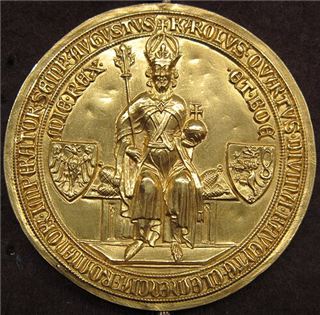
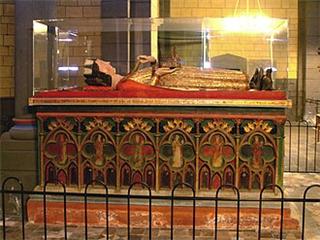
The Golden Bull of 1356 confirmed the count palatine of the Rhine as one of the seven electors who chose the King of the Romans, with the office of arch-steward of the Empire and the right to act as imperial vicar in the Rhineland, Swabia and the lands of Franconian law when the throne was vacant. Elector Rupert III was himself elected King of the Romans in 1400, after the deposition of Wenceslaus, and reigned until 1410. On his death the lands were divided among his four sons, creating the electoral line and the branches of Neumarkt, Simmern-Zweibrücken and Mosbach; later extinctions repeatedly brought the electorate to collateral lines, the Simmern in 1559, the Catholic Neuburg in 1685 and the Sulzbach in 1742. The electors governed through a council in Heidelberg and district officials in the Oberämter, and unlike many German princes they faced no powerful territorial estates. Frederick III created a church council to run the Reformed church and sponsored the Heidelberg Catechism of 1563, chiefly the work of Zacharias Ursinus, and in 1582 the territory received a common law code, the Landrecht. After the Thirty Years' War Charles I Louis rebuilt the administration, and in 1720 Charles III Philip moved the residence to Mannheim, laid out on a grid around a vast new palace.
Global & Regional Impact

The Palatinate's main legacy lay in religion, learning and the politics of the Empire. The Heidelberg Catechism became one of the most widely used confessions of the Reformed churches, approved by the Synod of Dort in 1618–1619 and carried to North America, South Africa and elsewhere, and it remains in use today. The University of Heidelberg is the oldest university in present-day Germany. The marriage of Frederick V to Elizabeth Stuart, daughter of James VI and I, in 1613 tied German Protestantism to Britain and the Dutch Republic, and through their daughter Sophia, electress of Hanover, the British throne passed to the house of Hanover in 1714. Frederick V's Bohemian venture turned the revolt of the Bohemian estates into a wider German war, the Thirty Years' War, and the transfer of his electoral title to Bavaria in 1623 and the creation of an eighth electorate for his son in 1648 reshaped the Empire's constitution. After the plunder of Heidelberg much of the Bibliotheca Palatina was given to the pope in 1623, and it remains in the Vatican Library. In the eighteenth century Charles Theodore's court at Mannheim, with its celebrated orchestra and its Academy of Sciences founded in 1763, was a leading centre of music, where the young Mozart sought employment in 1777–1778.
Decline & Fall
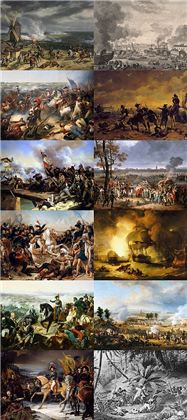
The Palatinate never fully recovered from the seventeenth century. Charles I Louis regained the Lower Palatinate in 1648, but the Upper Palatinate stayed with Bavaria and the restored electorate ranked last among the electors. The extinction of the Simmern line in 1685 brought the Catholic Neuburg branch to power, provoking French claims, the destruction of 1689 and decades of religious conflict with the Protestant majority. In 1777, when the Bavarian Wittelsbachs died out, Elector Charles Theodore inherited Bavaria, moved his court to Munich and merged the two electorates; Austria's attempt to take part of Bavaria led to the brief War of the Bavarian Succession (1778–1779). Mannheim and Heidelberg became provincial towns. The French Revolutionary Wars ended the Palatinate as a state. French armies occupied the left bank of the Rhine from 1794, and its annexation by France was recognised in the Treaty of Campo Formio in 1797 and the Peace of Lunéville in 1801. By the Imperial Recess (Reichsdeputationshauptschluss) of 1803 the right-bank lands, including Heidelberg and Mannheim, went mainly to Baden, with smaller parts to Hesse-Darmstadt, the princes of Leiningen and others, while Elector Maximilian IV Joseph was compensated in Franconia and Swabia. From 1816 the left-bank lands belonged to Bavaria again as the Rhenish Palatinate, the origin of the modern name Pfalz.
The Electoral Palatinate, the Rhineland electorate of the Wittelsbach counts palatine, founded the oldest university in present-day Germany, gave Reformed Protestantism its most widely used catechism and, through Frederick V's Bohemian venture, helped set off the Thirty Years' War, before French conquest and the Imperial Recess of 1803 divided it.
Test yourself
5 questions on this page, from its key events and facts.
The questions open here once the page has loaded.
References
- Press, V. (1970) Calvinismus und Territorialstaat: Regierung und Zentralbehörden der Kurpfalz 1559–1619. Stuttgart: Klett.
- Pursell, B.C. (2003) The Winter King: Frederick V of the Palatinate and the Coming of the Thirty Years' War. Aldershot: Ashgate.
- Schaab, M. (1988) Geschichte der Kurpfalz, vol. 1: Mittelalter. Stuttgart: Kohlhammer.
- Whaley, J. (2012) Germany and the Holy Roman Empire, 2 vols. Oxford: Oxford University Press.
- Wilson, P.H. (2009) Europe's Tragedy: A History of the Thirty Years War. London: Allen Lane.
Connections
Open the full connections map →