Encyclopedia: P
1,704 entries under P · page 15 of 18: Preslav – Promotion of Bantu Self-Government Act, 1959
 PreslavPlacePreslav was the capital of the First Bulgarian Empire from 893 to 972, near modern Veliki Preslav in north-eastern Bulgaria.
 PrešovPlacePrešov is the third-largest city of Slovakia, in the north-east of the country on the Torysa river.
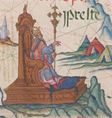 Prester JohnReligion / ideaPrester John was a legendary Christian priest-king believed in medieval Europe to rule a powerful realm in the East.
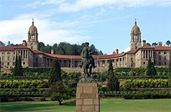 PretoriaPlacePretoria is the administrative capital of South Africa, in Gauteng province.
 Pretoria ConventionTreaty · Peace · 1881The Pretoria Convention was the peace settlement signed on 3 August 1881 that ended the First Boer War.
- PriariusPersonPriarius was king of the Alemannic Lentienses.
- PribinaPersonPribina was a Slavic prince who ruled Nitra in the early 9th century until Mojmír I of Moravia expelled him around 833.
- Pribislav of MecklenburgPersonPribislav was the last prince of the Obotrites and the first Lord of Mecklenburg.
 Pribislav-HenryPersonPribislav-Henry was the last prince of the Slavic Hevelli, ruling from Brandenburg.
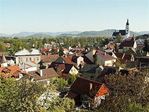 PříborPlacePříbor is a small town in north-eastern Moravia, in the Moravian-Silesian Region of the Czech Republic.
- Price RevolutionEventThe Price Revolution was a period of sustained inflation in Europe during the sixteenth and early seventeenth centuries.
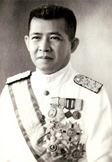 Pridi BanomyongPersonPridi Banomyong was a Thai lawyer and statesman, a leader of the civilian wing of the People's Party that ended absolute monarchy in 1932.
 PrilepPlacePrilep is a city in the Pelagonia plain of central North Macedonia.
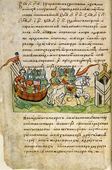 Primary ChronicleWork / monumentThe Primary Chronicle, or Tale of Bygone Years, is a history of Kievan Rus from the earliest times to the early 12th century, compiled in Kiev around 1113 and…
 Primera JuntaInstitutionThe Primera Junta was the first autonomous government of the Río de la Plata, formed in Buenos Aires on 25 May 1810 after the May Revolution deposed the Spanish viceroy…
- Primo PopoloInstitutionThe Primo Popolo was the first popular regime of Florence, established in 1250 when the guilds and the armed neighbourhood companies of the popolo took power under a…
- PrimogenitureTermPrimogeniture is the rule of inheritance by which the eldest son succeeds to the whole of a title or estate.
- Primorsk, Kaliningrad OblastPlacePrimorsk, in German Fischhausen, is a small town on the Vistula Lagoon in the Kaliningrad Oblast of Russia.
 Primož TrubarPersonPrimož Trubar was a Slovene Protestant reformer and the founder of the Slovene literary language.
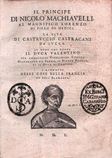 The PrinceWork / monumentThe Prince is a political treatise by the Florentine Niccolò Machiavelli, written in 1513 after the return of the Medici had cost him his office, and published in 1532.
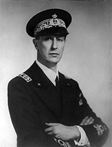 Prince Aimone, Duke of AostaPersonPrince Aimone, Duke of Aosta, was a member of the Italian royal house of Savoy and an admiral.
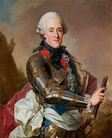 Prince Albert, Duke of TeschenPersonPrince Albert, Duke of Teschen, was a son of Augustus III of Poland who married Archduchess Maria Christina, daughter of Maria Theresa, and received the Duchy of…
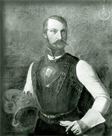 Prince Carl of Solms-BraunfelsPersonPrince Carl of Solms-Braunfels was a German nobleman and officer who served as the first commissioner-general of the Adelsverein, a society that organised German…
 Prince Edward IslandPlacePrince Edward Island is the smallest province of Canada, an island in the Gulf of St.
 Prince Eugene of SavoyPersonPrince Eugene of Savoy was a Paris-born general in Habsburg service and one of the greatest commanders of his age.
- Prince Ferdinando, Duke of GenoaPersonFerdinando, Duke of Genoa, was a prince of the House of Savoy, the second son of King Charles Albert of Sardinia, who commanded troops in the First Italian War of…
 Prince Frederick Charles of HessePersonPrince Frederick Charles of Hesse was a German prince, brother-in-law of Kaiser Wilhelm II, who was elected King of Finland by the Finnish parliament on 9 October 1918…
- Prince Frederick of NoerPersonPrince Frederick of Noer, of the Augustenburg branch of the Danish royal house, was a leader of the German movement in Schleswig-Holstein.
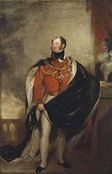 Prince Frederick, Duke of York and AlbanyPersonPrince Frederick, Duke of York and Albany, was the second son of George III of Great Britain.
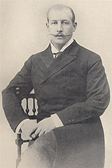 Prince George of Greece and DenmarkPersonPrince George of Greece and Denmark was the second son of King George I of Greece.
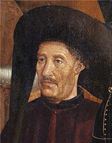 Prince Henry the NavigatorPersonPrince Henry the Navigator was a fifteenth-century Portuguese prince, a son of King João I, who took part in the capture of Ceuta in 1415.
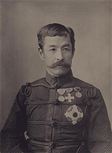 Prince Kitashirakawa YoshihisaPersonPrince Kitashirakawa Yoshihisa was a member of the Japanese imperial family who, as abbot of the Rinnōji temple at Ueno, fled Edo in 1868 and became nominal head of the…
 Prince Louis of BattenbergPersonPrince Louis of Battenberg was a German-born British admiral of the Hessian Battenberg family.
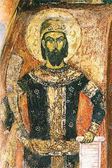 Prince MarkoPersonPrince Marko, Marko Mrnjavčević, was the son of King Vukašin and ruled a realm around Prilep in Macedonia after his father's death at the Battle of the Maritsa in 1371.
 Prince Maximilian of BadenPersonPrince Maximilian of Baden was a German liberal aristocrat who served as the last chancellor of the German Empire in October and November 1918.
 Prince Maximilian of Wied-NeuwiedPersonPrince Maximilian of Wied-Neuwied was a German naturalist and explorer.
- The Prince of HomburgWork / monumentThe Prince of Homburg is a play by Heinrich von Kleist, completed around 1810 and first performed in 1821.
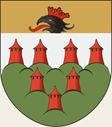 Prince of TransylvaniaTermPrince of Transylvania was the title of the rulers of the Principality of Transylvania, first taken by John Sigismund Zápolya when he gave up the Hungarian royal title…
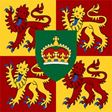 Prince of WalesTermPrince of Wales was the title claimed by native Welsh rulers of Gwynedd as overlords of Wales.
 Prince Rupert of the RhinePersonPrince Rupert of the Rhine was a nephew of Charles I of England, a Royalist cavalry commander in the English Civil War and later an admiral.
 Prince ShōtokuPersonPrince Shōtoku (574–622) was a regent and statesman of the Yamato court in Japan under Empress Suiko.
 Prince VijayaPersonPrince Vijaya is the legendary first king of Sri Lanka, said in the Pali chronicles to have been exiled from northern India and to have landed on the island with 700…
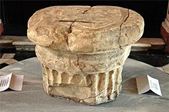 Prince's StoneWork / monumentThe Prince's Stone is the base of an ancient Roman column that stood at Karnburg in Carinthia, where the princes of Carantania and later the dukes of Carinthia were…
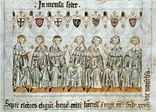 Prince-electorInstitutionA prince-elector was one of the princes entitled to elect the King of the Romans, the future Holy Roman Emperor.
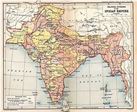 Princely stateInstitutionA princely state was a nominally sovereign state in British India ruled by an Indian prince under British paramountcy.
- PrincepsInstitutionPrinceps, meaning first citizen, was the title adopted by Augustus to describe his position after the end of the Roman Republic.
 Princes Town (Ghana)PlacePrinces Town, known locally as Pokesu, is a coastal village near Cape Three Points in western Ghana.
 Princess Alice of the United KingdomPersonPrincess Alice was the third child of Queen Victoria and Prince Albert.
- Princess BetyPersonBety was a princess of the Betsimisaraka of eastern Madagascar, the daughter of Ratsimilaho, founder of the Betsimisaraka confederation.
- Princess Charlotte of WalesPersonPrincess Charlotte of Wales was the only child of the future George IV of the United Kingdom and second in line to the British throne.
- Princess JinchengPersonPrincess Jincheng was a Tang princess, an adopted daughter of the emperor Zhongzong, who was sent to Tibet in 710 to marry the young emperor Me Agtsom as part of a…
- Princess Juliana International AirportWork / monumentPrincess Juliana International Airport is the main airport of the Caribbean island of Saint Martin, on the Dutch side, Sint Maarten.
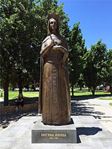 Princess Milica of SerbiaPersonMilica was the wife of Prince Lazar of Serbia and, after his death at the Battle of Kosovo in 1389, regent for their son Stefan Lazarević.
 Princess WenchengPersonPrincess Wencheng was a member of the Tang imperial clan who was sent to Tibet in 641 as a bride for the royal house of Songtsen Gampo, sealing peace with the emperor…
 Princeton UniversityInstitutionPrinceton University is a private university in Princeton, New Jersey, chartered in 1746 as the College of New Jersey, the fourth college founded in British North…
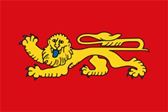 Principality of AquitaineStateThe Principality of Aquitaine was the territory in south-western France that Edward III of England granted to his son Edward the Black Prince in 1362, after the Treaty…
 Principality of Lucca and PiombinoStateThe Principality of Lucca and Piombino was a Napoleonic state in Tuscany created in 1805 for Napoleon's sister Elisa Bonaparte and her husband Felice Baciocchi.
 Principality of RegensburgStateThe Principality of Regensburg was a short-lived state created in 1803 for Karl Theodor von Dalberg, the last Archchancellor of the Holy Roman Empire.
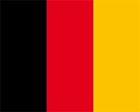 Principality of Reuss Younger LineStateThe Principality of Reuss Younger Line was a small Thuringian state ruled from Gera.
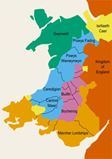 Principality of WalesStateThe Principality of Wales was the realm of the native princes of Gwynedd, who from the early 13th century claimed overlordship over the other Welsh rulers.
- PrincipateReligion / ideaThe Principate is the term for the first period of the Roman Empire, from Augustus in 27 BCE until the late third century CE.
- Printing pressTermPrinting is the mechanical reproduction of text and images.
 Pripet MarshesPlaceThe Pripet Marshes are a vast area of forests, wetlands and rivers along the Pripyat River in southern Belarus and northern Ukraine, among the largest wetlands in Europe.
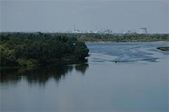 Pripyat RiverPlaceThe Pripyat is a river of Eastern Europe, about 760 kilometres long, flowing east from north-western Ukraine through southern Belarus to join the Dnieper north of Kyiv.
- PriscillianPersonPriscillian was a Christian ascetic teacher in Hispania and bishop of Ávila in the late 4th century.
- PriscillianismReligion / ideaPriscillianism was an ascetic Christian movement founded in Hispania in the later 4th century by Priscillian, a layman who became bishop of Ávila.
 PriscusPersonPriscus of Panium was an Eastern Roman diplomat and historian of the 5th century.
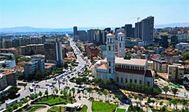 PristinaPlacePristina is the capital and largest city of Kosovo.
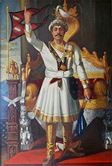 Prithvi Narayan ShahPersonPrithvi Narayan Shah was king of Gorkha from 1743 and the founder of modern Nepal.
- Prithvideva IIPersonPrithvideva II was a king of the Kalachuri dynasty of Ratanpur in Chhattisgarh in the 12th century.
- Prithvipal SenPersonPrithvipal Sen was the last king of Palpa, a hill kingdom in western Nepal ruled by the Sen dynasty.
- Prithvipati IPersonPrithvipati I was a prince of the Western Ganga dynasty of southern Karnataka and an ally of the Pallavas in their wars with the Pandyas.
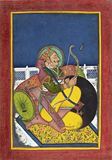 Prithviraj ChauhanPersonPrithviraja III, known as Prithviraj Chauhan, was a king of the Chahamana dynasty of Shakambhari, ruling from Ajmer.
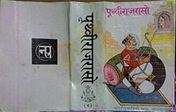 Prithviraj RasoWork / monumentThe Prithviraj Raso is an epic poem in Brajbhasha attributed to Chand Bardai, said to have been the court poet of Prithviraj Chauhan.
 PrivernumPlacePrivernum was a Volscian town in southern Lazio, near modern Priverno, in the hills above the Pontine plain.
 Privilege of the UnionWork / monumentThe Privilege of the Union was a charter issued by Charles III the Noble of Navarre on 8 September 1423 that united the three rival boroughs of Pamplona, the…
 Privilegium MaiusWork / monumentThe Privilegium Maius was a forged charter produced at the court of Duke Rudolf IV of Austria around 1358-1359.
- Privilegium MinusWork / monumentThe Privilegium Minus was a charter issued by Emperor Frederick Barbarossa in 1156 that raised the Margraviate of Austria to a duchy.
- Privy Council of IrelandInstitutionThe Privy Council of Ireland was the body of senior officials and nobles that advised the lord deputy or lord lieutenant in governing Ireland.
 PrizrenPlacePrizren is a city in southern Kosovo, at the foot of the Šar Mountains.
 Probus (emperor)PersonMarcus Aurelius Probus was Roman emperor from 276 to 282, a soldier from Sirmium in Pannonia.
- Processional WayWork / monumentThe Processional Way was a monumental street in Babylon leading through the Ishtar Gate, decorated with glazed brick reliefs of lions.
 Proclamation of the German EmpireEventThe proclamation of the German Empire took place on 18 January 1871 in the Hall of Mirrors at Versailles, during the Franco-Prussian War.
- Proclamation of the Republic (Brazil)Revolution · 1889The Proclamation of the Republic was the military coup of 15 November 1889 that overthrew the Brazilian monarchy.
- Proclamation of the Russian EmpireEventThe proclamation of the Russian Empire took place in 1721, when the Senate conferred on Peter I the titles of Emperor of All Russia, Peter the Great and Father of the…
- Proclamation of the Yuan dynastyEventThe proclamation of the Yuan dynasty was Kublai Khan's adoption in 1271 of the Chinese dynastic name Yuan for his realm.
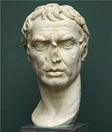 ProconsulInstitutionA proconsul was a Roman official who exercised the authority of a consul outside Rome, usually as governor of a province.
- ProcopiusPersonProcopius of Caesarea was a Byzantine historian of the 6th century and secretary to the general Belisarius.
- Progressive Liberal PartyPeople / groupThe Progressive Liberal Party is a political party of the Bahamas, founded in 1953 to challenge the white merchant elite known as the Bay Street Boys.
- Progressive Reform Party (Suriname)People / groupThe Progressive Reform Party (VHP) is a Surinamese political party founded in 1949 as the United Hindustani Party under Jagernath Lachmon, and renamed in 1973.
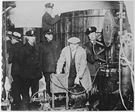 Prohibition in the United StatesEventProhibition in the United States was the nationwide ban on the production, import and sale of alcoholic drinks from 1920 to 1933, under the Eighteenth Amendment to the…
 Prokhorovka cultureReligion / ideaThe Prokhorovka culture is the early Sarmatian archaeological culture of the steppes of the southern Urals and lower Volga, dated to about the fourth to second…
 Prokop of MoraviaPersonProkop of Moravia was a margrave of Moravia of the Luxembourg dynasty, the younger son of John Henry and brother of Jobst.
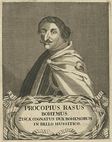 Prokop the GreatPersonProkop the Great was a Hussite priest and military leader, the chief commander of the Taborites after Jan Žižka's death.
- Prola IIPersonProla II was a chief of the Kakatiya dynasty in the Telangana region in the first half of the 12th century, ruling as a feudatory of the Western Chalukya Empire.
- Prolaya NayakaPersonProlaya Nayaka was a Telugu chief of the Musunuri family who led the resistance to the Delhi Sultanate after the fall of the Kakatiya dynasty in 1323.
 Prolaya Vema ReddiPersonProlaya Vema Reddi was the founder of the Reddi kingdom in coastal Andhra.
- ProletariatPeople / groupThe proletariat is the class of wage workers who own no means of production and live by selling their labour, a central concept in Marxist theory.
- PromonaPlacePromona was a hill fortress near modern Drniš in Dalmatia, Croatia, held by the Delmatae in the 1st century BCE.
- Promotion of Bantu Self-Government Act, 1959Work / monumentThe Promotion of Bantu Self-Government Act of 1959 was a South African law of Hendrik Verwoerd's government that divided the African population into ethnic 'national…