Encyclopedia: P
1,704 entries under P · page 16 of 18: Prophet Muhammad – Pueblo peoples
 Prophet MuhammadPersonThe Prophet Muhammad was the founder of Islam, who lived in Mecca and Medina in the late sixth and early seventh centuries and died in 632 CE.
- ProphetstownPlaceProphetstown was a Native American town founded in 1808 by Tenskwatawa and Tecumseh near the junction of the Tippecanoe and Wabash rivers, in present-day Indiana.
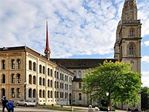 ProphezeiInstitutionThe Prophezei was a school of biblical study founded in Zürich in 1525 by Huldrych Zwingli in place of the old chapter school of the Grossmünster.
 PropylaeaWork / monumentThe Propylaea is the monumental gateway to the Acropolis of Athens, built between 437 and 432 BCE to designs by the architect Mnesicles as part of the building…
 Proserpina DamWork / monumentThe Proserpina Dam is a Roman gravity dam near Mérida in Spain, built probably in the 1st or 2nd century CE to supply Emerita Augusta, capital of Lusitania.
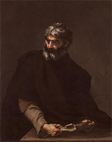 ProtagorasPersonProtagoras was a Greek philosopher from Abdera and the most famous of the sophists, the paid teachers of rhetoric and argument in 5th-century BCE Greece.
- Protective Division of QuitoPeople / groupThe Protective Division of Quito was the army raised by the Free Province of Guayaquil after its declaration of independence in October 1820 to free the Ecuadorian…
- Protective tariffTermA protective tariff is a tax on imported goods designed to shield domestic producers from foreign competition.
- ProtectorateInstitutionA protectorate is a territory that retains its own ruler and some internal autonomy but is placed under the control and protection of a stronger state, usually in…
 Protectorate General to Pacify the EastInstitutionThe Protectorate General to Pacify the East was set up by Tang China at Pyongyang in 668, after the fall of Goguryeo, to rule the conquered lands of Goguryeo and Baekje.
 Protestant ReformationEventThe Protestant Reformation was the religious movement of the sixteenth century, begun by Martin Luther in 1517, that broke with the Roman Catholic Church and created…
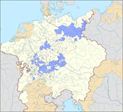 Protestant UnionPeople / groupThe Protestant Union was a defensive alliance of Protestant German princes and cities formed at Auhausen in 1608 under the Calvinist Elector Palatine Frederick IV.
 ProtestantismReligion / ideaProtestantism is the branch of Christianity that arose from the Reformation of the sixteenth century, when Martin Luther, Huldrych Zwingli, John Calvin and others broke…
- ProtisPersonProtis was the leader of the Greek settlers from Phocaea who, according to tradition, founded Massalia (Marseille) around 600 BCE.
- Protocol of KorçëEventThe Protocol of Korçë was an agreement signed on 10 December 1916 between the French military commander in the area and Albanian notables during the First World War.
 Protogeometric styleTermThe Protogeometric style is the style of Greek pottery of about 1050–900 BCE, after the collapse of Mycenaean civilisation, decorated with concentric circles and…
 ProtonInstitutionProton is Malaysia's national car company, founded in 1983 on the initiative of Mahathir Mohamad in partnership with Mitsubishi.
- Protopalatial periodTermThe Protopalatial or Old Palace period is the phase of Minoan Crete, roughly 1900 to 1700 BCE, in which the first palaces were built at Knossos, Phaistos and Malia.
- Provenzan SalvaniPersonProvenzan Salvani was the leader of the Ghibelline government of Siena in the mid-13th century.
- Providence Island CompanyInstitutionThe Providence Island Company was an English joint-stock company chartered in 1630 by Puritan nobles and gentry, including the Earl of Warwick, Lord Saye and Sele and…
 Providence, Rhode IslandPlaceProvidence is the capital and largest city of Rhode Island, at the head of Narragansett Bay.
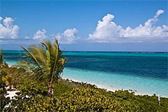 ProvidencialesPlaceProvidenciales is an island in the Caicos group of the Turks and Caicos Islands, a British overseas territory.
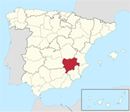 Province of AlbacetePlaceThe Province of Albacete is a province of Castilla–La Mancha in south-eastern Spain, with its capital at the city of Albacete.
 Province of BrandenburgStateThe Province of Brandenburg was a province of Prussia from 1815 to 1947, formed from the old Margraviate of Brandenburg with some additions.
 Province of CastellónPlaceThe Province of Castellón is the northernmost province of the Valencian Community in eastern Spain, with its capital at Castellón de la Plana.
 Province of HanoverPlaceThe Province of Hanover was a province of Prussia created after Prussia annexed the Kingdom of Hanover in 1866, with its capital at Hanover.
 Province of Hesse-NassauStateThe Province of Hesse-Nassau was a province of Prussia formed in 1868 from lands annexed after the Austro-Prussian War of 1866: the Electorate of Hesse, the Duchy of…
 Province of HohenzollernStateThe Province of Hohenzollern, officially the Hohenzollern Lands, was a Prussian territory in southern Germany formed in 1850 from the principalities of…
 Province of LuxembourgPlaceThe Province of Luxembourg is the largest and least populous province of Belgium, in the south-east of the country, with Arlon as its capital.
 Province of PosenPlaceThe Province of Posen was a province of the Kingdom of Prussia from 1848 to 1920, formed when the Grand Duchy of Posen lost its special status after the Polish rising…
- Province of Quebec (1763–1791)StateThe Province of Quebec was the British colony created by the Royal Proclamation of 1763 from the conquered French colony of Canada.
 Province of SaxonyStateThe Province of Saxony was a province of the Kingdom of Prussia formed after the Congress of Vienna from lands taken from the Kingdom of Saxony and older Prussian…
 Province of WestphaliaStateThe Province of Westphalia was a province of the Kingdom of Prussia created in 1815 from former prince-bishoprics, counties and principalities of the Westphalian…
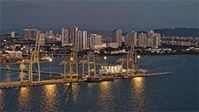 Province WellesleyPlaceProvince Wellesley, now Seberang Perai, is the mainland part of the Malaysian state of Penang, a strip of coast facing Penang island.
- Provincial reform of Catherine IIEventThe provincial reform of Catherine II, set out in the Statute for the Administration of the Provinces of 1775, reorganised local government in the Russian Empire after…
 ProvinsPlaceProvins is a medieval town south-east of Paris, in the Seine-et-Marne department of France, once one of the main towns of the counts of Champagne.
 PRRI rebellionRevolt · 1958–1961The PRRI rebellion was a regional revolt against the central government of Indonesia, launched when dissident army officers and politicians proclaimed the Revolutionary…
 PrudentiusPersonPrudentius (Aurelius Prudentius Clemens) was a Latin Christian poet from Hispania, probably born at Calagurris (Calahorra).
- Prüm UrbarWork / monumentThe Prüm Urbar is a register of the estates, tenants and dues of Prüm Abbey in the Eifel, drawn up in 893.
 Prusias I of BithyniaPersonPrusias I was king of Bithynia from about 228 to 182 BCE.
 Prussian Academy of SciencesInstitutionThe Prussian Academy of Sciences was founded in Berlin in 1700 by Elector Frederick III of Brandenburg on the advice of Gottfried Wilhelm Leibniz, its first president.
- Prussian coup of 1932EventThe Prussian coup of 20 July 1932, the Preußenschlag, was the removal of the Social Democratic-led government of the Free State of Prussia by Chancellor Franz von…
- Prussian CrusadeWar · 1217–1274The Prussian Crusade was the series of thirteenth-century campaigns by Polish dukes and above all the Teutonic Order to conquer and Christianise the pagan Old Prussians…
 Prussian War AcademyInstitutionThe Prussian War Academy (Kriegsakademie) in Berlin was founded in 1810 by Gerhard von Scharnhorst to train officers for the general staff.
 PrutPlaceThe Prut is a river of Eastern Europe, about 950 kilometres long, rising in the Ukrainian Carpathians and flowing south-east to join the Danube near Reni.
 Przemko of ŚcinawaPersonPrzemko of Ścinawa was a Silesian Piast duke, a son of Henry III of Głogów, who received Ścinawa on the Oder as his share of his father's lands.
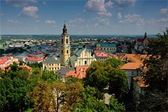 PrzemyślPlacePrzemyśl is a city on the San river in south-eastern Poland, near the Ukrainian border.
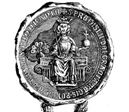 Przemysł IIPersonPrzemysł II was duke of Greater Poland who gained Pomerelia in 1294 and was crowned King of Poland at Gniezno in 1295, the first royal coronation in Poland for over two…
 Przemysław of RacibórzPersonPrzemysław (c. 1258–1306) was a Piast duke of Racibórz in Upper Silesia, the first ruler of the separate duchy created when the sons of Władysław of Opole divided their…
- PsammuthesPersonPsammuthes was a king of the Twenty-ninth Dynasty of Egypt who ruled for about a year in the 390s BCE, after the death of Nepherites I.
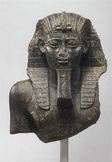 Psamtik IPersonPsamtik I was the founder of Egypt's Twenty-sixth, or Saite, Dynasty, reigning from 664 to 610 BCE.
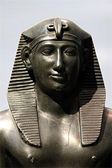 Psamtik IIPersonPsamtik II was a pharaoh of the 26th Dynasty of Egypt, ruling from Sais.
 Psamtik IIIPersonPsamtik III was the last pharaoh of Egypt's Twenty-sixth Dynasty, reigning briefly in the sixth century BCE.
- Psaumis of CamarinaPersonPsaumis was a citizen of Camarina, a Greek city on the south coast of Sicily, who won an Olympic victory with a chariot, probably in 452 BCE.
- PsekupsPlaceThe Psekups is a river of the North-West Caucasus in Russia, a left tributary of the Kuban, flowing north from the Caucasus foothills through Krasnodar Krai and Adygea.
 PshaviPlacePshavi is a historic mountain region of north-eastern Georgia, in the valley of the Pshavi Aragvi river.
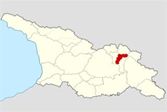 PshavsPeople / groupThe Pshavs are a Georgian highland people of Pshavi, in the upper valleys of the Aragvi and Iori rivers in north-eastern Georgia.
 Pshemakho KotsevPersonPshemakho Kotsev was a Kabardian politician who led the government of the Mountainous Republic of the Northern Caucasus in 1918–1919.
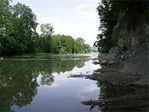 PshishPlaceThe Pshish is a river of the North-West Caucasus in Russia, a left tributary of the Kuban.
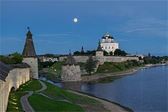 PskovPlacePskov is one of Russia's oldest cities, on the Velikaya river near the Estonian border, first recorded in the chronicles under 903.
- Pskov KromPlaceThe Pskov Krom is the medieval citadel of Pskov in north-western Russia, standing on a rocky promontory where the Pskova River flows into the Velikaya.
 Psusennes IPersonPsusennes I was a king of the Twenty-first Dynasty of Egypt who ruled from Tanis in the late 11th century BCE for about 46 years.
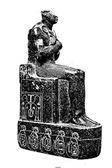 Psusennes IIPersonPsusennes II was the last king of the Twenty-first Dynasty of Egypt, reigning in the mid-10th century BCE.
- PsychoanalysisReligion / ideaPsychoanalysis is a theory and method of treating mental disorders through the investigation of unconscious processes, developed by Sigmund Freud.
- Psychological warfareTermPsychological warfare is the use of fear, deception and propaganda to weaken an enemy's will to resist.
- PsylliPeople / groupThe Psylli were an ancient Libyan people living on the shores of the Gulf of Sirte in present-day Libya.
 PtoionPlaceThe Ptoion was a sanctuary of Apollo Ptoios on Mount Ptoon in Boeotia, near the city of Acraephia.
- Ptolemaeus of CommagenePersonPtolemaeus was the founder of the kingdom of Commagene in south-eastern Anatolia.
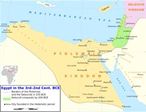 Ptolemaic KingdomStateThe Ptolemaic Kingdom was a Hellenistic state in Egypt founded in 305 BCE by Ptolemy I Soter, one of Alexander the Great's generals, after the break-up of the…
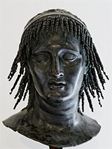 Ptolemy ApionPersonPtolemy Apion was a son of Ptolemy VIII who became king of Cyrene when Cyrenaica was separated from Egypt around 116 BCE.
 Ptolemy I SoterPersonPtolemy I Soter was a Macedonian general of Alexander the Great who became ruler of Egypt after Alexander's death.
 Ptolemy II PhiladelphusPersonPtolemy II Philadelphus was king of Egypt from 283 to 246 BCE, born on Kos.
 Ptolemy III EuergetesPersonPtolemy III Euergetes was king of Ptolemaic Egypt from 246 to 222 BCE.
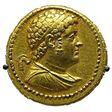 Ptolemy IV PhilopatorPersonPtolemy IV Philopator was king of Ptolemaic Egypt from 221 to 204 BCE.
 Ptolemy KeraunosPersonPtolemy Keraunos was a son of Ptolemy I Soter who was passed over for the Egyptian succession.
 Ptolemy of MauretaniaPersonPtolemy of Mauretania was the last king of Mauretania, son of Juba II and Cleopatra Selene and a grandson of Mark Antony and Cleopatra.
- Ptolemy son of MennaeusPersonPtolemy son of Mennaeus was the ruler of the Ituraeans in the 1st century BCE, with his capital at Chalcis in the Beqaa valley.
 Ptolemy VI PhilometorPersonPtolemy VI Philometor was king of Ptolemaic Egypt from 180 to 145 BCE, at times jointly with his brother Ptolemy VIII and his sister-wife Cleopatra II.
 Ptolemy VIII PhysconPersonPtolemy VIII, nicknamed Physcon, was a Ptolemaic king who quarrelled for decades with his brother Ptolemy VI.
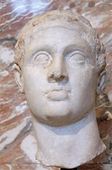 Ptolemy XII AuletesPersonPtolemy XII Auletes was king of Ptolemaic Egypt from 80 to 58 BCE and again from 55 to 51 BCE, and father of Cleopatra VII.
 Pua districtPlacePua is a district in the upper Nan valley of Nan Province in northern Thailand.
 PuabiPersonPuabi was a queen or noblewoman of Ur around 2600 BCE, known from her richly furnished tomb in the Royal Cemetery, excavated by Leonard Woolley in 1927–1928.
 Publius Canidius CrassusPersonPublius Canidius Crassus was a Roman general and partisan of Mark Antony, suffect consul in 40 BCE.
 Publius CarisiusPersonPublius Carisius was a Roman general under Augustus, legate in Hispania Ulterior during the Cantabrian Wars.
- Publius Cornelius Scipio (consul 218 BCE)PersonPublius Cornelius Scipio was a Roman consul of 218 BCE and the father of Scipio Africanus.
 Publius Cornelius Scipio Nasica (consul 191 BC)PersonPublius Cornelius Scipio Nasica was a Roman politician, the son of Gnaeus Scipio Calvus.
 Publius Cornelius Scipio Nasica CorculumPersonPublius Cornelius Scipio Nasica Corculum was a Roman statesman and general, consul in 162 and 155 BCE.
- Publius Licinius CrassusPersonPublius Licinius Crassus was a son of the triumvir Marcus Crassus and a legate of Julius Caesar in the Gallic Wars.
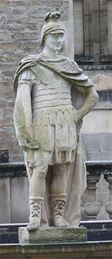 Publius Ostorius ScapulaPersonPublius Ostorius Scapula was Roman governor of Britain from 47 to 52.
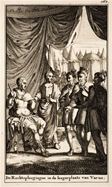 Publius Quinctilius VarusPersonPublius Quinctilius Varus was a Roman general and governor.
- Publius Servilius Vatia IsauricusPersonPublius Servilius Vatia Isauricus was a Roman general and statesman, consul in 79 BCE.
 Publius SittiusPersonPublius Sittius was a Roman adventurer from Nuceria who led a mercenary army in North Africa.
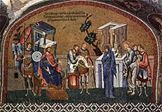 Publius Sulpicius QuiriniusPersonPublius Sulpicius Quirinius was a Roman senator, consul in 12 BCE, who as governor of Syria carried out a census of Judaea in 6 CE, when it became a Roman province…
- Publius Valerius LaevinusPersonPublius Valerius Laevinus was a Roman consul in 280 BCE who commanded the first Roman army to face Pyrrhus of Epirus in Italy.
- Pucangan inscriptionWork / monumentThe Pucangan inscription is a stone inscription of 1041 issued by Airlangga, king of Kahuripan in East Java, in Sanskrit and Old Javanese.
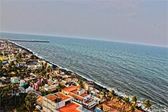 Puducherry (union territory)PlacePuducherry is a union territory of India formed from the four former French settlements of Pondicherry, Karaikal, Mahé and Yanam, which lie hundreds of kilometres apart.
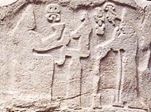 PuduhepaPersonPuduhepa was a Hittite queen of the 13th century BCE, wife of Hattusili III and the daughter of a priest of Lawazantiya in Kizzuwatna.
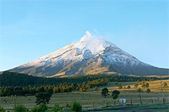 Puebla (state)PlacePuebla is a state of central Mexico, east of Mexico City, with its capital at the city of Puebla.
- Puebla-Tlaxcala ValleyPlaceThe Puebla-Tlaxcala Valley is a highland basin of central Mexico, east of the volcanoes Popocatépetl and Iztaccíhuatl, shared by the modern states of Puebla and Tlaxcala.
 Pueblo peoplesPeople / groupThe Pueblo peoples are Native American communities of the south-western United States, chiefly in New Mexico and Arizona, who live in compact villages of stone and…