Europe
Margraviate of Brandenburg
At a glance
- A frontier march east of the Elbe founded by Albert the Bear in 1157, whose ruler became one of the seven electors of the Empire.
- From 1415 the Hohenzollerns ruled it, gaining Prussia in 1618 and building a standing army under the Great Elector.
- In 1701 its elector became King in Prussia, and Brandenburg remained the Prussian heartland until the Empire ended in 1806.
Rise & Fall
- 1157Albert the Bear recaptures Brandenburg an der Havel and styles himself margrave
- 1356The Golden Bull confirms the margrave as an elector of the Empire
- 1415Frederick of Hohenzollern is granted the Mark and the electoral title
- 1539Joachim II introduces the Lutheran Reformation
- 1618The electors inherit the Duchy of Prussia
- 1675The Great Elector defeats the Swedes at the Battle of Fehrbellin
- 1685The Edict of Potsdam invites Huguenot refugees
- 1701Elector Frederick III crowns himself King in Prussia
Foundation
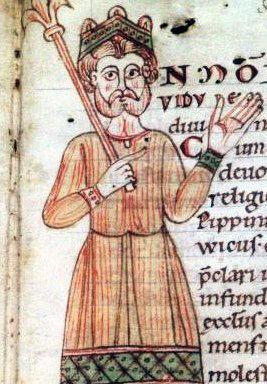
Brandenburg began as a frontier march on the eastern edge of the Holy Roman Empire, in lands settled by Slavic peoples such as the Hevelli on the Havel. Otto I had founded a bishopric at Brandenburg in 948, but the Great Slav Rising of 983 drove the Germans back beyond the Elbe, and for a century and a half the Northern March existed mostly as a title. In 1134 Emperor Lothair III gave the Northern March to Albert the Bear of the House of Ascania. Albert had an understanding with Pribislav-Henry, the Christian prince of the Hevelli, who made him his heir, and on Pribislav’s death in 1150 he took over the fortress of Brandenburg an der Havel. A Slav prince, Jaxa of Köpenick, then seized it, but Albert recaptured it on 11 June 1157, the date traditionally taken as the founding of the margraviate, and thereafter styled himself Margrave of Brandenburg. His Ascanian successors pushed east through the Havelland, Teltow and Barnim and beyond the Oder into the Neumark, bringing in German and Flemish settlers, founding Cistercian monasteries such as Lehnin in 1180, and chartering towns. Among them were the twin settlements of Cölln and Berlin on the Spree, first recorded in 1237 and 1244, which were united in administration in 1307.
Socioeconomy
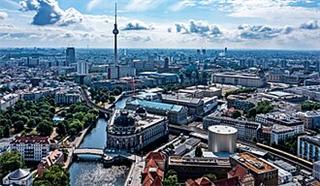
The Mark was poor land by German standards: sandy soils, pine forest, heath, lakes and marshes, nicknamed the Holy Roman Empire’s sandbox. Its economy rested on rye, barley, cattle, fish and timber, and its towns, including Brandenburg, Berlin-Cölln, Frankfurt an der Oder and Stendal in the Altmark, traded grain and cloth along the Elbe and the Oder, several joining the Hanseatic League. From the fifteenth century the nobility, the Junkers, turned their estates into large grain-producing manors worked by peasants bound by heavy labour services, a system of manorial lordship, Gutsherrschaft, that shaped east-Elbian society until the nineteenth century. Joachim II introduced the Lutheran Reformation in 1539, taking communion in both kinds at Spandau, and the elector John Sigismund became a Calvinist in 1613, leaving a Reformed dynasty ruling a Lutheran people. The Thirty Years’ War was catastrophic: armies of both sides crossed the Mark, and parts of it may have lost half their population. The Great Elector rebuilt by encouraging immigration, above all through the Edict of Potsdam of 1685, which invited some 20,000 Huguenot refugees from France who brought new crafts and industries. Canals, such as the Friedrich-Wilhelm Canal linking the Oder and the Spree, built in the 1660s, connected the river systems and helped Berlin grow into a commercial centre.
Military

In its first centuries Brandenburg was a conquering frontier power, extending its rule over the Slavs east of the Elbe and contending with Pomerania, Poland, the Archbishopric of Magdeburg and Denmark. The first Hohenzollern, Frederick I, made his authority real by breaking the castles of robber barons such as the Quitzow family in 1414 with heavy artillery. Yet for much of the sixteenth and early seventeenth centuries the electorate had little military weight, and in the Thirty Years’ War the elector George William could not keep either the Swedish or the imperial armies out of his lands. The turning point was the reign of Frederick William, the Great Elector, from 1640 to 1688. He built a permanent standing army that grew to some 30,000 men, fought on both sides in the Second Northern War to win sovereignty over the Duchy of Prussia, and on 28 June 1675 defeated an invading Swedish army at the Battle of Fehrbellin, the first major victory of Brandenburg’s own forces. He also created a small navy and founded the fort of Gross Friedrichsburg on the Gold Coast in 1683. After 1701 the army that the electors had built became the army of the Kingdom of Prussia, with which Frederick the Great conquered Silesia from 1740 and survived the Seven Years’ War of 1756–1763.
Governance & Law
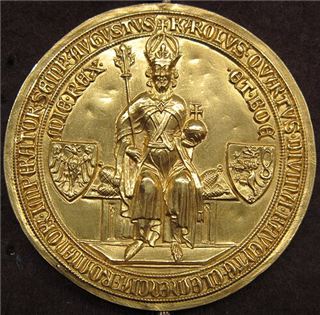
The margrave held his land as an imperial fief, and the Golden Bull of 1356 confirmed him as one of the seven electors who chose the king of the Romans, with the office of arch-chamberlain of the Empire. After the Ascanian line died out in 1320 the Mark passed to the Wittelsbachs in 1323 and to the Luxembourgs in 1373, and suffered from weak, absent rulers. In 1415 Emperor Sigismund granted it to his supporter Frederick VI, Burgrave of Nuremberg, of the House of Hohenzollern, who became Elector Frederick I. His successors subdued the towns, with Frederick II Irontooth breaking Berlin’s independence in 1448, and Albert Achilles laid down in the Dispositio Achillea of 1473 that the Mark itself should pass undivided to the eldest son. The estates of nobles and towns controlled taxation, but in the Recess of 1653 the Great Elector confirmed the Junkers’ power over their peasants in return for taxes to support his army. He then built a central administration under the General War Commissariat that collected taxes across his scattered lands, from Cleves and Mark in the west to the Duchy of Prussia in the east. This combination of a bureaucracy funding an army, a noble officer class and a Reformed dynasty ruling a largely Lutheran people became the foundation of the Prussian state.
Global & Regional Impact

Brandenburg was the nucleus of the Prussian monarchy and therefore of the German Empire founded in 1871. The inheritances of Hohenzollern electors brought Cleves, Mark and Ravensberg in 1614 and the Duchy of Prussia in 1618, and the Peace of Westphalia in 1648 added Farther Pomerania, Halberstadt, Minden and the expectancy of Magdeburg, so that a minor electorate became the core of a composite state stretching across northern Europe. In 1701 Elector Frederick III took the title King Frederick I in Prussia, and Berlin, the electors’ residence since the late fifteenth century, became a royal capital and later the capital of Germany. Brandenburg’s welcome to religious refugees, from Huguenots to Bohemian Protestants and Salzburg Lutherans, became a lasting element of Prussian state policy and enriched Berlin’s economy and culture. The University of Frankfurt an der Oder, the Viadrina, founded in 1506, was the Mark’s first university. The German colonisation of the lands east of the Elbe, in which the Ascanian margraves took a leading part, reshaped the ethnic and linguistic map of central Europe, though the Slavic Sorbs of Lusatia survive as a minority. The Junker estate economy and the close bond between monarchy, nobility and army that grew up in Brandenburg shaped Prussian and German politics into the twentieth century.
Decline & Fall

Brandenburg did not decline so much as dissolve into the larger state it had created. After the coronation of Frederick I at Königsberg on 18 January 1701 the electorate remained a distinct territory of the Holy Roman Empire, and the kings of Prussia continued to sit in the imperial college of electors as electors of Brandenburg, but government was increasingly organised for the Prussian monarchy as a whole. Under Frederick William I and Frederick the Great the Mark was the heartland of the kingdom, with Berlin and Potsdam as its seats of government and garrisons. Its separate existence ended with the Empire itself. In 1806 Napoleon’s victories at Jena and Auerstedt broke the Prussian army, French troops entered Berlin, and the Holy Roman Empire had already been dissolved on 6 August 1806 when Francis II laid down the imperial crown, so that the electoral title lost its meaning. After the Napoleonic Wars the Prussian reforms and the Congress of Vienna reorganised the monarchy, and in 1815 the Mark became the Province of Brandenburg, from which Berlin was separated in 1881. After the Second World War the Neumark east of the Oder passed to Poland, Prussia was abolished in 1947, and the territory west of the Oder is today the German federal state of Brandenburg, surrounding Berlin.
The Margraviate of Brandenburg turned a sandy frontier march east of the Elbe into the electoral seat of the Hohenzollerns, whose standing army, bureaucracy and inheritances created the Prussian state and made Berlin the future capital of Germany.
Test yourself
5 questions on this page, from its key events and facts.
The questions open here once the page has loaded.
References
- Carsten, F.L. (1954) The Origins of Prussia. Oxford: Clarendon Press.
- Clark, C. (2006) Iron Kingdom: The Rise and Downfall of Prussia, 1600–1947. London: Allen Lane.
- Materna, I. and Ribbe, W. (eds) (1995) Brandenburgische Geschichte. Berlin: Akademie Verlag.
- McKay, D. (2001) The Great Elector. Harlow: Longman.
- Partenheimer, L. (2001) Albrecht der Bär: Gründer der Mark Brandenburg und des Fürstentums Anhalt. Cologne: Böhlau.
Connections
Open the full connections map →