Europe
Vladimir-Suzdal
At a glance
- The leading principality of north-eastern Rus’, ruled from Vladimir on the Klyazma after Andrei Bogolyubsky made it his capital in 1157.
- Its white-stone churches and the icon of Our Lady of Vladimir became lasting symbols of Russian culture.
- After the Mongol conquest of 1238 its grand-princely title was granted by the khans and finally passed to Moscow.
Rise & Fall
- 1157Andrei Bogolyubsky becomes prince and makes Vladimir his capital
- 1169Andrei’s army sacks Kiev
- 1174Andrei Bogolyubsky is murdered at Bogolyubovo
- 1176–1212Vsevolod the Big Nest rules as grand prince
- 1216Battle of Lipitsa between Vsevolod’s sons
- 1238The Mongols sack Vladimir and kill Yuri II on the Sit River
- 1252Alexander Nevsky becomes grand prince
- 1331Ivan I Kalita of Moscow becomes sole grand prince
Foundation
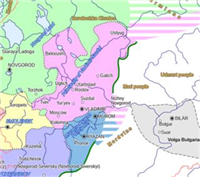
Vladimir-Suzdal grew out of the Principality of Rostov-Suzdal, the forested north-eastern land of Kievan Rus’ that Slavic settlers had colonised among Finnic peoples such as the Merya. The old centres were Rostov and Suzdal, and the town of Vladimir on the Klyazma was traditionally founded by Vladimir Monomakh around 1108. Monomakh’s son Yuri Dolgoruky ruled Rostov-Suzdal for decades while fighting to win the throne of Kiev, which he finally held from 1155 until his death in 1157. His son Andrei Bogolyubsky took a different course. In 1155 he left the south for the north-east, carrying with him the Byzantine icon later known as Our Lady of Vladimir, and after his father’s death the townsmen of Rostov, Suzdal and Vladimir accepted him as their prince. Andrei made Vladimir, a town of craftsmen with fewer entrenched boyar families than Rostov, his capital, and built a residence nearby at Bogolyubovo. He enlarged and fortified the city, raising the Dormition Cathedral in 1158–1160 and the Golden Gate around 1164, and set out to make Vladimir rival Kiev as the leading seat of Rus’. In 1169 his army sacked Kiev, yet he did not move there, and the political centre of gravity of the Rus’ lands began to shift north-east.
Socioeconomy
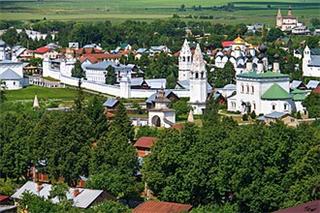
The heart of the principality was the opolye, open patches of fertile soil around Vladimir, Suzdal, Rostov and Yuryev-Polsky set within the great forests the chroniclers called Zalesye, the land beyond the woods. Rye, oats and barley grown there gave the north-east a grain surplus, and Novgorod, which could not feed itself, depended on supplies passing through Suzdalian territory, a dependence the grand princes used as political leverage. Furs, honey and wax came from the forests, and the Volga linked the principality with Volga Bulgaria and, through it, with the trade of the Caspian and the Islamic world. Towns such as Vladimir, Suzdal, Pereslavl-Zalessky, Tver, Kostroma and Moscow, first mentioned in 1147, grew as fortified centres of princely power and craft. Society was overwhelmingly rural, with peasants owing dues to princes, boyars and the church. Orthodox Christianity spread outwards from the towns, and Andrei Bogolyubsky promoted the cult of the Virgin, introducing the feast of the Intercession. The Mongol invasion of 1237–1238 destroyed many towns and killed or enslaved much of their population. Recovery afterwards was slow, and from the 1250s the people paid a regular tribute to the Golden Horde, assessed by Mongol census-takers from 1257 and collected first by Horde officials and later by the Rus’ princes themselves.
Military

Princely power rested on the druzhina, the prince’s armoured mounted retinue, supported by town militias and contingents brought by allied and junior princes. Andrei Bogolyubsky campaigned against Volga Bulgaria in 1164 and sent the coalition army that stormed and plundered Kiev in March 1169, but his attempt to subdue Novgorod failed before its walls in 1170. Vsevolod the Big Nest defeated Gleb of Ryazan on the Koloksha in 1177, led a large expedition against the Bulgars in 1183, and in 1207–1208 crushed the princes of Ryazan and burned their capital. Internal wars proved as costly as foreign ones: at the Battle of Lipitsa in 1216 Mstislav the Bold of Novgorod and Konstantin of Rostov routed the brothers Yuri and Yaroslav, with heavy losses on the Suzdalian side. The decisive test came with the Mongol invasion. Batu’s army took Ryazan in December 1237, stormed Vladimir in February 1238, killing the grand prince’s family in the burning Dormition Cathedral, and destroyed Grand Prince Yuri II’s army at the Battle of the Sit River on 4 March 1238. After that the grand princes fought chiefly as agents or rivals under Mongol overlordship, while Alexander Nevsky, before his accession, had defeated the Swedes on the Neva in 1240 and the Teutonic Knights on Lake Peipus in 1242.
Governance & Law
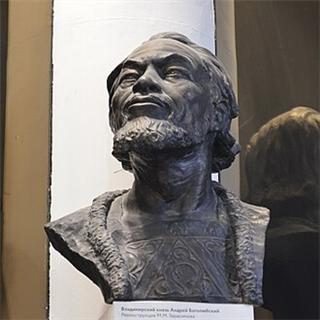
Andrei Bogolyubsky tried to rule as an autocrat, relying on his own servitors rather than the old boyars of Rostov and Suzdal and claiming seniority over all the Rus’ princes from Vladimir. His murder by members of his household at Bogolyubovo in 1174 was followed by a two-year war in which the townsmen of Vladimir backed his half-brothers against candidates supported by the Rostov boyars. Vsevolod the Big Nest, who won in 1176 and ruled until 1212, was the first to be styled grand prince regularly in the chronicles, placed his sons in Novgorod, Pereslavl and other towns, and was courted by the princes of the south. His many descendants received appanages, hereditary shares such as Rostov, Pereslavl and Starodub, which slowly divided the land. After 1243 the Mongols decided who held the grand-princely title, by issuing a patent, the yarlyk, to the prince they favoured, and claimants travelled to the Horde at Sarai, and sometimes to Karakorum, to receive it. The title, with its capital at Vladimir, passed among the princes of Pereslavl, Tver, Kostroma, Gorodets and Moscow, who usually stayed in their own appanages. The church gave Vladimir its remaining prestige: in 1299 Metropolitan Maximus moved the seat of the metropolitan of Kiev and all Rus’ to Vladimir.
Global & Regional Impact
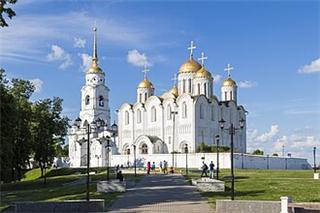
Vladimir-Suzdal moved the centre of East Slavic politics from the Dnieper to the upper Volga, and its grand-princely title became the core of later Muscovite claims to rule all Rus’. The Grand Duchy of Moscow, Tver, Nizhny Novgorod and other principalities of north-eastern Russia were all formed from its appanages, and the Moscow princes counted their descent from Vsevolod the Big Nest through Alexander Nevsky. Its rulers set patterns that lasted: Andrei’s ambition to rule from a new capital above the claims of rival princes, Vsevolod’s system of dynastic appanages, and, after 1238, the practice of seeking authority from the khans of the Golden Horde. Its white-stone churches, including the Dormition Cathedral, the Cathedral of St Demetrius of 1194–1197 with its carved façades, and the Church of the Intercession on the Nerl of 1165, formed a distinctive school of architecture later echoed by the Italian architect Aristotele Fioravanti in the Moscow Kremlin’s Dormition Cathedral. They are now inscribed by UNESCO as the White Monuments of Vladimir and Suzdal. The Vladimir chronicle tradition survives in the Laurentian Codex, copied in 1377, which also preserves the oldest copy of the Primary Chronicle. The icon of Our Lady of Vladimir became one of Russia’s most venerated images.
Decline & Fall
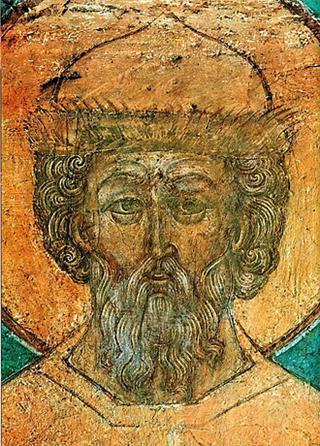
The principality’s unity was already wearing away before the Mongols arrived. The division of Vsevolod’s lands among his sons after 1212, and the civil war that ended at Lipitsa, created a ring of appanages whose princes put their own lines first. The invasion of 1237–1238 then wrecked its towns and armies and ended its independence: from 1243, when Yaroslav II accepted the patent of Khan Batu, the grand prince of Vladimir was a vassal of the Golden Horde. Alexander Nevsky, grand prince from 1252, cooperated with the khans, accepting the census and suppressing urban revolts against tribute collectors. After his death in 1263 the title rotated among his brothers and sons, and the feud between Dmitry of Pereslavl and Andrei of Gorodets brought Mongol armies into the land, most destructively in Dudenev’s raid of 1293. In the fourteenth century the contest narrowed to Tver and Moscow. Mikhail of Tver held the patent from 1305 but was executed at the Horde in 1318; after the Tver uprising of 1327 Ivan I Kalita of Moscow joined the khan’s punitive expedition and received the title in 1328, at first jointly with Alexander of Suzdal. When Alexander died in 1331 Ivan held it alone, and the Grand Principality of Vladimir became, in practice, a possession of Moscow.
Vladimir-Suzdal moved the centre of Rus’ politics from Kiev to the north-east, created the grand-princely title and the white-stone architecture that Muscovy inherited, and after the Mongol conquest of 1238 became the prize for which Tver and Moscow competed under the Golden Horde.
References
- Fennell, J. (1983) The Crisis of Medieval Russia, 1200–1304. London: Longman.
- Franklin, S. and Shepard, J. (1996) The Emergence of Rus, 750–1200. London: Longman.
- Halperin, C.J. (1985) Russia and the Golden Horde: The Mongol Impact on Medieval Russian History. Bloomington: Indiana University Press.
- Martin, J. (1995) Medieval Russia, 980–1584. Cambridge: Cambridge University Press.
- Ostrowski, D. (1998) Muscovy and the Mongols: Cross-Cultural Influences on the Steppe Frontier, 1304–1589. Cambridge: Cambridge University Press.
Connections
Open the full connections map →