Europe
Carolingian Empire
At a glance
- Charlemagne's Frankish empire united much of Western and Central Europe and revived the Western imperial title in 800.
- Its scholars copied much of the classical Latin literature that survives today, in the new Carolingian minuscule script.
- The Frankish custom of dividing realms among sons split it at Verdun in 843 and broke it apart for good by 888.
Rise & Fall
- 732Charles Martel checks an Umayyad raid near Tours and Poitiers
- 751Pepin the Short deposes the last Merovingian king and is made king with papal approval
- 774Charlemagne conquers the Lombard kingdom and becomes King of the Lombards
- 778Basques destroy Charlemagne's rearguard under Roland at Roncevaux Pass
- 800Pope Leo III crowns Charlemagne emperor in Rome on Christmas Day
- 814Louis the Pious inherits the undivided empire
- 843Treaty of Verdun divides the empire among Charlemagne's grandsons
- 887Charles the Fat is deposed and the empire fragments permanently
Foundation

The Carolingian Empire was built on Frankish power accumulated over three generations of the Carolingian family before its most famous member came to the throne. Pepin of Herstal, Charles Martel — whose victory near Tours and Poitiers in 732 CE checked an Umayyad raid into Gaul — and Pepin the Short transformed the Carolingians from palace mayors into the effective rulers of the Frankish kingdom, before Pepin deposed the last Merovingian king, Childeric III, and was made king with papal approval in 751 CE. This papal-Carolingian alliance — in which the Carolingians protected the papacy against the Lombards while the papacy lent religious legitimacy to Carolingian rule — became a foundational partnership of medieval European history and set the stage for Charlemagne's coronation. Charlemagne (r. 768–814) inherited only part of the Frankish kingdom on Pepin's death in 768, sharing it with his brother Carloman under the Frankish custom of partible inheritance. Carloman's early death in 771 ended the division, and Charlemagne promptly took over his brother's lands. There followed one of the most sustained programmes of conquest in early medieval history: the Lombard kingdom was absorbed in 774, when Charlemagne crossed the Alps at Pope Adrian I's request, deposed King Desiderius and took the title King of the Lombards; the Saxon Wars (772–804) subjected the pagan Saxons east of the Rhine through more than thirty years of brutal campaigning, mass deportations and forced Christianisation; and the Avar campaigns of the 790s destroyed the power of the Avar khaganate in Pannonia and brought back treasure so vast — reportedly fifteen wagons, each drawn by four oxen — that it transformed Carolingian finances. On Christmas Day 800 CE, Pope Leo III crowned Charlemagne in St. Peter's Basilica in Rome, where he was acclaimed Imperator Romanorum, making him the first emperor in the West since the deposition of Romulus Augustulus in 476 CE and establishing the ideal of a unified Christian Europe under Carolingian leadership.
Socioeconomy
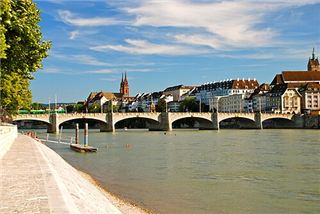
The Carolingian economy was predominantly agrarian, organised around the great estates (villae) of the crown, the church and the aristocracy, which were the principal units of both agricultural production and local lordship. The capitulary De Villis, generally attributed to Charlemagne's reign, gives an extraordinarily detailed picture of how a royal estate was expected to function: it specified the crops to be grown, the livestock to be kept, the crafts to be practised and the accounts to be rendered to the king — revealing both the empire's administrative ambitions and its reliance on local self-sufficiency. Trade existed but was constrained by poor infrastructure: rivers such as the Rhine, Meuse and Seine were the main commercial arteries, linking inland markets, episcopal cities and monastic fairs to North Sea trading centres such as Dorestad and Quentovic, where Frisian merchants dominated. Charlemagne's monetary reforms, building on Pepin's, standardised a heavier silver penny (denarius), struck at 240 to the pound and issued under royal control across the empire — a significant achievement that facilitated exchange across a territory that had previously used a patchwork of coinages, and the basis of the pound-shilling-penny system used in Britain until 1971. Agriculture was slowly expanding onto new land through forest clearance, a process that would accelerate after the empire's end and feed the great medieval agricultural expansion of the tenth to twelfth centuries. The empire's fiscal base was relatively thin: royal revenues derived mainly from the king's own estates, war booty (the Avar treasure being an extraordinary windfall), tolls on river and road traffic, and annual gifts from magnates, bishops and abbots — enough to sustain the court and the missi dominici, but insufficient to maintain an army independent of aristocratic military service.
Military

Charlemagne's military achievement — the conquest of much of Western and Central Europe in a reign of nearly half a century — rested on well-equipped mounted warriors, a disciplined logistics system and the political skill to combine military pressure with dynastic marriage and church patronage in a comprehensive strategy of territorial consolidation. The Carolingian army was organised around the obligation of free landowners to provide armed service — the wealthiest serving mounted, lesser men combining their resources to equip one warrior between them — supplemented by the retinues of the great nobles, bishops and abbots, who owed service in proportion to their lands. The annual assembly was a central rhythm of Carolingian government: court, nobility and army gathered each spring or early summer at the general assembly, known as the Marchfield (Campus Martius) and later the Mayfield, received the capitularies and orders for the year, and set out on campaign. Carolingian logistics were notably sophisticated: De Villis required royal estates to keep carts and supplies ready for the host, reflecting an understanding that armies could be destroyed by supply failure as readily as by the enemy. The Saxon Wars (772–804) showed both the army's strengths and its limits: the Saxons could be beaten in battle but melted into forests and marshes, requiring thirty-two years of near-annual campaigns, mass deportations, and episodes of exemplary brutality such as the massacre of Verden in 782 before resistance was finally broken. The Battle of Roncevaux Pass (778), in which Charlemagne's rearguard under the margrave Roland was ambushed and destroyed by Basques during the withdrawal from an unsuccessful Spanish campaign, showed that the Carolingian war machine had geographical limits. The empire had no professional standing army: its military capacity was the sum of obligations owed by free landowners and magnates, and as power passed to a hereditary aristocracy after the empire's partition, the military system became an instrument of noble power rather than royal control.
Governance & Law
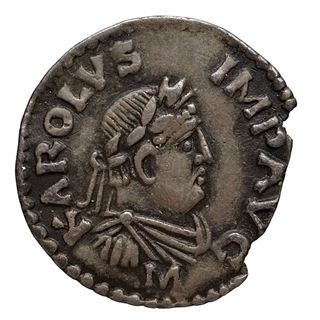
Carolingian government was the most ambitious administrative project in Western Europe since the fall of the Western Roman Empire, combining written legislation, a royal inspection system, the administrative capacity of the church and a programme of educational reform into a coherent imperial administration. The capitularies — written royal decrees, often issued at assemblies of the Frankish nobility and clergy — provided the legal framework for governing an enormous territory, addressing everything from the management of royal estates to the conduct of clergy and the standards expected of local judges. Day-to-day authority in the localities lay with some several hundred counts, royal appointees drawn from the aristocracy who held courts, raised troops and collected dues. The missi dominici — royal envoys sent out in pairs, usually one layman and one churchman, to tour assigned districts, hear complaints, check the conduct of counts and report back to the palace, a system formalised in 802 — were the main link between central authority and local administration, and were notably effective under Charlemagne. The Carolingian Renaissance — the programme of educational and cultural renewal associated with the palace school at Aachen and with scholars such as Alcuin of York, Theodulf of Orléans, Paul the Deacon and Einhard — spread the Carolingian minuscule script that preserved classical texts and eased administrative correspondence, reformed the liturgy and church music, and made Latin learning the medium of government and religious life. The empire's structural weakness was the Frankish custom of partible inheritance, which made long-term unity almost impossible: a custom suited to a warrior aristocracy, in which a father's realm was divided among his legitimate sons, could not coexist with an empire whose coherence depended on a single central authority. Every capable Carolingian ruler spent considerable energy managing the competing claims of sons, brothers and nephews, and no institutional mechanism was ever found to resolve this contradiction.
Global & Regional Impact
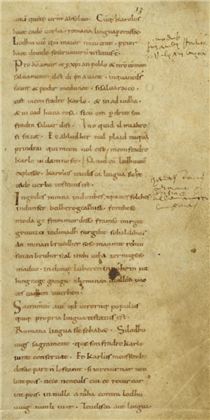
The Carolingian Empire's impact on European history lay primarily in the institutional, cultural and ideological frameworks it established during its brief unified phase rather than in any lasting territorial legacy. The Carolingian Renaissance copied and transmitted a large share of the classical Latin texts that survive today, standardised Latin as the language of administration and liturgy in Western Christendom, and created the scribal tradition that kept Roman learning alive through the early medieval period until its fuller recovery in the twelfth-century Renaissance. The close partnership between counts and bishops, and the empire's reliance on cathedral and monastic centres for administration and education, shaped the ecclesiastical geography of medieval Western Europe and strengthened the network of cathedral cities that would serve as hubs of commerce and culture for centuries. Charlemagne's coronation in 800 CE established the precedent of a Western imperial title that the Holy Roman Empire would claim to continue from 962 until 1806, and the ideal of a single Christian empire governing Latin Christendom remained a powerful theme of European political thought throughout the Middle Ages and beyond. The Treaty of Verdun (843 CE) divided the empire into kingdoms that foreshadowed France and Germany; the Oaths of Strasbourg (842 CE), sworn in both a Romance vernacular and Old High German, are the earliest surviving text in a language recognisable as early Old French. Few divisions in European political history proved more consequential for the diplomacy and warfare of later centuries. Charlemagne's exchange of embassies with the Abbasid caliph Harun al-Rashid — which brought the elephant Abul-Abbas to Aachen in 802 — established an early precedent of diplomatic contact between Latin Christendom and the Islamic world.
Decline & Fall

The Carolingian Empire's decline was built into its foundations by the custom that would eventually destroy it: the Frankish practice of partible inheritance, which divided a father's realm among his surviving legitimate sons. Charlemagne was fortunate that two of his three legitimate adult sons, Charles the Younger and Pepin of Italy, died before him, allowing Louis the Pious to inherit the undivided empire in 814 CE — but such fortune could not be relied upon. Louis held the empire together through a reign of twenty-six years in which he was twice deposed by his own sons, most humiliatingly at the “Field of Lies” near Colmar in 833 CE, when his army deserted to the rebels en masse, and was constantly renegotiating the division of the empire among Lothair, Pepin, Louis the German and, after 823, his youngest son Charles the Bald. The civil war that broke out after Louis's death in 840 CE was the logical outcome of these disputes: at the Battle of Fontenoy (841 CE), Carolingian armies fought one another in a battle remembered by contemporaries for its terrible slaughter. The Treaty of Verdun (843 CE) formalised a threefold division into West Francia under Charles the Bald, Middle Francia (from the Low Countries through Burgundy to Italy) under Lothair, and East Francia under Louis the German, ending the unified empire in practice even as the imperial title passed with the Middle Kingdom. The following decades saw further subdivision as sons and grandsons partitioned their inheritances, Viking raids devastated coastal and riverine regions and exposed the inability of divided kingdoms to coordinate their defence, and the nobility accumulated hereditary local power at the expense of the crown. The brief reunion of all the Frankish kingdoms under Charles the Fat (884–887) proved hollow: during the Viking siege of Paris (885–886) he bought the attackers off rather than fight, an act widely seen as cowardice, and he was deposed in November 887 and died in January 888, after which the empire fragmented permanently into the kingdoms from which the states of medieval Europe would grow.
The Carolingian Empire's most enduring legacy was not the territory it briefly unified but the idea it implanted: that a single Christian political authority could encompass Latin Europe — an idea that inspired the Holy Roman Empire, the medieval papacy's universal claims and later visions of European unity, including the European Union, making Charlemagne the emblematic father of a continent whose unity he briefly achieved and whose aspiration to unity his example permanently shaped.
Test yourself
5 questions on this page, from its key events and facts.
The questions open here once the page has loaded.
References
- Collins, R. (1998) Charlemagne. London: Macmillan.
- Fichtenau, H. (1978) The Carolingian Empire. Translated by P. Munz. Oxford: Blackwell.
- Ganshof, F.L. (1971) The Carolingians and the Frankish Monarchy: Studies in Carolingian History. Translated by J. Sondheimer. London: Longman.
- McKitterick, R. (2008) Charlemagne: The Formation of a European Identity. Cambridge: Cambridge University Press.
- Nelson, J.L. (1992) Charles the Bald. London: Longman.
- Story, J. (ed.) (2005) Charlemagne: Empire and Society. Manchester: Manchester University Press.
Connections
Open the full connections map →