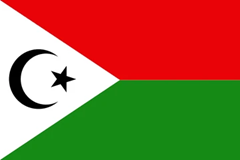
Sub-Saharan Africa
Wadai Empire
At a glance
- Wadai was an Islamic sultanate in what is now eastern Chad, founded in the early 17th century after a revolt against the Tunjur.
- Its caravan road to Benghazi made it a major trans-Saharan trading power, fed largely by slave raiding into the lands to the south.
- Weakened by succession wars, it fell to the French, who took Abéché in 1909 and abolished the sultanate in 1912.
Rise & Fall
- c. 1611Abd al-Karim ibn Jama overthrows the Tunjur and founds the Wadai sultanate at Wara
- c. 1803Sultan Sabun begins his reign and opens a caravan route through Kufra to Benghazi
- c. 1850Sultan Muhammad al-Sharif moves the capital from Wara to Abéché
- 1871Sultan Ali's armies sack Massenya, capital of the rival sultanate of Bagirmi
- 1899An Anglo-French convention places Wadai in the French sphere
- 1909A French column captures Abéché and installs Adam Asil as a client sultan
- 1911Sultan Dud Murra surrenders after years of resistance from the countryside
- 1912France abolishes the Wadai sultanate
Foundation

The Wadai Empire emerged in what is now eastern Chad in the early seventeenth century, establishing itself as a significant Sahelian Islamic state through religious reform, military consolidation and its position on the trans-Saharan trade routes. Its foundation is traditionally attributed to Abd al-Karim ibn Jama, who around 1611 (some traditions say 1635) led a successful revolt against the Tunjur, a dynasty that was at most nominally Muslim, and established an Islamic sultanate based on the Maba people with its capital at Wara. The transition from Tunjur to Wadai rule was religious as well as political: Abd al-Karim promoted Maliki Islamic institutions, Quranic education and a more orthodox legal framework, aligning Wadai with the scholarly and commercial networks that linked the Sahel to North Africa and the wider Islamic world. Wadai's early history must be understood in the context of regional competition, for it arose between the powerful sultanate of Bornu to the west and the emerging Keira sultanate of Darfur to the east, and its survival required careful management of relations with both. Under Sultan Sabun (r. c. 1803–1813) it rose to regional prominence: he centralised administration, expanded the army, improved revenue collection and opened a direct caravan route northwards through the Kufra oases to Benghazi on the Mediterranean, freeing Wadai's trade from dependence on its neighbours. The later transfer of the capital from Wara to Abéché around 1850, under Sultan Muhammad al-Sharif, reflected both the empire's shifting priorities and, reportedly, the shortage of water at the old capital.
Socioeconomy
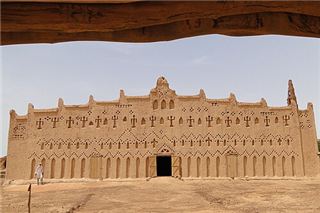
The Wadai economy rested on control of long-distance trade routes connecting the central Sudan to Libya and Egypt, supplemented by Sahelian agriculture and the tribute of a largely pastoral and semi-pastoral population. Its most important artery was the route opened under Sultan Sabun, which ran north from Abéché through the Kufra oases to Benghazi, and in the later nineteenth century this road became one of the busiest surviving trans-Saharan routes, protected and promoted by the Sanusi religious order, with which Wadai's sultans maintained close ties. Along it moved slaves, ivory, ostrich feathers and other goods northward in exchange for horses, textiles, firearms and manufactured goods from North Africa and Egypt. Slavery was central to the Wadai political economy: raids into the non-Muslim, largely animist lands to the south, in what is now southern Chad and the Central African Republic, supplied both trade commodities and the domestic, military and agricultural labour that sustained the sultanate. The slave trade conducted through Wadai was among the most active in the Sahel in the nineteenth century, feeding demand in Libya, Egypt and the wider Ottoman world. Sahelian agriculture was constrained by uncertain rainfall and semi-arid conditions, but millet and sorghum cultivation, alongside cattle, camel and horse herding, supported a predominantly subsistence rural population. The sultanate drew revenue from the tribute of subordinate chiefs, from duties on commerce passing through Abéché and other markets, and from the proceeds of raiding. This dependence on external trade left Wadai vulnerable when Egyptian expansion in the Sudan and, later, French conquest in the central Sahara disrupted and redirected its traditional routes.
Military
The Wadai army combined a core of professional cavalry with contingents levied from tributary peoples, reflecting a Sahelian political culture in which mounted warriors were the primary instrument both of state power and of external raiding. The sultan's forces were built around heavily armed horsemen drawn from the Maba ruling aristocracy, the awlad al-balad (sons of the country), supplemented by slave soldiers who offered more reliable personal loyalty to the sultan than a potentially ambitious free-born nobility. Slave soldiers were a common feature of Sahelian Islamic states, reflecting the logic of creating a military class whose status derived entirely from royal favour rather than from birth or kinship. Military campaigns served a dual purpose: war against non-Muslim peoples to the south provided religious justification for slave raiding, while the captives, horses and other wealth acquired financed the establishment that conducted further raids. Wadai's armies also fought major wars against its Sahelian neighbours; under Sultan Ali (r. 1858–1874) they sacked Massenya, the capital of the rival sultanate of Bagirmi, in 1871. Firearms, which reached Wadai in growing numbers through the northern caravan trade in the nineteenth century, increased the army's effectiveness against southern communities but proved inadequate against the better-equipped French colonial forces that ultimately conquered the empire. Sultan Muhammad Dud Murra's resistance to the French demonstrated both the military resilience of the sultanate and the insurmountable gap between its largely cavalry-based forces and colonial troops armed with modern rifles, machine guns and artillery.
Governance & Law
The Wadai state combined Islamic institutions with indigenous Sahelian political traditions, creating a sultanate that drew legitimacy both from Islamic scholarship and from older traditions of sacred kingship common across the Sahel. The sultan held political and religious authority, the latter exercised in practice through appointed judges (qadis) and the network of Quranic schools (khalwa) that provided basic literacy and religious instruction. Below the sultan stood a hierarchy of court officials responsible for revenue, military command and provincial government; slave officials and eunuchs often held positions of considerable responsibility precisely because their lack of kinship networks and noble connections made them wholly dependent on royal favour. Relations between the court and the chiefs of the periphery were organised through tribute: subordinate rulers acknowledged Wadai suzerainty through periodic payments and military service while retaining internal autonomy, and neighbouring states such as Bagirmi were at times reduced to tributary status. Islamic law governed personal status, inheritance and criminal matters in the towns, while customary law prevailed in rural areas where Islamic institutions were thin. Succession, which was contested among the many sons of deceased sultans, was a recurrent source of instability, and princes considered dangerous were sometimes blinded to disqualify them from rule. The court at Abéché maintained ceremonial protocols drawing on both Islamic and Sahelian royal traditions, including the seclusion of the sultan from ordinary subjects, a practice found in several Sahelian courts, which invested the ruler with an aura of sacred authority.
Global & Regional Impact
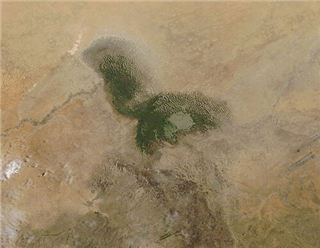
The Wadai Empire's historical significance was primarily regional rather than global: it was one of the most durable and institutionally developed of the Sahelian Islamic sultanates that organised the political and economic life of the lands between Lake Chad and the Nile valley. Its control of the Benghazi route made it a vital link between the central Sudan and Mediterranean and Middle Eastern markets, and thus a critical node in the trans-Saharan slave trade, one of the major systems of forced migration in world history. The scholarly tradition fostered under Wadai's patronage, through Quranic schools and scholars drawn from across the Sahel and North Africa, created a literate administrative class and maintained connections with the wider Islamic world that shaped the religious and intellectual life of the population. The rivalry between Wadai and Darfur to the east, which brought repeated warfare in the eighteenth and nineteenth centuries, and its long contest with Bornu and Bagirmi to the west, shaped the political geography of the central Sahel. Wadai's slave raiding into the non-Muslim south contributed to the depopulation and political fragmentation of communities in what is now southern Chad and the Central African Republic, with demographic consequences that persisted into the colonial and post-colonial periods. The sultanate's survival as an independent state into the twentieth century, later than most comparable Sahelian polities, made it a significant factor in Anglo-French colonial rivalry; the Anglo-French convention of 1899 assigned Wadai to the French sphere and Darfur to the British, a division that still broadly underlies the border between Chad and Sudan.
Decline & Fall
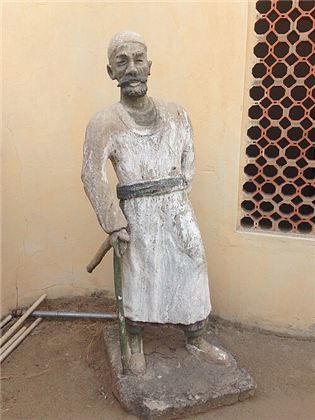
The Wadai Empire's decline was shaped by internal instability and by the advance of French and British colonial power across the Sahel in the late nineteenth and early twentieth centuries. The nineteenth century was marked by succession conflicts that often escalated into civil war, draining the sultanate's military resources and administrative coherence just as the external threat was growing. The reign of Muhammad al-Sharif (r. c. 1835–1858) and that of his successor Ali (r. 1858–1874) represented the sultanate's last periods of sustained expansion and consolidation; after Ali, and especially after the death of Sultan Yusuf in 1898, violent succession disputes became endemic. The rise of Rabih az-Zubayr, a Sudanese warlord who ravaged Bagirmi and conquered Bornu in 1893, brought a formidable new military power to Wadai's borders before the French arrived. The French advance into the region and the French conquest of Bornu, which culminated in Rabih's defeat and death at the Battle of Kousséri in April 1900, created a direct confrontation with Wadai. Sultan Muhammad Dud Murra (also Doud Murra, r. 1902–1909) resisted French encroachment through both arms and diplomacy, but at the Battle of Abéché in June 1909 a French column captured the capital and installed his rival Adam Asil as a client sultan, effectively ending the empire's independence. Dud Murra continued the struggle from the countryside, with support from the neighbouring Masalit, until his surrender in 1911, and the French abolished the sultanate altogether in 1912. Wadai was absorbed into the colony of Chad within French Equatorial Africa. Its heartland now forms the Ouaddaï region of eastern Chad, with Abéché still one of the country's principal cities, and the sultanate remains an important part of Chad's historical identity.
The Wadai Empire stands as one of the most durable of the central Sahelian Islamic sultanates, its survival into the twentieth century testifying to the resilience of a system of government that combined Islamic legitimacy, control of trans-Saharan commerce and the effective management of a diverse pastoral and agricultural population in a demanding environment.
Test yourself
5 questions on this page, from its key events and facts.
The questions open here once the page has loaded.
References
- Cordell, D.D. (1985) Dar al-Kuti and the Last Years of the Trans-Saharan Slave Trade. Madison: University of Wisconsin Press.
- Hallam, W.K.R. (1977) The Life and Times of Rabih Fadl Allah. Ilfracombe: Arthur Stockwell.
- Holt, P.M. and Daly, M.W. (1988) A History of the Sudan. 4th edn. London: Longman.
- Nachtigal, G. (1980) Sahara and Sudan. Vol. 4: Wadai and Darfur. Translated by A.G.B. Fisher and H.J. Fisher. London: C. Hurst.
- O'Fahey, R.S. (1980) State and Society in Dar Fur. London: C. Hurst.
- O'Fahey, R.S. and Spaulding, J.L. (1974) Kingdoms of the Sudan. London: Methuen.
Connections
Open the full connections map →