South & Southeast Asia
Maratha Empire
At a glance
- The Maratha Empire grew from Shivaji's hill forts in the Western Ghats into a confederacy that dominated 18th-century India.
- It broke Mughal supremacy, reaching Attock on the Indus in 1758 and later controlling Delhi and the Mughal emperor.
- Defeat at Panipat in 1761, rivalry among its chiefs and three wars with the East India Company ended its independence in 1818.
Rise & Fall
- 1646Shivaji captures the fort of Torna, beginning his rise
- 1659Shivaji kills the Bijapur general Afzal Khan at Pratapgad
- 1674Shivaji is crowned Chhatrapati at Raigad, formally asserting sovereignty
- 1689Shivaji's son Sambhaji is executed during the long war with Aurangzeb
- 1728Peshwa Baji Rao I defeats the Nizam at Palkhed
- 1758Maratha armies reach Attock on the Indus
- 1761The Durrani army of Ahmad Shah Abdali crushes the Marathas at the Third Battle of Panipat
- 1818Peshwa Baji Rao II surrenders to the British and the Peshwa's office is abolished
Foundation
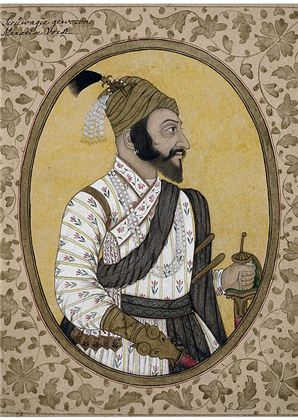
The Maratha Empire emerged on the Deccan Plateau in the mid-17th century as a regional power challenging the Deccan sultanates and, in time, the Mughal Empire. Its origins are closely tied to the political turmoil of the western Deccan, where the sultanates of Ahmadnagar and Bijapur were declining under Mughal pressure, and to the rise of local warrior and landholding families known as Marathas. The founding figure, Chhatrapati Shivaji Maharaj (1630–1680), son of the Bijapur commander Shahaji Bhonsle, exploited the rugged terrain of the Western Ghats and a keen grasp of guerrilla warfare to seize strategically significant forts such as Torna, Rajgad and later Raigad. The coronation of Shivaji at Raigad in 1674 formally asserted sovereignty, establishing a hereditary monarchy and a political identity rooted in Marathi culture and Hindu kingship. His statecraft drew on peasant support, the loyalty of Maratha warrior families and shifting alliances, including a pact with the Qutb Shahi sultanate of Golconda in 1677, allowing a relatively small polity to contest Mughal authority. The state survived Aurangzeb's long Deccan war after Shivaji's death, and by the early 18th century the Mughals' overextension and the fracturing of the Deccan had opened the way for Maratha expansion across India.
Socioeconomy
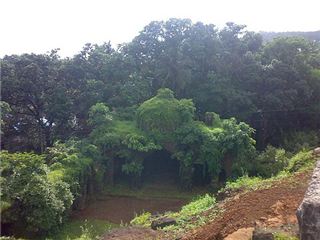
The Maratha socio-economic system combined a militarised aristocracy with an agrarian base. Society was organised hierarchically, with the Chhatrapati and his council (the Ashta Pradhan) at the apex, followed by sardars (noble commanders), deshmukhs and patils (district and village headmen) and the peasants who formed the agrarian backbone. The population was predominantly Marathi-speaking and Hindu, with Muslim, tribal and other communities integrated through trade, taxation or military service. Agriculture was the principal economic activity, with rice grown on the Konkan coast and jowar, bajra, cotton and sugarcane on the Deccan plateau, while the forests of the Western Ghats supplied timber and other products. Beyond their own lands the Marathas levied chauth, a quarter of the land revenue, and sardeshmukhi, a further tenth claimed as a hereditary right, financing both administration and military campaigns. Internal trade flowed along Deccan routes, while Konkan ports such as Dabhol linked the Marathas to the Arabian Sea trade in cotton, spices and the horses essential for cavalry. Revenue collection was largely decentralised, empowering local sardars and revenue farmers while maintaining allegiance to the centre and enabling rapid mobilisation of fiscal and human resources.
Military
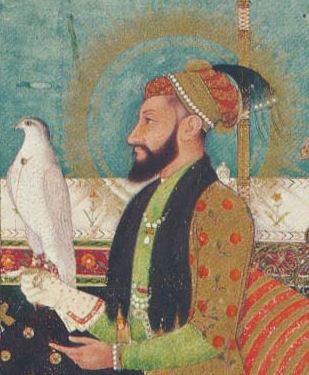
The Maratha military combined infantry, cavalry and, later, artillery in a flexible and highly mobile system suited to the Deccan's terrain. Cavalry formed the backbone of Maratha power, with light horsemen capable of rapid raids and ambushes. Shivaji's innovations included the extensive use of hill forts as defensive anchors, guerrilla tactics (Ganimi Kava) and decentralised command, allowing local leaders to respond swiftly to threats. The Marathas also built an effective navy, with sea forts such as Sindhudurg and Vijaydurg, to defend the Konkan coast against the Portuguese and the Siddis of Janjira; under Kanhoji Angre in the early 18th century it challenged even the English and Dutch. Notable campaigns under Shivaji included the capture of Torna (1646), the killing of the Bijapur general Afzal Khan at Pratapgad (1659) and the raid on Surat (1664). After the death of Shivaji and the execution of his son Sambhaji in 1689, the state survived a long war with Aurangzeb and re-emerged under the Peshwas, the hereditary chief ministers. Peshwa Balaji Vishwanath (1713–1720) and his son Baji Rao I (1720–1740) drove expansion north into Malwa, Gujarat and Bundelkhand, defeating the Nizam at Palkhed (1728) and Bhopal (1737) and raiding the outskirts of Delhi in 1737. Military power underpinned political legitimacy, revenue extraction and territorial expansion, making the Marathas a dominant force in 18th-century India.
Governance & Law
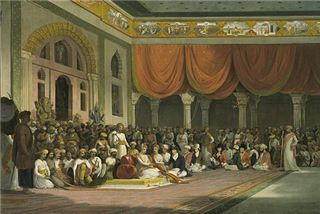
The Maratha state developed a sophisticated administrative and legal framework under Shivaji, later transformed under the Peshwas. The Ashta Pradhan, or council of eight ministers, oversaw military affairs, finance, records, foreign relations, justice and religious matters, each with defined responsibilities, an early form of bureaucratic specialisation. Shivaji favoured paying officials in cash rather than with hereditary land grants, limiting the power of local magnates. Districts were governed by appointed officers such as subedars responsible for revenue and defence, while village assemblies (panchayats) settled disputes according to customary law. In the 18th century real power passed from the Chhatrapati at Satara to the Peshwa's administration at Pune, which supervised a confederacy of semi-autonomous chiefs, among them the Gaekwads of Baroda, Holkars of Indore, Scindias of Gwalior and Bhonsles of Nagpur, who collected revenue and maintained armies while acknowledging the Peshwa's leadership and the Chhatrapati's formal sovereignty. This decentralised yet coherent structure allowed the Marathas to control territory spanning the Deccan, central India and much of the north, balancing local autonomy with central oversight.
Global & Regional Impact
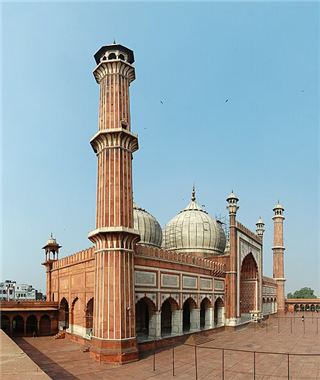
The Marathas broke Mughal supremacy and became the principal political and military power in India by the mid-18th century, when their armies reached Attock on the Indus in 1758. They carried Marathi language, culture and Hindu ritual patronage across the Deccan and into northern and eastern territories. Maratha ascendancy reshaped the political map, compelling alliances, tribute arrangements and settlements with the Nizam of Hyderabad, the Rajput states, the Nawabs of Bengal and the Sikh chiefs, and under Mahadji Scindia the Marathas controlled Delhi and the Mughal emperor in the 1770s and 1780s. Their control of key routes linked regional economies from the Arabian Sea and Gujarat to Bengal, while their tribute system stimulated trade in arms, horses, textiles and grain. European powers, especially the British and Portuguese, dealt with the Marathas both diplomatically and militarily, recognising their control of central and western Indian trade corridors. Their legacy includes hill and sea forts, temples and ghats, as well as successor princely states such as Baroda, Gwalior and Indore that endured until Indian independence.
Decline & Fall
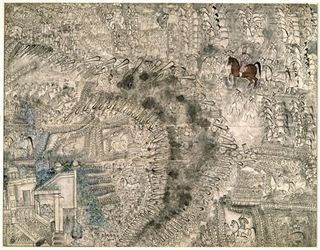
The Maratha decline stemmed from both internal fragmentation and external pressure. Expansion continued under Peshwa Balaji Baji Rao after 1740, but rivalry among the great chiefs, the Gaekwads, Holkars, Scindias and Bhonsles, increasingly weakened central authority. Conflict with the Durrani Empire of Ahmad Shah Abdali over the Punjab and northern India culminated in the catastrophic defeat at the Third Battle of Panipat in 1761, which inflicted heavy military and human losses and disrupted revenue systems. Although recovery followed under Peshwa Madhav Rao I and Mahadji Scindia, succession disputes in Pune and rivalry among the chiefs left the confederacy divided. From the late 18th century the Marathas were drawn into conflict with the British East India Company in the three Anglo-Maratha Wars (1775–1818). Defeats such as the Battle of Assaye (1803) cost them extensive territory, and the final war ended in 1818 with the surrender of Peshwa Baji Rao II and the abolition of the Peshwa's office, marking the end of Maratha political independence. The Maratha legacy nevertheless persisted in the regional politics, social structures and military traditions of western and central India.
The Maratha Empire stands as the power that broke Mughal supremacy in India, building from Shivaji's hill forts and guerrilla warfare a confederacy that dominated eighteenth-century India until the Third Battle of Panipat and the Anglo-Maratha Wars ended its independence.
References
- Duff, J.G. (1826) History of the Mahrattas. 3 vols. London: Longman.
- Gordon, S. (1993) The Marathas, 1600–1818. Cambridge: Cambridge University Press.
- Pearson, M.N. (1976) Merchants and Rulers in Gujarat: The Response to the Portuguese in the Sixteenth Century. Berkeley: University of California Press.
- Richards, J.F. (1993) The Mughal Empire. Cambridge: Cambridge University Press.
- Sarkar, J. (1920–1952) Shivaji and His Times. 6th edn. Calcutta: M.C. Sarkar.
- Wink, A. (1990–2004) Al-Hind: The Making of the Indo-Islamic World. 3 vols. Leiden: Brill.
Connections
Open the full connections map →