South & Southeast Asia
Sulu Sultanate
At a glance
- A Tausug Muslim sultanate ruling the islands between Mindanao and Borneo from Jolo, founded by tradition by Sharif ul-Hashim.
- It resisted Spanish conquest for three centuries and grew rich exporting sea produce to China in the eighteenth and nineteenth centuries.
- Its 1878 grant of North Borneo to a British syndicate is the origin of the Philippine claim to Sabah.
Rise & Fall
- 1417Paduka Batara and two other Sulu rulers visit the Ming court; he dies on the journey home
- c. 1450Sharif ul-Hashim founds the sultanate, by Sulu tradition
- 1638Spanish forces under Hurtado de Corcuera capture Jolo
- 1775Tausug warriors destroy the British post on Balambangan Island
- 1848Spanish steam gunboats destroy the Balangingi raiding bases
- 1876Spain occupies Jolo
- 1878Sultan Jamalul Alam grants North Borneo to Overbeck and Dent
- 1915Jamalul Kiram II gives up temporal power under the Carpenter Agreement
Foundation
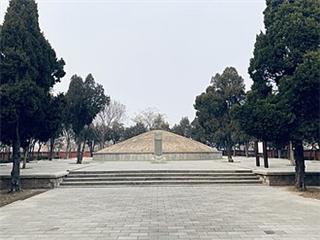
The Sulu Sultanate grew out of the trading chiefdoms of the Sulu archipelago, the chain of islands between Mindanao and northern Borneo inhabited by the Tausug and Sama peoples. Islam probably reached the islands with Muslim traders and teachers in the fourteenth century; Sulu tradition remembers Karim ul-Makhdum, credited with building a mosque on Simunul in Tawi-Tawi, and Raja Baguinda, a prince said to have come from Minangkabau in Sumatra. Chinese records show that in 1417 three Sulu rulers, among them Paduka Batara, led a large mission to the Ming court of the Yongle Emperor; Paduka Batara died on the return journey and was buried at Dezhou in Shandong, where his tomb still stands. The sultanate itself is traditionally credited to Sharif ul-Hashim, also called Sayyid Abu Bakr, an Arab scholar said in the Sulu genealogies to have come by way of Johor, who married Baguinda's daughter and took the title of sultan. The date is uncertain: the genealogies (tarsila) and later chronologies place it anywhere between 1405 and the mid-fifteenth century. Sharif ul-Hashim is remembered as a lawgiver who introduced Islamic institutions and divided the islands into districts under chiefs. The court settled first at Buansa and later at Jolo, which became its lasting capital.
Socioeconomy

Tausug society was organised around the sultan, the hereditary datus who led districts and followings of their own, free commoners, and dependants and slaves. Sama sea-going communities and the Iranun of the Mindanao coast stood in looser relationships to the court. The economy rested on the sea. Sulu divers harvested pearls and mother-of-pearl, and the islands gathered tripang (sea cucumber), edible birds' nests from the caves of Borneo, tortoiseshell and wax, products prized above all in China. From the 1760s British country traders from India, followed by Chinese junks and other Western merchants, exchanged opium, cloth, rice and especially firearms and gunpowder for these goods, and Jolo became a busy entrepôt. The historian James Francis Warren has shown that this boom created a vast demand for labour, met by slave raiding: Iranun and Balangingi Sama fleets based in the Sulu zone seized, by his estimates, thousands of captives a year from the Visayas, Luzon, the Moluccas, Sulawesi and the Malay world, many of whom were set to fishing and collecting marine produce or sold onward. Islam, practised alongside customary law and older local beliefs, gave the sultanate its identity, and religious teachers and pilgrims linked Jolo to the wider Muslim world.
Military
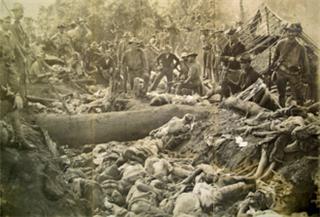
Sulu had no standing army; the sultan relied on the armed followings of the datus, who fought with the kris, the barong and spears, and increasingly with muskets and lantaka, small bronze swivel guns cast locally or bought from traders. Defence rested on fortified kota of stone, coral and timber, and on reefs and shallows that hampered large ships. The Spanish, established at Manila from 1571, launched repeated expeditions in the long conflicts they called the Moro wars. Jolo was attacked as early as 1578, and in 1638 Governor-General Sebastián Hurtado de Corcuera captured it after a siege of several months; the Spanish garrison was withdrawn in 1646. Spain abandoned its fort at Zamboanga in 1662 and did not return until 1718, giving Sulu a long respite. Sulu and allied fleets in turn raided Spanish-held coasts, and in 1775 Tausug warriors destroyed the British East India Company's new post on Balambangan Island. The raiders lost their edge only when steam gunboats arrived: Governor-General Narciso Clavería destroyed the Balangingi strongholds in 1848, Jolo was stormed in 1851, and in 1876 a large expedition under José Malcampo occupied it. Under American rule, armed resistance ended with the massacre at Bud Dajo in 1906 and defeat at Bud Bagsak in 1913.
Governance & Law

The sultan stood at the head of a Muslim state but ruled more through consensus than command. He was chosen from the royal lineage descended from Sharif ul-Hashim, and his authority over the datus, who controlled their own districts, trade and fighting men, depended on wealth, kinship and religious prestige. A council of leading datus and officials, the ruma bichara, advised on succession, war and treaties, and disputes over the throne between rival branches of the dynasty were frequent. Islamic law, interpreted by religious officials, coexisted with Tausug customary law (adat). The court controlled trade at Jolo, levying duties and dealing with foreign merchants, which gave sultans the means to reward followers. Sulu's reach extended through tributary ties to coastal chiefs in Palawan, Basilan and northern and eastern Borneo; according to Sulu tradition, the Sultan of Brunei granted it the lands of northern Borneo in return for help in Brunei's civil war of 1660–1673. Sultan Azim ud-Din I, seeking Spanish help against his brother Bantilan, went to Manila, was baptised in 1750 and was later imprisoned, an episode that divided the court. In the nineteenth century diplomacy with Spain, Britain and the Netherlands became as important to survival as warfare.
Global & Regional Impact

Sulu was one of the most durable Muslim states of maritime Southeast Asia and, with the Maguindanao Sultanate, the main reason Spain never controlled the southern Philippines. Three centuries of resistance shaped the distinct Moro identity of the Muslim peoples of Mindanao and Sulu, which remains central to Philippine politics and lay behind the struggle for autonomy that produced the Bangsamoro autonomous region in 2019. The sultanate's commercial role made Jolo a node linking China, the Malay world, British India and the Spanish Philippines, and Warren's work on the 'Sulu zone' has made it a classic case of how global trade could reshape a regional state and drive slavery. The raids of the allied fleets left deep marks on the coastal societies of the Visayas and eastern Indonesia, where watchtowers and fortified churches were built against them. The most lasting legacy is legal and diplomatic. The 1878 agreement under which Sultan Jamalul Alam granted North Borneo to Baron Gustav von Overbeck and Alfred Dent underlies the Philippine claim to Sabah, formally raised in 1962, and the claims of the sultan's heirs, which remain a source of friction between the Philippines and Malaysia.
Decline & Fall

Sulu's decline came with the steam gunboat and the colonial partition of the region. After Clavería's campaign of 1848 and the storming of Jolo in 1851, Sultan Muhammad Pulalun signed a treaty acknowledging Spanish sovereignty, though Sulu continued in practice to act independently. Spain's occupation of Jolo in 1876 forced the court inland, and in 1878 Sultan Jamalul Alam accepted Spanish protection. In the same year he signed the grant of North Borneo, read by one side as a lease and by the other as a cession, in exchange for an annual payment; the British North Borneo Company received its charter in 1881, and the Madrid Protocol of 1885 confirmed Spanish sovereignty over the archipelago while Spain renounced its claims in Borneo. After Spain ceded the Philippines to the United States in 1898, General John C. Bates negotiated the Bates Treaty of 1899 with Sultan Jamalul Kiram II, recognising his position under American sovereignty; the United States abrogated it in 1904 and governed Sulu directly through the Moro Province. In 1915, under the Carpenter Agreement, Jamalul Kiram II renounced temporal power while remaining religious head of Sulu's Muslims. The title passed after his death in 1936 to rival claimants, and the sultanate's former lands now lie within the Philippines and Malaysia.
The Sulu Sultanate, a Tausug Muslim state ruling the islands between Mindanao and Borneo from the fifteenth century to 1915, resisted Spain for three centuries, grew rich on the China trade and the slave raiding of the Sulu zone, and left behind the unresolved Philippine claim to Sabah.
Test yourself
5 questions on this page, from its key events and facts.
The questions open here once the page has loaded.
References
- Kiefer, T.M. (1972) The Tausug: Violence and Law in a Philippine Moslem Society. New York: Holt, Rinehart and Winston.
- Majul, C.A. (1973) Muslims in the Philippines. Quezon City: University of the Philippines Press.
- Saleeby, N.M. (1908) The History of Sulu. Manila: Bureau of Printing.
- Warren, J.F. (1981) The Sulu Zone, 1768–1898: The Dynamics of External Trade, Slavery, and Ethnicity in the Transformation of a Southeast Asian Maritime State. Singapore: Singapore University Press.
Connections
Open the full connections map →