South & Southeast Asia
Brunei Sultanate
At a glance
- A Malay Muslim sultanate on the northwest coast of Borneo whose rulers trace a line back to the fourteenth century.
- Around 1500 its fleets and allies made it the leading power of Borneo's coasts and the southern Philippines.
- It lost most of its lands to Sarawak and Britain but survived as a protectorate and, from 1984, an independent state.
Rise & Fall
- 1408A king of Po-ni visits the Ming court at Nanjing and dies there
- 1521Antonio Pigafetta describes the water city of Brunei
- 1578Spain captures the capital in the Castilian War but soon withdraws
- 1841Sarawak is granted to James Brooke
- 1888Brunei becomes a British protectorate
- 1929Oil is discovered at Seria
- 1984Brunei becomes fully independent under Sultan Hassanal Bolkiah
Foundation
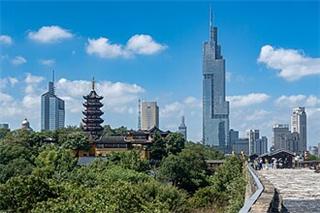
A trading state on the northwest coast of Borneo appears in Chinese records from the tenth century under the name Po-ni, which sent missions to the Song court, and in 1365 the Javanese poem Nagarakretagama listed Barune among the dependencies of Majapahit. Brunei's own tradition, preserved in the royal genealogy and the epic Syair Awang Semaun, holds that its first ruler, Awang Alak Betatar, accepted Islam and became Sultan Muhammad Shah, an event traditionally placed in the 1360s; the register uses 1368. The dating is uncertain. In 1408 a king of Po-ni with a Hindu-Buddhist name, Maharaja Karna, travelled to the Ming capital at Nanjing and died there, and some historians therefore place the court's conversion to Islam in the fifteenth century. The third sultan in the traditional list, Sharif Ali, said to have been a descendant of the Prophet from Arabia, is credited with building the first mosque and strengthening Islamic law. The early capital lay at Kota Batu on the Brunei River, a sheltered estuary where Chinese and Southeast Asian ships could anchor. By the fifteenth century Brunei had become an independent Muslim sultanate with ties to Ming China, Malacca and the trading ports of the Sulu and Philippine seas.
Socioeconomy

Brunei lived by trade. Its rulers and nobles collected forest and sea products from the rivers and coasts of Borneo, including camphor, which was among the most prized in Asia, together with pepper, beeswax, sago, edible birds' nests, tortoiseshell and gold, and exchanged them for Chinese porcelain, silk and iron, Indian cloth and other imports. The capital was largely a settlement of houses built on stilts over the water, the ancestor of today's Kampong Ayer. Antonio Pigafetta, who visited with the survivors of Magellan's expedition in 1521, reported a large city built over the water, which he put at some 25,000 households, and a court where the ruler received visitors with elephants dressed in silk. After the Portuguese took Malacca in 1511, many Muslim merchants moved their trade to other ports, and Brunei benefited. Society was hierarchical: the sultan and the pengiran nobility stood above the commoners of the capital, many of them traders, fishermen and craftsmen, while subject peoples of the interior, including Kedayan farmers and various Dayak groups, paid tribute in produce. Islam of the Shafi'i school became central to court and urban life, while Brunei's brass-casters became famous across the region for their cannon and vessels.
Military

Brunei's power was maritime. Its fleets of oared war boats carried warriors along the coasts of Borneo and into the Philippine islands, and its foundries produced bronze cannon, including the small swivel guns known as lela, which were traded and used throughout the archipelago. Brunei tradition credits the fifth sultan, Bolkiah, remembered as Nakhoda Ragam, the 'singing captain', with expeditions that extended Brunei's influence over the coasts of Borneo, Sulu and the Manila region in the late fifteenth and early sixteenth centuries. Brunei's power in the Philippines was challenged by Spain, whose forces under Miguel López de Legazpi took Manila from its Muslim rulers, relatives and allies of Brunei, in 1570–1571. In 1578, during the Castilian War, an expedition under the governor Francisco de Sande captured the capital and forced the sultan to flee, but disease among the Spanish troops forced them to withdraw within a few months. A civil war between rival sultans in 1660–1673 weakened the kingdom, and Sulu's help to the eventual victor became the basis of Sulu's claim to northeast Borneo. In the nineteenth century Brunei could not resist British naval power, and a British force attacked the capital in 1846. Today the small Royal Brunei Armed Forces are supported by a British Gurkha battalion stationed in the country.
Governance & Law
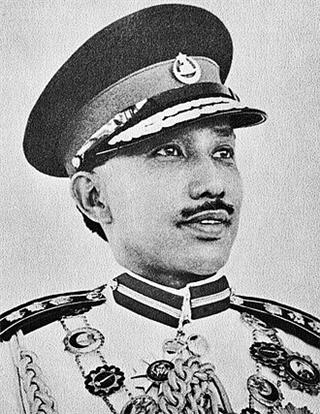
The sultan stood at the head of a hierarchy defined by birth and title. He governed with four senior ministers, or wazirs, drawn from the royal family, the Pengiran Bendahara, Pengiran Di-Gadong, Pengiran Pemancha and Pengiran Temenggong, and with lesser titled officials known as cheteria and manteri. Rivers and their populations were the basic units of government and were held under three forms of rights: kerajaan, belonging to the crown, kuripan, attached to office, and tulin, owned hereditarily by nobles. Each holder collected taxes and tribute from his rivers, so that power in Brunei was widely distributed and the sultan's authority depended on balancing the great families. Islamic law, administered by religious officials, coexisted with Malay customary law. Royal genealogy was recorded in the Salasilah Raja-Raja Brunei and on the Batu Tarsilah, a stone tablet of 1807. Under British protection from 1888, and with a British Resident from 1906, the administration was modernised while the monarchy was preserved. The 1959 constitution, granted by Sultan Omar Ali Saifuddien III, gave Brunei internal self-government. Since the emergency of 1962 the sultan has ruled by decree, and Sultan Hassanal Bolkiah, who succeeded in 1967, has also served as prime minister since independence.
Global & Regional Impact

At its height in the early sixteenth century Brunei was the leading Muslim power of Borneo and the southern Philippines, and its name, in European forms, gave the whole island of Borneo its name. Brunei's influence helped spread Islam along the coasts of Borneo and into the Philippine archipelago, where the rulers of Manila and Tondo were linked to its royal house before the Spanish conquest. Its Malay court culture, titles and language shaped the coastal peoples of Sarawak and Sabah, and its brass cannon and gongs circulated widely in the region. Brunei's long decline also had lasting consequences: the territories it lost became the foundations of Sarawak and Sabah, now states of Malaysia, and Sulu's claim to Sabah, rooted in a seventeenth-century grant, still affects relations between Malaysia and the Philippines. Since independence Brunei has built its national identity on the ideology of Melayu Islam Beraja, Malay Islamic Monarchy, which presents the sultanate as the continuation of a monarchy that has ruled for more than six centuries. Kampong Ayer, the water village of the capital, and the Omar Ali Saifuddien Mosque, completed in 1958, are symbols of that continuity, and Brunei is one of the few surviving absolute monarchies in the world.
Into the Present

From the seventeenth century Brunei's power contracted. Civil war, the loss of Philippine dependencies to Spain and to the rising Sulu Sultanate, and the shift of trade to new European-controlled ports reduced its revenue. In 1841 Sultan Omar Ali Saifuddin II granted the Sarawak region to the English adventurer James Brooke, who ruled it as rajah and steadily absorbed more Brunei rivers, ending with Limbang in 1890. Britain took the island of Labuan by treaty in 1846, and concessions in the northeast passed to the British North Borneo Company, chartered in 1881. In 1888 Brunei became a British protectorate, reduced to a small territory in two parts. The discovery of oil at Seria in 1929 transformed its prospects. After the Japanese occupation of 1941–1945, Brunei gained a constitution in 1959. In December 1962 a revolt led by the Brunei People's Party was suppressed with British help, and in 1963 the sultan declined to join Malaysia, keeping control of Brunei's oil wealth. Sultan Omar Ali Saifuddien III abdicated in favour of his son Hassanal Bolkiah in 1967, and Brunei became fully independent on 1 January 1984, joining ASEAN and the United Nations. Today it is a small but wealthy absolute monarchy whose economy rests on oil and natural gas.
Brunei matters as one of the oldest surviving monarchies in Southeast Asia: a Malay Muslim sultanate that in the sixteenth century dominated the coasts of Borneo and reached Manila, lost most of its lands to Sarawak and Britain, and survived through oil wealth as an independent state.
References
- Saunders, G. (2002) A History of Brunei. 2nd edn. London: RoutledgeCurzon.
- Brown, D.E. (1970) Brunei: The Structure and History of a Bornean Malay Sultanate. Bandar Seri Begawan: Brunei Museum.
- Hussainmiya, B.A. (1995) Sultan Omar Ali Saifuddin III and Britain: The Making of Brunei Darussalam. Kuala Lumpur: Oxford University Press.
- Nicholl, R. (ed.) (1975) European Sources for the History of the Sultanate of Brunei in the Sixteenth Century. Bandar Seri Begawan: Muzium Brunei.
- Reid, A. (1993) Southeast Asia in the Age of Commerce, 1450–1680. Volume 2: Expansion and Crisis. New Haven: Yale University Press.
Connections
Open the full connections map →