South & Southeast Asia
Johor Sultanate
At a glance
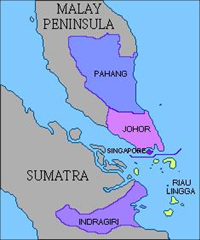
- Founded around 1528 by a son of the last Sultan of Malacca, Johor claimed Malacca's royal line and maritime empire.
- It allied with the Dutch to take Malacca in 1641 and became the leading Malay entrepôt of the late seventeenth century.
- Its partition by Britain and the Netherlands in 1824 created modern borders; it survives as a monarchy within Malaysia.
Rise & Fall
- c. 1528Alauddin Riayat Shah II founds a new court on the Johor River
- 1613Aceh sacks Johor's capital Batu Sawar
- 1641Johor and the Dutch take Malacca from the Portuguese
- 1699Sultan Mahmud Shah II is murdered, ending the Malacca line
- 1819Raffles recognises Hussein as sultan and founds British Singapore
- 1824The Anglo-Dutch Treaty splits the realm; Riau-Lingga goes to the Dutch sphere
- 1885Britain recognises Abu Bakar as Sultan of Johor
- 2024Sultan Ibrahim Iskandar becomes King of Malaysia
Foundation
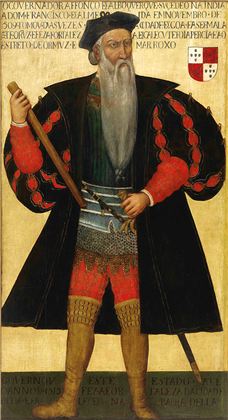
The Johor Sultanate was the direct heir of the Malacca Sultanate, the great Malay trading state of the fifteenth century. When the Portuguese under Afonso de Albuquerque captured Malacca in 1511, Sultan Mahmud Shah fled south, setting up his court first in Pahang and then on the island of Bintan, from which he harassed the Portuguese until they destroyed his base in 1526. He died at Kampar in Sumatra around 1528. One of his sons, Muzaffar Shah, went on to found the sultanate of Perak; another, Alauddin Riayat Shah II, established a new court on the Johor River at the southern tip of the Malay Peninsula. The new state claimed Malacca's royal line, its regalia and court traditions, and its authority over the Malay lands around the southern Strait of Malacca: the Johor River basin, the islands of the Riau archipelago, parts of the east coast of Sumatra and, at times, Pahang. Its early capitals, among them Johor Lama and later Batu Sawar, lay on the Johor River, but the court moved frequently in response to attack, and from the late seventeenth century its centre of gravity shifted to Riau. The sultanate thus began as a continuation of Malacca in exile, competing to win back the trade that the Portuguese had seized.
Socioeconomy
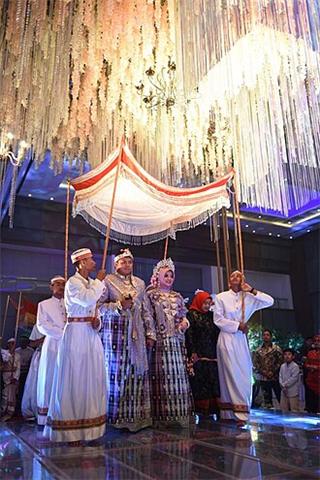
Like Malacca before it, Johor lived by trade. Its rulers sought to attract merchants to their river and island ports by offering security, moderate duties and access to the produce of the region: pepper, tin, forest products such as camphor and rattan, and the marine goods gathered by the Orang Laut, the sea peoples of the Riau islands, whose fleets were the backbone of the sultan's power at sea. After the fall of Portuguese Malacca in 1641, Johor's ports flourished as centres of the trade between India, China and the archipelago, and in the late seventeenth century Riau was among the busiest Malay entrepôts. Malay society was organised around the ruler and the great officials, with commoners bound to chiefs and many slaves and debt-bondsmen, while Islam provided the common faith of court and people. Under Bugis leadership in the eighteenth century, Riau grew rich on gambier and pepper planted by Chinese settlers and on the transit trade. In the nineteenth century the temenggongs of Johor opened the mainland to Chinese pepper and gambier planters under the kangchu system, in which river concessions were granted to Chinese headmen; later, rubber and oil palm plantations and, after independence, industry linked to neighbouring Singapore transformed the economy of modern Johor.
Military

Johor's military strength lay at sea. The Orang Laut provided crews and fleets of oared vessels, and the sultan's warfare consisted largely of naval raids, blockades and the defence of fortified river capitals. For its first century Johor was caught in a three-way struggle with Portuguese Malacca and the Aceh Sultanate. The Portuguese attacked its capitals repeatedly and destroyed Johor Lama in 1587; Aceh sacked Batu Sawar in 1613 and carried members of the royal family to Sumatra. Johor shifted its alliances accordingly, sending ships to help the Portuguese against Aceh's great attack on Malacca in 1629. Its decisive move was an alliance with the Dutch East India Company, first concluded in 1606, which culminated in the joint siege that took Malacca from the Portuguese in January 1641. A long war with the Sumatran state of Jambi, which sacked Batu Sawar in 1673, was eventually won with the help of Bugis mercenaries. In 1718 Raja Kecil of Siak seized the throne, and in 1722 Bugis warriors expelled him and gained great power at court. Under the Bugis viceroy Raja Haji, Riau attacked Dutch Malacca in 1784; Raja Haji was killed at Teluk Ketapang, and the Dutch then occupied Riau. Thereafter Johor's forces were those of a small protected state.
Governance & Law

The sultan, as heir of the Malacca line, stood at the apex of a hierarchy of great officials inherited from Malacca: the bendahara (chief minister), the temenggong (responsible for security and justice) and the laksamana (admiral), whose families often held real power. In the 1670s and 1680s the laksamana Tun Abdul Jamil dominated the state. The murder of Sultan Mahmud Shah II in 1699, the last of the Malacca line, broke the sacred bond between ruler and subjects; the bendahara took the throne as Sultan Abdul Jalil IV, but many Malays and the Orang Laut questioned the new dynasty's legitimacy. From 1722 Bugis nobles held the hereditary office of Yang Dipertuan Muda (under-king) in Riau, controlling government and trade while the Malay sultans reigned. In the nineteenth century authority on the mainland passed to the temenggongs, whose line, after a treaty of 1855 with Sultan Ali, governed Johor. Abu Bakar (r. 1862–1895), recognised by Britain as Sultan of Johor in 1885, created a modern administration with government departments, a state council and the Johor constitution of 1895, one of the first written constitutions in the Malay world. His son Sultan Ibrahim accepted a British General Adviser in 1914, bringing Johor into the Unfederated Malay States.
Global & Regional Impact

Johor carried the political and cultural tradition of Malacca into the modern era. Its court preserved Malacca's royal genealogy, regalia and literature: the Sejarah Melayu (Malay Annals), the classic chronicle of the Malacca dynasty, is generally thought to have been revised for the Johor court in 1612, and the Bugis-Malay court of Riau-Lingga became a centre of Malay letters in the nineteenth century, producing Raja Ali Haji's Tuhfat al-Nafis and grammars that helped standardise the Malay language from which modern Malay and Indonesian developed. Johor's alliance with the Dutch in 1641 changed the balance of power in the Strait of Malacca, and its dynastic disputes gave the British their opening to found Singapore in 1819. The Anglo-Dutch Treaty of 1824, which divided Johor's realm along the Singapore Strait, fixed a line that still separates Malaysia and Singapore from Indonesia. Under Abu Bakar, Johor became a model of a modernising Malay monarchy, and in 1946 Johor Bahru was the birthplace of the United Malays National Organisation (UMNO), founded under the Johor chief minister Onn Jaafar to oppose the Malayan Union. Several sultanates that broke away from Johor, among them Pahang, Terengganu and Riau-Lingga, trace their ruling houses to its court.
Into the Present
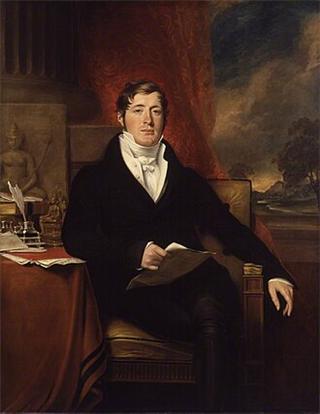
Johor's transformation into a modern state began with the partition of its realm. When Sultan Mahmud Shah III died in 1812, the Bugis faction installed his younger son Abdul Rahman, passing over the elder, Hussein. In 1819 Stamford Raffles, seeking a base for the British East India Company, recognised Hussein as Sultan of Johor and signed a treaty with him and the Temenggong Abdul Rahman to found a British settlement on Singapore, which was ceded outright in 1824. The Anglo-Dutch Treaty of 1824 then divided the old kingdom: Riau and Lingga, under Sultan Abdul Rahman, fell into the Dutch sphere as the Riau-Lingga Sultanate, while the mainland lay in the British sphere. On the mainland the temenggongs, enriched by Singapore's trade, displaced Hussein's heirs; in 1855 Sultan Ali ceded the government of Johor to Temenggong Daeng Ibrahim, whose son Abu Bakar made Johor Bahru his capital and took the title of sultan. Johor accepted a British adviser in 1914, joined the Federation of Malaya in 1948, which became independent in 1957, and became a state of Malaysia in 1963. It remains a constitutional monarchy within the federation, and its ruler, Sultan Ibrahim Iskandar, was elected Yang di-Pertuan Agong, King of Malaysia, taking office in January 2024.
The Johor Sultanate, founded around 1528 by the heirs of the Malacca Sultanate, dominated the southern Strait of Malacca as a maritime trading state, helped the Dutch take Malacca in 1641, gave Britain its foothold at Singapore and survives as a constitutional monarchy within Malaysia.
References
- Andaya, B.W. and Andaya, L.Y. (2001) A History of Malaysia. 2nd edn. Basingstoke: Palgrave.
- Andaya, L.Y. (1975) The Kingdom of Johor, 1641–1728: Economic and Political Developments. Kuala Lumpur: Oxford University Press.
- Borschberg, P. (2010) The Singapore and Melaka Straits: Violence, Security and Diplomacy in the 17th Century. Singapore: NUS Press.
- Trocki, C.A. (1979) Prince of Pirates: The Temenggongs and the Development of Johor and Singapore, 1784–1885. Singapore: Singapore University Press.
Connections
Open the full connections map →