Americas
Aztec Empire
At a glance
- The Triple Alliance of Tenochtitlan, Texcoco and Tlacopan ruled central Mexico from 1428 through a vast tribute system.
- Tenochtitlan, fed by lake-bed chinampa gardens, held 200,000 or more people, one of the largest cities in the world.
- It fell in under two years to smallpox and to a Spanish-led army made up mostly of its own resentful neighbours.
Rise & Fall
- c. 1325The Mexica settle on a swampy island in Lake Texcoco, founding Tenochtitlan
- 1428Itzcoatl's coalition defeats Azcapotzalco and the Triple Alliance is formed
- 1479The Purépecha rout Axayacatl's army, fixing the empire's western frontier
- 1487Ahuitzotl rededicates the enlarged Templo Mayor
- 1502Moctezuma II comes to power and centralises tribute and appointments
- 1519Hernán Cortés enters Tenochtitlan as Moctezuma II's guest
- 1520Spanish flee Tenochtitlan on La Noche Triste; smallpox then ravages the city
- 1521Tenochtitlan falls after a three-month siege; Cuauhtémoc is captured
Foundation
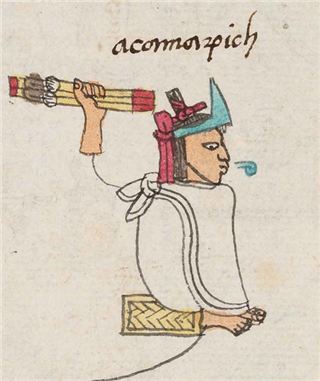
The Aztec Empire — more precisely the Triple Alliance, or Ēxcān Tlahtolōyān — had one of history's most unpromising beginnings. The Mexica arrived in the Valley of Mexico as late-coming migrants and, by tradition, settled around 1325 CE on a small, swampy island in Lake Texcoco after seeing the prophesied omen of an eagle perched on a cactus devouring a serpent. They were among the weakest groups in the valley — latecomers who received the island because no established power wanted it — and served as tributaries and mercenaries of the dominant Tepanec city of Azcapotzalco. Over a century of patient subordination they built their island into the city of Tenochtitlan, developed the chinampas (raised-bed gardens in the lake) that transformed agricultural productivity, established their first royal dynasty under Acamapichtli (r. c. 1375–1395), and earned a reputation for ferocity as mercenary warriors. The founding moment of the empire came from an external crisis: the death of the long-reigning Tepanec ruler Tezozomoc in 1426 triggered a succession struggle during which his son Maxtla reportedly had the Mexica ruler Chimalpopoca murdered. The new Mexica ruler Itzcoatl formed a coalition with the exiled Texcocan prince Nezahualcoyotl and the city-state of Tlacopan against Maxtla's Azcapotzalco. Victory in 1428 was followed by the formal constitution of the Triple Alliance, which traditionally divided tribute two-fifths each to Tenochtitlan and Texcoco and one-fifth to Tlacopan. At the same time the statesman Tlacaelel reshaped Mexica history to supply the theological foundation for empire: the Mexica were recast as the chosen people of the sun and war god Huitzilopochtli, whose continued existence required the nourishment of human sacrifice, making perpetual war a cosmic necessity.
Socioeconomy
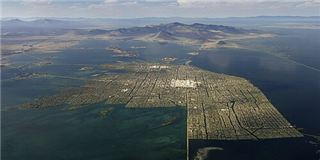
The Aztec imperial economy was one of the most sophisticated tribute systems in pre-Columbian history, channelling the agricultural and craft surpluses of conquered regions into Tenochtitlan through a highly organised system of collection, redistribution and long-distance commerce. The heartland in the Valley of Mexico was transformed by the chinampas — artificial plots built up from lake sediment and anchored by willow trees — which yielded several harvests a year and helped support a Tenochtitlan population estimated at 200,000 or more, making it one of the largest cities in the world. Beyond the valley, the 38 tribute provinces recorded in the Codex Mendoza supplied cotton, cacao, precious feathers, gold dust, jaguar skins and countless other goods. Much of this wealth passed through the great market of Tlatelolco, Tenochtitlan's twin city, whose scale and variety astonished the Spanish conquistador Bernal Díaz del Castillo. The pochteca, a hereditary merchant class with its own patron deity, courts and social organisation, conducted long-distance trade beyond the imperial frontiers, gathering intelligence as well as goods. The Flower Wars — ritualised combat against the independent city-states of Tlaxcala, Huexotzinco and Cholula — served the dual purpose of supplying captives for sacrifice and keeping the warrior class in readiness. Moctezuma II (r. 1502–1520) tightened central control over tribute and appointments and intervened in the succession at Texcoco, concentrating wealth and power in Tenochtitlan while deepening the resentments that would undermine imperial solidarity when the Spanish arrived.
Military
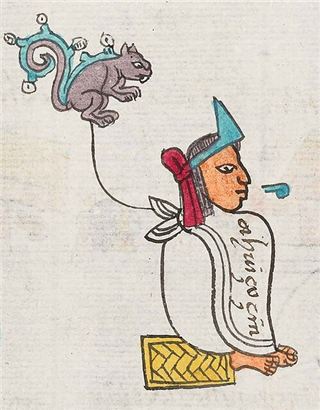
The Aztec military was among the most formidable fighting forces of the pre-Columbian Americas, built on universal male military training, elite warrior orders and a style of warfare that prized capture over killing. Every Mexica boy received military training, and social advancement was explicitly tied to the number of captives taken in battle: a warrior who seized four enemies attained the prestigious rank of tequihua, opening the way to the elite Eagle and Jaguar warrior societies. This capture-oriented warfare — driven by the religious demand for living sacrificial victims — set Aztec tactics apart from European battlefield practice and would prove a critical weakness against Spanish opponents who fought to kill. The army could mobilise very large forces, with the warriors of Tenochtitlan and its allies supplemented by levies from tributary provinces. Ahuitzotl (r. 1486–1502), the eighth Huey Tlatoani, was the greatest Aztec conqueror, extending the empire south to Xoconusco (Soconusco) on the Pacific coast of modern Chiapas, near the present-day border with Guatemala, and marking the rededication of the enlarged Templo Mayor in 1487 with a mass sacrifice reported to have lasted four days. The army's clearest limitation was exposed by the Purépecha (Tarascan) state in the Aztec–Purépecha war of 1479, when Axayacatl's force, reportedly 24,000 strong, was routed — fixing a western frontier the Aztecs never subsequently crossed. The fundamental strategic weakness of the system was its relationship with its tributaries: the coercive extraction that financed the army also created a vast pool of resentful subject peoples who needed only a credible alternative leadership to defect, which Hernán Cortés provided in 1519.
Governance & Law

Aztec government combined an elaborate ritual monarchy with a capable administration that managed tribute collection, trade, justice and religious ceremony across an empire of roughly 200,000 square kilometres. The Huey Tlatoani — Great Speaker — of Tenochtitlan was not a hereditary monarch in the European sense but was chosen by a council of senior nobles from among eligible male members of the royal lineage, a system that in theory selected for ability but in practice concentrated power within a small elite and produced recurring succession disputes. Beneath him stood the cihuacoatl, a chief minister who managed internal affairs; tribute stewards (calpixque) who collected and recorded tribute in the provinces; and the senior commanders, the tlacatecatl and tlacochcalcatl. The judicial system maintained separate courts for nobles and commoners, with a high court in Tenochtitlan hearing the most serious cases. Moctezuma II carried out the most significant restructuring of Aztec government since the Triple Alliance's founding: he concentrated power in Tenochtitlan, replaced many officials appointed by his predecessor Ahuitzotl with members of the high nobility, and elaborated the ritual and ceremonial dimensions of royal authority to an unprecedented degree, presiding over a court of extraordinary complexity. The fundamental weakness was the empire's relationship with its subject peoples: unlike the Achaemenid Persians or the Romans, the Aztecs made little systematic effort to integrate conquered populations into a shared imperial identity. Tributary peoples paid taxes, provided military service and honoured Aztec religious requirements but remained culturally and politically distinct, retaining their languages, local rulers and identities — and their resentments.
Global & Regional Impact
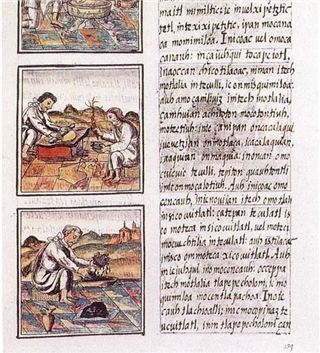
The Aztec Empire's historical legacy was permanently shaped by its sudden and total defeat, which made it the defining case study of colonial conquest in the Americas and ensured that its civilisation — its cities, religious practices, artistic traditions and language — reached the wider world largely through the accounts of its conquerors. Tenochtitlan, one of the largest and most sophisticated cities on earth in 1519, was razed and Mexico City built on its ruins, an act of symbolic obliteration matched by the systematic destruction of Aztec religious and historical manuscripts by Spanish clergy. The surviving codices, and the testimony of indigenous informants compiled by Fray Bernardino de Sahagún in the Florentine Codex, provide the primary window into Aztec civilisation, and they record a world of great complexity: Nahuatl poetry, sophisticated astronomical and calendrical knowledge, elaborate philosophical and cosmological systems, and an urban planning tradition that astonished European observers. The tributary system, paradoxically, preserved more of Mesoamerica's political and cultural diversity than the Aztecs' reputation as conquerors might suggest: by governing through local rulers rather than replacing them, the empire left in place administrative structures and traditions that the Spanish colonial system could later co-opt. Nahuatl, already widespread and further spread by Aztec power, became the most important indigenous lingua franca of colonial New Spain, used by missionaries as a principal vehicle for evangelisation across central Mexico. The demographic catastrophe caused by smallpox and other European diseases — which killed an estimated 80 to 90 per cent of central Mexico's indigenous population within a century of contact — was not a consequence of Aztec rule, but it was among the most consequential events in the history of the Americas.
Decline & Fall
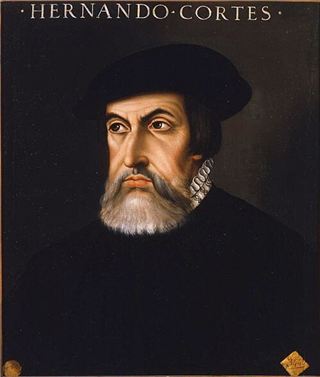
The fall of the Aztec Empire was one of the most rapid in imperial history: from November 1519, when Cortés entered Tenochtitlan as Moctezuma II's guest, to the fall of the city in August 1521 was less than two years. The speed of collapse was produced by four mutually reinforcing forces that no pre-Columbian political system had been built to withstand. The first and most devastating was smallpox: the epidemic that swept through Tenochtitlan after the Spanish retreat of La Noche Triste (30 June–1 July 1520) killed a large share of the city's population within months, including the new ruler Cuitlahuac, who had driven the Spanish from the city — stripping away the leadership and manpower needed for sustained resistance. The second was the mass defection of subject and enemy peoples: by some estimates Cortés's army at the final siege numbered as many as 100,000 warriors, of whom fewer than 1,000 were Spaniards; the great majority were Tlaxcalans, Huexotzincas, Chalcans, Texcocan factions and others who seized the opportunity to destroy the power that had dominated or threatened them. The third was the seizure of Moctezuma II, whose hesitancy in the face of the Spanish presence — whether from religious uncertainty about their identity or a calculated political gamble — removed effective central leadership at the most critical moment. The fourth was the structural contradiction of the tribute system itself, which had built a vast empire without creating the institutional loyalty, cultural integration or shared identity needed to sustain it once central authority was challenged. Tenochtitlan fell on 13 August 1521 after a siege of nearly three months; the last ruler, Cuauhtémoc, was captured fleeing by canoe, and the city was levelled.
The Aztec Empire's collapse in 1521 — one of the swiftest falls from peak to extinction in the historical record — stands as the defining case study of hegemonic empires built on coercion rather than integration: the vast army that destroyed Tenochtitlan was composed overwhelmingly of indigenous peoples whom the Aztecs had subjugated or fought, demonstrating that the empire's greatest structural vulnerability was not Spanish steel but the accumulated resentments of its own tributaries and neighbours.
References
- Berdan, F.F. (1982) The Aztecs of Central Mexico: An Imperial Society. New York: Holt, Rinehart and Winston.
- Clendinnen, I. (1991) Aztecs: An Interpretation. Cambridge: Cambridge University Press.
- Hassig, R. (1988) Aztec Warfare: Imperial Expansion and Political Control. Norman: University of Oklahoma Press.
- León-Portilla, M. (1992) The Broken Spears: The Aztec Account of the Conquest of Mexico. Expanded edn. Boston: Beacon Press.
- Sahagún, B. de (1950–1982) Florentine Codex: General History of the Things of New Spain. Translated by A.J.O. Anderson and C.E. Dibble. Santa Fe: School of American Research.
- Smith, M.E. (2012) The Aztecs. 3rd edn. Oxford: Wiley-Blackwell.
- Townsend, R.F. (2000) The Aztecs. 2nd edn. London: Thames and Hudson.
Connections
Open the full connections map →