Americas
Inca Empire
At a glance
- Tawantinsuyu, the largest pre-Columbian state of the Americas, stretched some 4,000 km from southern Colombia to central Chile.
- It ran on labour tribute, storehouses, a 40,000 km road network and khipu records, without money or alphabetic writing.
- Smallpox and a civil war between Huáscar and Atahualpa left it open to Francisco Pizarro’s conquest in 1532–1533.
Rise & Fall
- c. 1438Pachacuti defeats the Chanka and launches Inca imperial expansion
- c. 1470Túpac Inca Yupanqui conquers the Kingdom of Chimor
- c. 1471Túpac Inca Yupanqui succeeds Pachacuti as Sapa Inca
- c. 1493Huayna Capac becomes Sapa Inca and extends the empire northwards
- c. 1527Huayna Capac dies of an epidemic, probably smallpox
- 1532Atahualpa defeats Huáscar, then is captured by Francisco Pizarro at Cajamarca
- 1533Atahualpa is executed and the Spaniards enter Cusco
Foundation

The Incas began as one of many small ethnic groups in the southern Peruvian highlands, centred on the Cusco Valley, where a local kingdom took shape from around the thirteenth century. Their origin myths tell of Manco Capac and his siblings emerging from the cave of Pacaritambo, or from Lake Titicaca, to found Cusco. The transformation into an empire is traditionally dated to about 1438, when the Chanka, a powerful confederation from the Andahuaylas region, attacked Cusco. According to the chronicles, the aged ruler Viracocha Inca abandoned the city, but his son Cusi Yupanqui defended it, defeated the Chanka and took the throne as Pachacuti. This date comes from John Rowe’s reading of the Spanish chronicler Miguel Cabello de Balboa; radiocarbon dates from imperial sites suggest that Inca expansion may have begun several decades earlier, so the familiar chronology is best treated as approximate. Pachacuti rebuilt Cusco as an imperial capital, subdued the neighbouring peoples of the highlands and the Lake Titicaca basin, and created the institutions of the new state. His son Túpac Inca Yupanqui, first as general and from about 1471 as ruler, conquered the Kingdom of Chimor on the north coast and pushed the frontiers into Ecuador and south into Chile, while Huayna Capac, from about 1493, extended rule to the north.
Socioeconomy

The empire, known to its people as Tawantinsuyu, the four parts together, may have held around ten million people, although estimates vary widely. Society rested on the ayllu, a kin-based community that held land collectively and shared labour, and on the Andean ideal of reciprocity. The state claimed rights over land, dividing it among the Inca state, the religion and the communities. Instead of taxes in goods or money, households owed labour, the mita: they worked state and temple fields, served in armies, built roads and buildings, and spun and wove. Its produce filled thousands of storehouses, or qollqa, which fed soldiers, officials and workers and supplied the state’s generosity at feasts. Specialists stood outside the normal system: the yanakuna, retainers bound to the nobility and the state, and the aqllakuna, chosen women who wove fine cloth and brewed maize beer, or chicha. Cloth was among the most valued goods. Agriculture combined maize grown on irrigated terraces with potatoes, quinoa and other crops of the high plateau, alongside herds of llamas and alpacas. Long-distance markets played a small role compared with redistribution by the state. Religion centred on the sun god Inti, honoured at the Coricancha in Cusco, alongside the creator Viracocha, local sacred places called huacas, and the mummies of past rulers.
Military
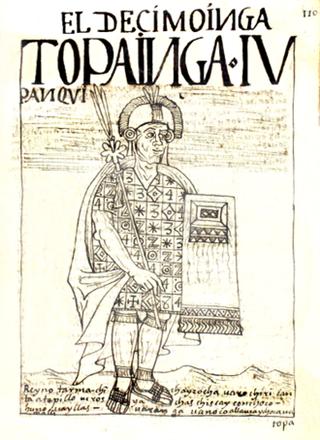
Inca expansion relied on large armies raised through the mita and fed from the storehouses along the roads, which allowed campaigns over great distances in difficult terrain. Commanders combined force with diplomacy: local lords were offered gifts and favoured status if they submitted, and those who resisted faced conquest and sometimes the resettlement of their people. The decisive victory over the Chanka around 1438 opened the way for conquests in the central and southern highlands, including the Colla and Lupaca kingdoms around Lake Titicaca. Túpac Inca Yupanqui defeated the Kingdom of Chimor around 1470 and campaigned south through Collasuyu into present-day Chile and north-west Argentina, where the advance stopped near the Maule River in the face of Mapuche resistance. In the north, the Cañari and the peoples of highland Ecuador were subdued only after hard fighting, and Huayna Capac’s campaign against the Caranqui ended in a massacre traditionally remembered at Yahuarcocha, the Lake of Blood. The Incas built fortresses on contested frontiers, such as Inkallajta in the east and a chain of hilltop forts facing the peoples of the Amazonian lowlands. Near Cusco, the great walls of Sacsayhuamán, built of fitted stone blocks, served ceremonial as well as defensive purposes. Soldiers fought with slings, maces, clubs, spears and bolas, but had no iron weapons, horses or firearms.
Governance & Law
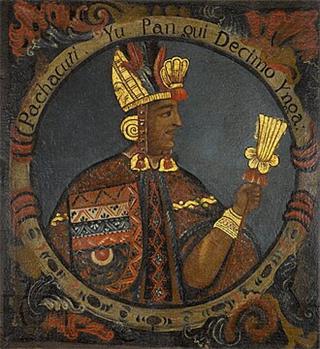
The Sapa Inca, the unique Inca, was regarded as a son of the sun and ruled from Cusco with near-absolute authority, supported by the royal nobility. Each dead ruler’s mummy was kept and served by his descendants, organised in a royal kin group or panaqa that held his estates; these groups became powerful factions in politics. The empire was divided into four quarters, Chinchaysuyu, Antisuyu, Collasuyu and Cuntisuyu, under high officials, and further into provinces under governors. Below them the population was counted and organised in decimal units, from groups of 10 households up to 10,000, led by local lords, the kurakas, who were usually confirmed in office if loyal. Records of people, tribute and stores were kept on khipus, knotted cords read by specialists called khipukamayuq. A road network of some 40,000 kilometres, the Qhapaq Ñan, joined the empire, with way stations, or tambos, and relay runners, the chaskis, who carried messages quickly between them. The state spread Quechua as a common administrative language and moved whole communities as mitmaqkuna, settling loyal groups in unstable areas and relocating rebellious ones. Royal estates such as Machu Picchu, probably built for Pachacuti, and Ollantaytambo combined residence, worship and agriculture. Succession, however, had no fixed rule, and every transfer of power risked open conflict among royal sons and their kin groups.
Global & Regional Impact

In less than a century the Incas united a larger area and population than any other state of the pre-Columbian Americas, stretching from southern Colombia to central Chile, and integrated coastal, highland and forest peoples into one administrative system without money, markets on a large scale or alphabetic writing. Its roads, terraces, storehouses and masonry, built of stones fitted without mortar, remain among the most impressive works of pre-industrial engineering, and the Qhapaq Ñan was inscribed on the UNESCO World Heritage List in 2014, as Machu Picchu had been in 1983. Spanish rule in the Andes was built on Inca foundations. Colonial officials adapted the mita to supply forced labour to the silver mines of Potosí, used kurakas as intermediaries, and relied on Inca roads and administrative divisions. Quechua, spread by the Incas and later used by missionaries, is today spoken by millions of people in Peru, Bolivia, Ecuador and neighbouring countries. Memory of the Incas inspired later resistance, from the Neo-Inca State at Vilcabamba to the great rebellion of Túpac Amaru II in 1780. Accounts by Pedro Cieza de León, Juan de Betanzos, Felipe Guaman Poma de Ayala and Garcilaso de la Vega, whose Comentarios Reales de los Incas appeared in 1609, made the Incas known in Europe, and Inti Raymi is still celebrated at Cusco.
Decline & Fall
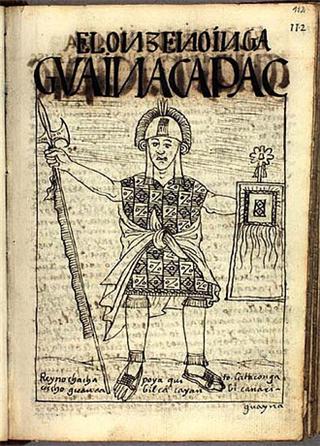
The empire fell at the height of its extent. Around 1527, while in the north, Huayna Capac died suddenly of an epidemic disease, probably smallpox, which had spread from European settlements ahead of the Spaniards themselves; his designated heir is said to have died too. Two sons claimed the throne: Huáscar, recognised in Cusco, and Atahualpa, backed by the veteran armies in the north around Quito. The resulting civil war devastated the empire. Atahualpa’s generals Quizquiz and Chalcuchímac defeated Huáscar’s forces in 1532 near Cusco and captured him, and Atahualpa’s troops killed many of Huáscar’s relatives and supporters. At this moment Francisco Pizarro landed with fewer than 200 Spaniards. On 16 November 1532, at Cajamarca, they ambushed Atahualpa’s escort, killed many of his attendants and took him prisoner. Atahualpa offered a room filled with gold and twice over with silver for his release, and had Huáscar killed in captivity. After the ransom was paid, the Spaniards executed him in July 1533. With the help of Andean peoples hostile to the Incas, Pizarro entered Cusco in November 1533 and installed Manco Inca as a puppet ruler. Manco rebelled in 1536, besieged Cusco, and withdrew to found the Neo-Inca State at Vilcabamba, which survived until the Spanish captured and executed Túpac Amaru in 1572.
The Inca Empire was the largest state of the pre-Columbian Americas, built within a century by Pachacuti and his successors and held together by labour tribute, roads, storehouses and knotted-cord records; weakened by epidemic and civil war, it fell to Francisco Pizarro’s small Spanish force between 1532 and 1533.
Test yourself
3 questions on this page, from its key events and facts.
The questions open here once the page has loaded.
References
- Bauer, B.S. (1992) The Development of the Inca State. Austin: University of Texas Press.
- D’Altroy, T.N. (2002) The Incas. Oxford: Blackwell.
- Hemming, J. (1970) The Conquest of the Incas. London: Macmillan.
- Murra, J.V. (1980) The Economic Organization of the Inka State. Greenwich, CT: JAI Press.
- Rostworowski de Diez Canseco, M. (1999) History of the Inca Realm. Translated by H.B. Iceland. Cambridge: Cambridge University Press.
Connections
Open the full connections map →