Americas
Muisca Confederation
At a glance
- Chibchan-speaking chiefdoms in Colombia's eastern highlands, led by the zipa of Bacatá in the south and the zaque of Hunza in the north.
- They traded salt, cotton cloth and emeralds for gold, which their smiths cast into ornaments and votive figures offered in sacred lakes.
- A small Spanish force under Gonzalo Jiménez de Quesada conquered them in 1537–1540 and founded Bogotá in the zipas' lands.
Rise & Fall
- c. 800The Early Muisca period begins in the highland basins of the Eastern Ranges
- c. 1490Chroniclers say the zipa Saguamanchica and zaque Michuá both die in battle near Chocontá
- 1514Tisquesusa becomes zipa after Nemequene dies of a war wound
- 1537Quesada's expedition enters Muisca lands and seizes the zaque at Hunza
- 1538Santa Fe de Bogotá is founded on 6 August in the zipas' former lands
- 1539The zipa Sagipa dies after torture; Tunja is founded on 6 August
- 1540The last zaque, Aquiminzaque, is beheaded at Tunja
- 1969A gold votive raft is found in a cave at Pasca
Foundation
The Muisca were Chibchan-speaking farmers of the high basins and valleys of the Eastern Ranges of the Colombian Andes, the Altiplano Cundiboyacense of present-day Cundinamarca and Boyacá, at 2,500 to 2,800 metres above sea level. Their history before the Spanish conquest is known from archaeology and from Spanish chroniclers writing in the sixteenth and seventeenth centuries, and the two do not always agree. Archaeologists divide the region's later past into the Herrera period of early farming villages, the Early Muisca period, which begins around 800 in some chronologies and around 1000 in others, and the Late Muisca period from about 1200. Over these centuries population grew, villages multiplied, and differences of wealth and rank sharpened as chiefdoms formed around hereditary chiefs. By the early sixteenth century the largest were grouped under two paramount rulers: the zipa of Bacatá, on the savanna of Bogotá in the south, and the zaque of Hunza, around present-day Tunja in the north. The sacred lordship of Sogamoso, under the iraca, and the lordship of Duitama, under the tundama, stood largely apart. Calling all this a 'confederation' is a later simplification: modern scholars see several loose unions of chiefdoms, held together by tribute, kinship and ritual, rather than a single state.
Socioeconomy
Muisca farmers grew maize, potatoes, quinoa, beans and other crops on the fertile soils of the highland basins, and through exchange obtained cotton, coca and fruit from the warmer valleys below. Salt was their great resource: brine from the springs of Zipaquirá, Nemocón and Tausa was boiled in large pottery vessels to make cakes of salt, which were traded far beyond the highlands. Women spun and wove cotton into mantas, cloaks that served as clothing, as tribute and as a common measure of value. According to the chronicler Pedro Simón, markets were held every eight days, and at frontier fairs such as Sorocotá, Muisca salt, cloth and emeralds from Somondoco were exchanged for gold and other goods with the Guane and other neighbours. Gold was scarce in the highlands and came mostly through trade, but Muisca smiths were skilled casters, working gold and tumbaga, an alloy of gold and copper, by the lost-wax method into ornaments and tunjos, small votive figures offered in lakes, caves and fields. Religion honoured Sué, the sun, Chía, the moon, and the culture hero Bochica, who was said to have taught weaving; the Temple of the Sun stood at Sogamoso, and lakes such as Guatavita were sacred. Society was ranked, from chiefs and their kin to commoners and servants.
Military

The Muisca fought among themselves and with their lowland neighbours, but most of what is known of their wars comes from Spanish chroniclers writing generations later, such as Juan de Castellanos, Pedro Simón and Lucas Fernández de Piedrahita, whose army sizes and speeches cannot be trusted. In their accounts the zipas of Bacatá expanded their domain from the later fifteenth century: Saguamanchica took Fusagasugá, and his successor Nemequene subdued Guatavita, Ubaque and other chiefdoms and fought the zaques of Hunza. Saguamanchica and the zaque Michuá are said to have both died in a battle near Chocontá around 1490, and Nemequene died of an arrow wound in 1514 during a war against the zaque Quemuenchatocha. Muisca warriors fought with wooden clubs, spears, darts and slings, and the western frontier facing the Panche of the warm Magdalena slopes was guarded by picked fighters whom the chroniclers call güechas. None of this prepared them for the Spanish. In 1537 fewer than 180 survivors of Gonzalo Jiménez de Quesada's expedition, with horses and steel, overcame much larger Muisca forces, seized the zaque at Hunza and drove the zipa Tisquesusa into the hills, where he died of a wound. In 1538 the Spanish fought beside the new zipa, Sagipa, against the Panche at Tocarema.
Governance & Law
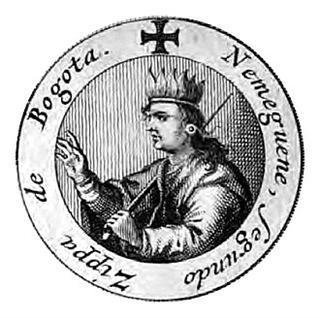
Muisca government rested on chiefs, whom the Spanish called caciques, and on the kin-based communities beneath them, which the sources call uta and sybyn. Office passed through the female line, usually from a ruler to his sister's son, and successions could be disputed. Chiefs lived in fenced compounds, received tribute in mantas, gold, food and labour, called their followers to war and judged disputes. Above them stood paramount rulers such as the zipa and the zaque, whose power depended on the loyalty of subject chiefs who kept their own lands and people; alliances shifted, and chiefdoms such as Guatavita could change sides. The chroniclers attribute to the zipa Nemequene a code of harsh laws against theft, adultery and cowardice, but how far it reflects real Muisca law is doubtful. Priests, whom the Spanish called jeques, served temples and sacred lakes, and the iraca of Sogamoso combined political and religious authority. The best-known ritual of office took place at Lake Guatavita. According to the chronicler Juan Rodríguez Freyle, writing in 1636, a new ruler, on taking office, was covered with gold dust and taken on a raft of rushes to the middle of the lake, where he and the chiefs with him offered gold and emeralds to the waters.
Global & Regional Impact
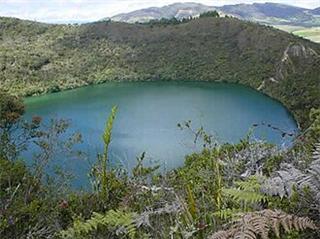
The Muisca gave Europe one of its most enduring myths. Reports of a 'gilded man' who covered himself in gold dust reached the Spanish in Quito in the 1530s, and in July 1539 the treasurer of Sebastián de Belalcázar's expedition testified that it had set out in search of a land called El Dorado. The legend, shifting from the ruler of Guatavita to a golden city and a lost kingdom, drew expeditions into the Llanos, the Amazon and the Orinoco for more than a century, among them Sir Walter Raleigh's voyage to Guiana in 1595, and treasure-hunters tried to drain Lake Guatavita from the sixteenth century to the early twentieth. The Muisca heartland became the core of the New Kingdom of Granada: Santa Fe de Bogotá, founded in 1538 on the savanna of the zipas, became the seat of a royal audiencia created in 1549, and later the capital of the Viceroyalty of New Granada and of Colombia. Muisca names survive in places such as Bogotá, Chía, Zipaquirá, Facatativá, Sogamoso and Tunja, and Muisca goldwork, including the votive raft found at Pasca in 1969, is among the treasures of the Museo del Oro in Bogotá. The salt deposits of Zipaquirá, worked since before the conquest, are still mined today.
Decline & Fall

The Muisca lordships fell to a small Spanish force in barely three years. Gonzalo Jiménez de Quesada left Santa Marta on 5 April 1536 with about 800 Spaniards to follow the Magdalena River inland; disease, hunger and fighting killed most of them, and fewer than 180 reached Muisca territory in March 1537. Divided among rival rulers, the Muisca never united against them. In August 1537 the Spanish seized the zaque Quemuenchatocha and his treasure at Hunza, and in September soldiers searching the Temple of the Sun at Sogamoso set it on fire. Tisquesusa died of a wound received in a night attack, and his successor Sagipa, after allying with the Spanish, was imprisoned and tortured to reveal the zipa's treasure and died early in 1539. Quesada founded Santa Fe de Bogotá on 6 August 1538, and rival conquerors soon arrived from Venezuela and Quito. Tunja was founded on 6 August 1539, the tundama of Duitama was defeated at the end of that year, and in 1540 Hernán Pérez de Quesada had the last zaque, Aquiminzaque, beheaded at Tunja. Under Spanish rule the Muisca were divided into encomiendas, their numbers fell under epidemics and forced labour, and their language died out in the eighteenth century. Muisca communities near Bogotá have since revived their councils.
The Muisca built a populous and prosperous highland society on farming, salt, cloth and trade, and their gold offerings in sacred lakes inspired the legend of El Dorado; their rapid conquest in 1537–1540 made their heartland, with Bogotá at its centre, the core of colonial New Granada and of modern Colombia.
References
- Boada Rivas, A.M. (2007) The Evolution of Social Hierarchy in a Muisca Chiefdom of the Northern Andes of Colombia. Pittsburgh: University of Pittsburgh, Department of Anthropology.
- Francis, J.M. (2007) Invading Colombia: Spanish Accounts of the Gonzalo Jiménez de Quesada Expedition of Conquest. University Park: Pennsylvania State University Press.
- Hemming, J. (1978) The Search for El Dorado. London: Michael Joseph.
- Langebaek, C.H. (1987) Mercados, poblamiento e integración étnica entre los muiscas, siglo XVI. Bogotá: Banco de la República.
- Langebaek Rueda, C.H. (1995) Regional Archaeology in the Muisca Territory: A Study of the Fúquene and Susa Valleys. Pittsburgh: University of Pittsburgh; Bogotá: Universidad de los Andes.
Connections
Open the full connections map →