Americas
Toltec state
At a glance
- An Early Postclassic state ruled from Tula in Hidalgo, a city of perhaps 30,000–60,000 people at its height in the 11th century.
- Its warrior statues, colonnaded halls and chacmools have close parallels at Chichén Itzá, though the nature of that link is debated.
- The Aztecs revered the Toltecs as founders of civilisation; Tula itself was abandoned around 1150, amid a severe drought.
Rise & Fall
- c. 600–650Monumental building begins at Tula Chico, the first civic centre of Tula
- c. 900Construction starts at Tula Grande, the new ceremonial centre to the south
- c. 950The growing city absorbs the populations of Tula Chico and Cerro Magoni
- c. 1050The Late Tollan phase begins; the city covers about 16 square kilometres
- 1149A severe drought begins, lasting until about 1167
- c. 1150Tula is largely abandoned and the Toltec state comes to an end
- c. 1175The Palacio Quemado and the ceremonial centre are burned
Foundation

The Toltec state took shape at Tula, in the valley of the Tula River in the present Mexican state of Hidalgo, just north of the Basin of Mexico. While the region was still under the control of Teotihuacan, settlers of the Coyotlatelco tradition, whose pottery links them to the Basin of Mexico, founded hilltop villages in the valley, and from about 600–650 one community began to build a monumental civic centre, known today as Tula Chico. Around 900, in the transition that archaeologists call the Terminal Corral phase, construction began on a larger centre some 1.5 kilometres to the south, Tula Grande. During the following Tollan phase (c. 900–1150) the city drew in the populations of Tula Chico and of neighbouring centres such as Cerro Magoni, which had probably been separate polities. Colonial chronicles say that the Toltecs combined Tolteca-Chichimeca migrants from the north with the Nonoalca, a people associated with the Gulf Coast, and they credit the city’s rise to leaders such as Mixcoatl and his son Ce Acatl Topiltzin Quetzalcoatl, figures of legend rather than of history. The city’s full name, Tollan-Xicocotitlan, used the title Tollan, usually translated ‘place of reeds’, which was given to great cities.
Socioeconomy

At its height in the eleventh and early twelfth centuries Tula covered some 16 square kilometres, and estimates of its population range from about 30,000 to 60,000, with perhaps 20,000 to 25,000 more in the surrounding countryside. Excavated neighbourhoods show families living in groups of houses built around shared courtyards. Farming villages multiplied across the Tula region during the Tollan phase, and the city drew food and other revenue from this hinterland. Farmers grew maize, beans and squash and probably cultivated maguey on the dry hillsides for fibre and for the fermented drink pulque. Craft production was central to the economy. Workshops turned obsidian, including the prized green obsidian of the Sierra de las Navajas near Pachuca, into blades and tools, and Tula became a major centre of the obsidian trade. Long-distance exchange brought Plumbate pottery from southern Guatemala and polychrome vessels from Costa Rica. Religion was public and spectacular: the art of Tula Grande honours the feathered serpent and the morning star, and reclining stone figures known as chacmools probably received offerings. Two large ballcourts stood beside the main plaza, a sign of the importance of the ballgame in civic and religious life.
Military
Warfare dominates Toltec art. On the summit of Pyramid B stand the Atlantes of Tula, four basalt pillars about 4.6 metres tall carved as warriors with butterfly-shaped breastplates, disc-shaped ornaments on their backs and spear-throwers and darts in their hands. Carved panels on the pyramid show prowling jaguars and coyotes and eagles devouring hearts, images often linked to warrior orders like the eagle and jaguar warriors of later Aztec society. Beside the pyramid ran the Coatepantli, a ‘serpent wall’ with reliefs of snakes devouring skeletons, and the benches of nearby colonnaded halls were carved with processions of armed and richly dressed men. A low platform beside the second ballcourt is usually identified as a skull rack, although some archaeologists attribute it to the later Aztec reoccupation of the site. No battle fought by the Toltec state is securely recorded, however, and the reach of its conquests is debated. Its direct rule probably covered the Tula region and parts of the Basin of Mexico and nearby valleys. Michael E. Smith and Lisa Montiel concluded in 2001 that Tula was more a kingdom than an empire, and Dan Healan and Robert Cobean have found no evidence that it ruled one.
Governance & Law
Tula left no readable written records, so its government is known only in outline. The scale of Tula Grande, with its great plaza, pyramids, ballcourts and halls, shows rulers able to command large workforces, and the Palacio Quemado (Burnt Palace), a complex of colonnaded halls lined with carved benches beside Pyramid B, was probably a setting for the councils, assemblies and ceremonies of the ruling elite. Some archaeologists, including Healan and Cobean, think that power may have been shared among different sectors of society, as it may have been at Teotihuacan, rather than concentrated in a single dynasty. The colonial chronicles, by contrast, describe Tollan as a kingdom and list its kings, but the lists disagree with one another, and in some of them reigns last a round 52 years, the length of a Mesoamerican calendar cycle, so they are treated as legend. The two most famous figures are Ce Acatl Topiltzin Quetzalcoatl, a priest-king driven into exile by the trickery of the god Tezcatlipoca, and Huemac, the last ruler. Historians have read them in different ways: Wigberto Jiménez Moreno made Ce Acatl one of Tula’s first rulers and Huemac its last, while Paul Kirchhoff argued that the two were contemporaries who both witnessed its fall.
Global & Regional Impact
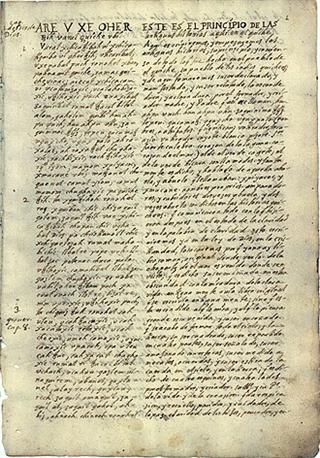
Tula’s art and architecture have close parallels elsewhere in Mesoamerica. The Temple of the Warriors at Chichén Itzá in Yucatán closely resembles Pyramid B, though on a larger scale, and the two cities share colonnaded halls, chacmools and warrior imagery. Once explained as a Toltec conquest of Yucatán, the connection is now usually seen as contact between two powerful capitals, with influence that may have run in both directions. Tula’s deeper legacy lay in memory. For the Aztecs, Tollan was the model of civilisation: in Nahuatl a toltecatl, ‘Toltec’, came to mean a skilled artisan, and toltecayotl, ‘Toltec-ness’, meant art and refinement, while the Nahua informants of Bernardino de Sahagún credited the Toltecs with inventing medicine and the calendar. Ruling houses claimed Toltec descent: the lords of Culhuacan did so, and the Mexica of Tenochtitlan chose as their first king Acamapichtli, who had Culhua ancestry. Far to the south, the Popol Vuh of the K’iche’ Maya traces the ancestors of their lords to a place called Tulan. Modern excavation began with Désiré Charnay in the 1880s, and from 1940 Jorge R. Acosta excavated Tula Grande and restored Pyramid B, setting up again on its summit the Atlantes that had been found broken in a trench beside it.
Decline & Fall
Tula’s end came in the mid-twelfth century. Recent archaeomagnetic dating places the close of the Tollan phase at about 1150, when a severe drought set in that lasted from 1149 to about 1167 and would have hit farming hard in this semi-arid region. The city was not destroyed in a single blow. Its abandonment seems to have been gradual, and the burning of Tula Grande, including the Palacio Quemado around 1175, followed abandonment closely in time; Tula Chico, too, was burned during or after the Tollan phase. Dan Healan, Robert Cobean and their colleagues have rejected the older view that invaders bringing Aztec II pottery sacked the city, since Tula Grande was already in ruins when such groups settled there. The chronicles tell instead of strife and calamity, of the flight of Huemac, who in several accounts died at Chapultepec, and of Toltec groups dispersing to Culhuacan, Cholula and other centres. The ruins remained a place of memory. Aztec-period settlers reoccupied parts of the old city, placed burials and offerings among its buildings and removed sculptures, including a chacmool later found in the sacred precinct of Tenochtitlan, while Toltec prestige passed to the city-states of the Basin of Mexico.
The Toltec state, ruled from Tula between about 900 and 1150, was the leading power of central Mexico in the Early Postclassic; its warrior art, trade and parallels with Chichén Itzá show its reach, and its memory made ‘Toltec’ a byword for civilisation and a source of royal legitimacy for the Aztecs and others.
Test yourself
3 questions on this page, from its key events and facts.
The questions open here once the page has loaded.
References
- Davies, N. (1977) The Toltecs until the Fall of Tula. Norman: University of Oklahoma Press.
- Diehl, R.A. (1983) Tula: The Toltec Capital of Ancient Mexico. London: Thames and Hudson.
- Healan, D.M. (ed.) (1989) Tula of the Toltecs: Excavations and Survey. Iowa City: University of Iowa Press.
- Kowalski, J.K. and Kristan-Graham, C. (eds) (2007) Twin Tollans: Chichén Itzá, Tula, and the Epiclassic to Early Postclassic Mesoamerican World. Washington, DC: Dumbarton Oaks Research Library and Collection.
- Mastache, A.G., Cobean, R.H. and Healan, D.M. (2002) Ancient Tollan: Tula and the Toltec Heartland. Boulder: University Press of Colorado.
Connections
Open the full connections map →