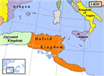
Egypt & North Africa
Fatimid Caliphate
At a glance
- An Ismaili Shia caliphate born of a secret missionary network in North Africa, set up in 910 as a rival to Abbasid Baghdad.
- From Cairo, which it founded, it controlled Red Sea to Mediterranean trade and built al-Azhar, still a leading centre of Islamic learning.
- Famine, army factions and a schism in 1094 eroded it until Saladin quietly restored Abbasid prayers in 1171.
Rise & Fall
- 910Abdallah al-Mahdi Billah is proclaimed caliph at Raqqada after the Kutama overthrow the Aghlabids
- 969General Jawhar al-Siqilli conquers Egypt; Cairo is founded north of Fustat
- 970The al-Azhar mosque is begun, later developing into a great teaching institution
- c. 1048The Zirid governor of Ifriqiya renounces Fatimid allegiance, severing North Africa
- 1073Badr al-Jamali arrives and takes over as vizier and commander after years of chaos
- 1094Succession crisis over Nizar splits the Ismaili community permanently
- 1099The First Crusade captures Jerusalem
- 1171Saladin restores prayers for the Abbasid caliph; the last Fatimid caliph al-Adid dies
Foundation

The Fatimid Caliphate was born not from dynastic inheritance but from a clandestine Ismaili missionary organisation, the da'wa, which spent decades preparing a revolution against the Sunni Abbasid order. The da'i Abu Abdallah al-Shi'i built loyalty among the Kutama Berbers of Ifriqiya towards a hidden imam whose identity was kept secret for security. In 909 his Kutama army overthrew the Aghlabid emirate, and the imam was retrieved from Sijilmasa and proclaimed caliph at Raqqada in January 910 as Abdallah al-Mahdi Billah, establishing a rival caliphate to Baghdad. Three conditions enabled the founding: a highly organised subversive network, a militarily capable Berber host people, and a theological claim tracing the imamate directly to the Prophet through his daughter Fatima. That premise was not decoration. It was the empire's structural core, and every institution was built around defending, propagating, or eventually failing to sustain it.
Socioeconomy

Egypt, conquered in 969 by the general Jawhar al-Siqilli, transformed the caliphate's economic character entirely. The Nile valley's agricultural surplus provided a stable revenue base the arid Ifriqiyan heartland had never offered. Cairo was founded north of Fustat as a palatine capital, and the al-Azhar mosque was begun in 970. At the empire's peak around 1047, the Persian traveller Nasir-i Khusraw described extraordinary wealth: the caliph reportedly owned some 20,000 shops in Cairo from which he collected rent, along with numerous caravanserais and bathhouses generating continuous revenue. Egypt's geography made it the pivot of Red Sea to Mediterranean transit trade, connecting Indian Ocean spice networks to European markets, and taxation on this commerce was a principal source of income. Socially, the caliphate governed a majority Sunni Egyptian population while employing a cosmopolitan bureaucracy that included Christians and Jews in senior positions, a pragmatic tolerance that coexisted uneasily with the dynasty's sectarian claims and was sharply interrupted by al-Hakim's persecutions.
Military
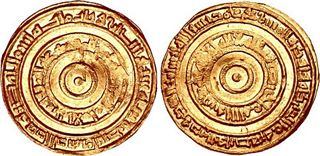
The Fatimid army was a deliberately multinational force, and that diversity was simultaneously its operational strength and its eventual structural vulnerability. Kutama Berbers formed the original revolutionary core; Turkish slave soldiers, the ghilman, were recruited for their skill as mounted archers; Black African infantry from the Sudan formed a large and politically assertive contingent. Jawhar led the largely unopposed conquest of Egypt with a reported force exceeding 100,000, then repelled the Qarmatian counter-attack that threatened Cairo in its earliest years. Under al-Aziz, the caliphate defeated the Turkish commander Alptakin near Ramla in the late 970s and pressed its claims in Syria against local and Byzantine-backed rivals. The army's ethnic factionalism was never resolved. In the 1060s and early 1070s, rivalries among Berber, Turkish, and Sudanese units erupted into open street warfare in Cairo, the vizierate changed hands dozens of times, and institutional coherence collapsed. Badr al-Jamali's subsequent reconstruction, including the still-standing gates of Bab Zuwayla, Bab al-Futuh, and Bab al-Nasr, restored order, but one dependent on his own Armenian troops rather than the caliphate's composite army.
Governance & Law

The Fatimid caliphate operated through a dual institutional structure without parallel in the medieval Islamic world. The overt apparatus consisted of the caliph, the vizierate, and conventional provincial administration. The covert apparatus was the da'wa, the missionary network propagating Ismaili doctrine across Persia, Sind, Yemen, and Arabia under a chief missionary in Cairo. The office of vizier, formalised under Ya'qub ibn Killis, the first holder appointed by al-Aziz, evolved from administrative coordinator into the seat of real executive power. By the late eleventh century, caliphs had become largely ceremonial figures. Badr al-Jamali, arriving in 1073, combined the posts of army commander, head of the missionary organisation, chief judge, and vizier, concentrating real governance in a military strongman while the caliph retained only a theological function. This represented the complete collapse of the dual structure the empire had been designed around.
Global & Regional Impact
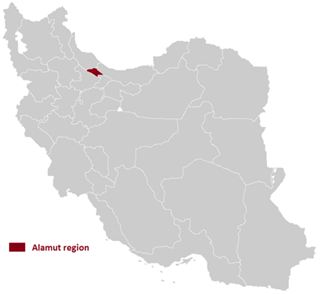
Al-Azhar, developed as a teaching institution from 988 onwards, became the most important centre of Islamic learning in the Arab world, a status it retains today despite Saladin's reversal of its Ismaili orientation after 1171. The caliphate's control of the Red Sea trade corridor made Cairo the premier commercial metropolis of the Islamic world, directing Indian Ocean commerce towards North African and European markets in a pattern that shaped Mediterranean trade geography for generations. The da'wa's missionary reach produced enduring Ismaili communities in Yemen, Persia, and the Indian subcontinent. The Nizari branch that split away following the 1094 succession crisis, led in Iran by Hasan-i Sabbah from the fortress of Alamut in the Alborz mountains, gave rise to the Assassin tradition and an Ismaili lineage whose imams, the Aga Khans, represent a continuous institutional legacy tracing directly to the Fatimid missionary apparatus.
Decline & Fall
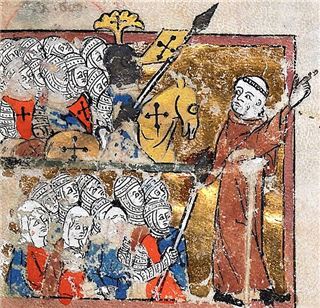
The Fatimid collapse unfolded across a century rather than through a single rupture. The Zirid defection of around 1048, when the Ifriqiyan governor al-Mu'izz ibn Badis abandoned Ismaili allegiance for Sunni orthodoxy, permanently severed the caliphate's North African hinterland. The Mustansirite Hardship of the 1060s, seven years of catastrophically low Nile floods, brought famine and plague, depopulated Cairo, and broke the army into murderous factions. The succession crisis of 1094, in which Vizier al-Afdal bypassed the designated heir Nizar in favour of al-Musta'li, permanently split the Ismaili community and destroyed the da'wa's universal authority. The First Crusade took Jerusalem in 1099, and the last Levantine stronghold, Ascalon, fell in 1153. Saladin entered Egypt with the Zengid army in 1169, became vizier, replaced Ismaili judges with Sunni ones, and in September 1171 ordered the Friday prayer read in the name of the Abbasid caliph. The last caliph, al-Adid, died on 13 September 1171, reportedly unaware that his caliphate had already ceased to exist.
The Fatimid Caliphate stands as history's most instructive case of an empire whose political existence was constitutively theological, and whose end came not through military conquest but through the quiet exhaustion of the ideological claim that had made it possible in the first place.
References
- Brett, M. (2001) The Rise of the Fatimids: The World of the Mediterranean and the Middle East in the Tenth Century CE. Leiden: Brill.
- Daftary, F. (2007) The Ismailis: Their History and Doctrines. 2nd edn. Cambridge: Cambridge University Press.
- Halm, H. (1996) The Empire of the Mahdi: The Rise of the Fatimids. Translated by M. Bonner. Leiden: Brill.
- Lev, Y. (1991) State and Society in Fatimid Egypt. Leiden: Brill.
- Sanders, P. (1994) Ritual, Politics, and the City in Fatimid Cairo. Albany: State University of New York Press.
- Walker, P.E. (2009) Caliph of Cairo: Al-Hakim bi-Amr Allah, 996–1021. Cairo: American University in Cairo Press.
Connections
Open the full connections map →