Egypt & North Africa
Makuria
At a glance
- A Christian kingdom of the Middle Nile, ruled from Old Dongola, that absorbed neighbouring Nobadia by about 700.
- Its archers repelled Arab invasions in 642 and 652, and the Baqt treaty kept it independent for some six centuries.
- Mamluk intervention from 1276, Arab migration and civil war broke the kingdom, and the court left Dongola in the 1360s.
Rise & Fall
- c. 569The Makurian court accepts Christianity, according to John of Biclaro
- 642Makurian archers repel an Arab raid sent from newly conquered Egypt
- 652Siege of Old Dongola ends with the Baqt treaty with Muslim Egypt
- c. 700Makuria and Nobadia form a single kingdom by the reign of Merkurios
- c. 836Prince Georgios travels to Baghdad to negotiate with the caliph al-Mu'tasim
- 1172Turan-Shah, brother of Saladin, sacks Qasr Ibrim
- 1276A Mamluk army defeats King David and installs a tributary king
- 1317The Throne Hall at Old Dongola is converted into a mosque
Foundation
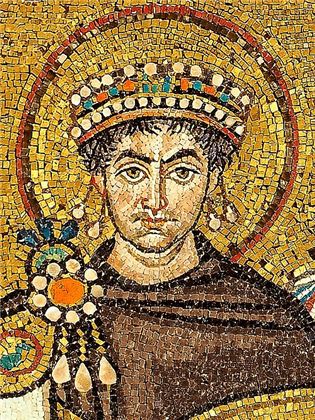
Makuria was one of three kingdoms that took shape in the Middle Nile valley after the decline of the Kushite Empire centred on Meroë in the fourth century. Nobadia lay in the north, around Faras, Alodia in the south, with its capital at Soba near the confluence of the Niles, and Makuria in between, in the reach between the Third and Fifth Cataracts, with its capital at Old Dongola, known in Nubian as Tungul. Its beginnings are poorly documented: large royal tumuli at el-Zuma and Tanqasi suggest that a powerful elite had emerged by the fifth or sixth century, but no founder is known by name. Makuria enters written history through Christian missions sent from the Byzantine Empire in the reign of Justinian I. According to the chronicler John of Biclaro, the Makurians accepted Christianity around 569 and sent ivory and a giraffe to the emperor Justin II a few years later, which suggests that they at first followed the Chalcedonian church of Constantinople. At some point before the early eighth century Makuria absorbed Nobadia, creating a single kingdom from the First Cataract far up the Nile. The date of this union is disputed: some scholars place it before the Arab invasions of the 640s, others in the reign of King Merkurios around 700.
Socioeconomy

Makurian society rested on farming along the narrow strip of fertile land beside the Nile. Farmers lifted water to their fields with the saqia, an ox-driven waterwheel that spread widely in medieval Nubia and allowed two or three harvests a year of sorghum, barley, wheat and dates, while cattle, sheep and goats grazed beyond the floodplain. Land documents and letters on parchment and paper from Qasr Ibrim show a society of landholders, churches and monasteries that bought and sold fields, mostly without coinage. Trade with Egypt passed through Aswan and was regulated by the Baqt treaty, under which Makuria delivered slaves each year in exchange for grain, wine and cloth; ivory, gold and other goods from the south also travelled north. Religion shaped daily life. Hundreds of churches, from small village chapels to the great cathedrals of Faras, Qasr Ibrim and Old Dongola, have been excavated, and monasteries such as the one at Ghazali in the Wadi Abu Dom housed communities of monks. The church used Greek and Coptic in the liturgy, while Old Nubian, written in an alphabet adapted from Coptic, became a language of religious texts, legal documents and letters. Makurian potters produced a distinctive fine painted ware that was traded throughout Nubia.
Military
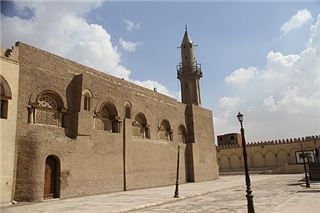
Makuria's reputation as a military power rests above all on its resistance to the Arab conquest of Egypt. In 642 a raiding force sent by Amr ibn al-As, probably led by Uqba ibn Nafi, met fierce resistance, and Arab writers remembered the Nubians as rumat al-hadaq, the pupil-smiters, because their archers aimed at the eyes of their enemies and blinded many. In 652 Abdallah ibn Sa'd ibn Abi Sarh, governor of Egypt, besieged Old Dongola and damaged its church with a catapult, but he could not take the country and agreed to a truce, the Baqt, which left Makuria independent. According to the History of the Patriarchs of Alexandria, King Kyriakos marched into Upper Egypt around 747 to demand the release of the imprisoned Coptic patriarch, and Arab historians report that Nubian forces raided Upper Egypt as far as Akhmim in the 960s. Old Dongola itself was protected by massive stone and mud-brick walls. Relations with Egypt worsened under the Ayyubids: after a Nubian attack on Aswan, Shams al-Dawla Turan-Shah, brother of Saladin, sacked Qasr Ibrim in 1172–1173. In the 1270s King David raided the Red Sea port of Aidhab and Aswan, provoking the Mamluk expedition of 1276 that defeated him near Dongola and broke Makuria's military independence.
Governance & Law
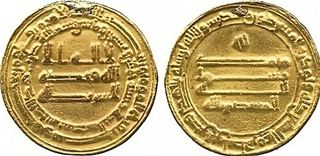
The king of Makuria ruled from Old Dongola with a court whose titles, such as domestikos and primikerios, were borrowed from Byzantine usage. Arab writers report that the throne passed to the son of the king's sister rather than to the king's own son, although known royal successions do not always follow this rule. The northern province, the former kingdom of Nobadia, was governed by an eparch, a powerful official who resided at Faras and later at Qasr Ibrim and handled relations and trade with Egypt. The church was closely tied to the monarchy. After the union with Nobadia, Makuria followed the Miaphysite Coptic Church, and its bishops, at sees such as Dongola, Faras, Qasr Ibrim and Sai, were consecrated by the Coptic Patriarch of Alexandria. A list of the bishops of Faras painted on the wall of its cathedral records an unbroken succession from the seventh to the twelfth century. Strong kings gave the state its greatest stability. Merkurios, who reigned around 697–710, was called a new Constantine by Coptic sources, and in the 830s Georgios I, then heir to the throne, travelled to Baghdad and negotiated with the Abbasid caliph al-Mu'tasim over unpaid Baqt arrears. The Throne Hall at Old Dongola, a two-storey building on a hill above the town, was the seat of royal ceremony.
Global & Regional Impact

Makuria's most lasting achievement was to stop the southward expansion of the early Islamic state along the Nile. The Baqt of 652 was an unusual arrangement for the period, a treaty between a caliphal governor and an independent Christian ruler, and it framed relations between Egypt and Nubia for some six centuries, through the Umayyad, Abbasid, Tulunid, Fatimid and Ayyubid periods. As a result Christian Nubia survived as one of the longest-lived Christian societies in Africa, alongside Ethiopia, long after Christianity had become a minority faith in Egypt. Makuria acted as a protector of the Coptic Church, and Coptic patriarchs looked to its kings for support. Its art is the best preserved legacy. The wall paintings of Faras cathedral, rescued by a Polish mission led by Kazimierz Michałowski before the area was flooded by Lake Nasser in the 1960s, are now in the National Museum in Warsaw and the Sudan National Museum in Khartoum and show bishops, kings and saints in a style that blends Byzantine and local traditions. The Old Nubian texts preserved from Makuria and its northern province are the earliest written evidence of a Nubian language, ancestral to Nobiin still spoken in the region. Excavations at Old Dongola continue to reveal churches, houses and monasteries of the medieval capital.
Decline & Fall
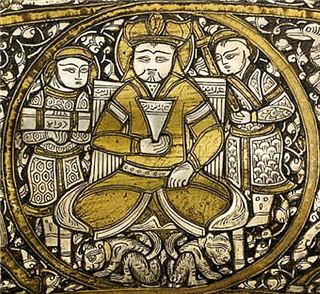
The decline of Makuria began with the rise of the Mamluk Sultanate in Egypt. After Baybars' expedition of 1276 defeated King David, the Mamluks placed his relative Shakanda on the throne as a tributary, and for the next half century Egyptian armies repeatedly intervened in Makurian successions, installing and removing kings such as Shemamun, who was deposed and restored more than once. In 1317 the Mamluks installed a Muslim member of the royal house, Abdallah Barshambu, and an Arabic inscription records the conversion of the Throne Hall at Old Dongola into a mosque in that year. Barshambu was soon overthrown, and Kanz al-Dawla, leader of the Banu Kanz of the Aswan region, who claimed the throne through descent from the royal family, contested the crown in the following years. Arab nomadic groups moved into the Nile valley and intermarried with Nubian families, the Black Death probably struck the region from the late 1340s, and central authority collapsed. Arab sources indicate that around 1365 Old Dongola was sacked amid a civil war between royal rivals and their Arab allies, and the surviving court withdrew north to Gebel Adda. From there a reduced Christian kingdom, known in its documents as Dotawo, survived in Lower Nubia into the late fifteenth century, while Islam and Arabic gradually spread through the former kingdom.
Makuria matters because its archers and diplomats halted the Arab advance up the Nile in the 640s and 650s, securing through the Baqt treaty six centuries of independence in which Christian Nubia produced a literate church, the earliest written Nubian language and the celebrated paintings of Faras cathedral.
References
- Adams, W.Y. (1977) Nubia: Corridor to Africa. London: Allen Lane.
- Welsby, D.A. (2002) The Medieval Kingdoms of Nubia: Pagans, Christians and Muslims along the Middle Nile. London: British Museum Press.
- Hasan, Y.F. (1967) The Arabs and the Sudan: From the Seventh to the Early Sixteenth Century. Edinburgh: Edinburgh University Press.
- Ruffini, G.R. (2012) Medieval Nubia: A Social and Economic History. New York: Oxford University Press.
Connections
Open the full connections map →