Conflicts & Resolutions · Treaty · Peace
Treaty of Canandaigua
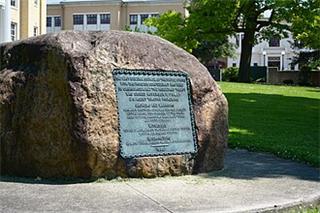
The Treaty of Canandaigua was signed on 11 November 1794 at Canandaigua, New York, between the United States, represented by Timothy Pickering, and the Six Nations of the Iroquois. It established peace and friendship, recognised the lands of the Seneca and other nations in New York, and promised an annual payment in goods. That payment, including bolts of cotton cloth, is still made each year, and the Haudenosaunee regard the treaty as in force.
Mentioned in 1 profile
See also






Cite this entry
- APA
- The Epoch Institute. (2026). Treaty of Canandaigua. In The Epoch Institute Encyclopedia. https://the-epoch-institute.org/encyclopedia/treaty-of-canandaigua
- MLA
- “Treaty of Canandaigua.” The Epoch Institute Encyclopedia, The Epoch Institute, 2026, https://the-epoch-institute.org/encyclopedia/treaty-of-canandaigua. Accessed .
- Chicago
- The Epoch Institute. “Treaty of Canandaigua.” The Epoch Institute Encyclopedia. 2026. https://the-epoch-institute.org/encyclopedia/treaty-of-canandaigua.
- Harvard
- The Epoch Institute (2026) ‘Treaty of Canandaigua’, The Epoch Institute Encyclopedia. Available at: https://the-epoch-institute.org/encyclopedia/treaty-of-canandaigua (Accessed: ).
Last reviewed October 2026Random entry ↻