Central & East Asia
Kazakh Khanate
At a glance
- Founded around 1465 by Kerei and Janibek, who broke away from the Uzbek ruler Abu'l-Khayr Khan with their followers.
- A nomadic confederation of three juzes under Genghisid khans, with law kept by biys and codified in the Zhety Zhargy.
- Dzungar invasions after 1723 drove the juzes towards Russia, which abolished the khans' power in the 1820s.
Rise & Fall
- c. 1465Kerei and Janibek lead their followers from the Uzbek Khanate into Moghulistan
- 1598Tauekel Khan takes Tashkent and Turkistan from Bukhara
- 1643Jahangir Khan checks the Dzungars at the Battle of Orbulaq
- c. 1680–1715Tauke Khan's reign; the Zhety Zhargy law code is attributed to him
- 1723Dzungar invasion begins the 'Years of the Great Disaster'
- 1731Abulkhair Khan of the Junior Juz swears allegiance to Russia
- 1822Russia abolishes the khanship in the Middle Juz
- 1847Kenesary Kasymov, the last khan, is killed and his revolt ends
Foundation

The Kazakh Khanate grew out of the political world of the White Horde, the eastern wing of the Golden Horde, whose khans descended from Jochi, the eldest son of Genghis Khan. In the mid-fifteenth century most of the steppe east of the Ural River was ruled by Abu'l-Khayr Khan of the Uzbeks, a Shibanid. Two sultans of the rival line of Urus Khan, Kerei and his kinsman Janibek, broke with him, and around 1465, the date given by the historian Muhammad Haidar Dughlat, they led their followers south-east into Moghulistan, where Esen Buqa Khan allowed them to settle in the western Chu and Talas valleys. Their people became known as the Kazakhs, a Turkic word meaning free or independent wanderers, a name earlier applied to men who had broken away from their own tribe or ruler. Many clans left Abu'l-Khayr to join them, and after his death in 1468 or 1469 the Uzbek confederation fell apart. Most of the Uzbek nomads later followed Abu'l-Khayr's grandson Muhammad Shaybani south into Transoxiana, and the Kazakhs became masters of most of the Dasht-i Qipchaq, the great steppe north of the Syr Darya. Kerei is usually counted as the first khan and was followed by his son Burunduk, while Janibek's son Qasim became the dominant figure by the early sixteenth century and is regarded as the khanate's first great ruler.
Socioeconomy

The Kazakhs were mounted pastoralists who moved their herds of sheep, horses, camels and cattle between summer pastures in the north and winter quarters in the south, along routes fixed by custom and clan. They lived in felt yurts, and wealth was counted in livestock; mare's milk (kumis) and mutton were staples. Some farming was practised in the river valleys, and the oasis towns of the middle Syr Darya, among them Sauran, Sygnak, Sayram and Turkistan, gave the khans access to crafts, markets and Muslim scholarship. Trade linked the steppe with Bukhara, Samarkand and Tashkent, where the nomads sold horses, sheep, hides and wool for cloth, grain and metal goods, and from the eighteenth century with Russian trading posts such as Orenburg. Society was divided into the 'white bone' (aq suyek), made up of the Genghisid sultans (tore) and the holy lineages of qoja, and the 'black bone' commoners, organised in genealogical clans and tribes whose ancestry every adult was expected to know. Islam spread gradually among the nomads, shaped by the Sufi tradition of Ahmad Yasawi, while older customs persisted alongside it. Oral poetry was the main literary form: zhyrau poet-advisers, from the semi-legendary Asan Kaigy in the fifteenth century to Bukhar Zhyrau in the eighteenth, and singers of heroic epics preserved history, law and genealogy.
Military
Kazakh armies were tribal cavalry led by sultans and by renowned warriors (batyr), fighting with bows, lances and sabres and, from the seventeenth century, increasingly with matchlocks. Under Qasim Khan (r. c. 1511–1521) they were feared across Central Asia, and Muhammad Haidar Dughlat credits him with a following of about a million people. The khans fought the Shaybanids of Bukhara for the towns of the Syr Darya, the Nogais to the west and the Moghuls and Oirats to the east. Haqnazar Khan (r. c. 1538–1580) restored Kazakh power after a period of defeats, and Tauekel Khan seized Tashkent, Turkistan and other towns from Bukhara in 1598, gains held under his successor Esim Khan. From the 1630s the main threat came from the Dzungar Khanate. In 1643 Jahangir Khan, with a small force of musketeers and help from Yalangtush Bahadur of Samarkand, is said to have checked the Dzungar ruler Erdeni Batur at the Battle of Orbulaq in the mountains of Zhetysu. Dzungar pressure grew under Galdan and Tsewang Rabtan and culminated in the invasion of 1723. The three juzes then joined forces under Abulkhair Khan and batyrs such as Kabanbai and Bogenbai, winning victories at Bulanty around 1727–1728 and at Anyrakai around 1729–1730, but their alliance broke apart soon afterwards over rivalry for leadership.
Governance & Law
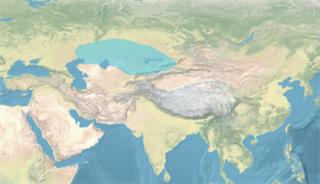
The khanate was a confederation rather than a centralised state. Only descendants of Genghis Khan could become khan or sultan, and a new khan was raised on a white felt by the assembled nobles; in practice several khans often reigned at once over different groups, and a khan's authority rested on personal prestige, success in war and the loyalty of clan leaders. The Kazakhs were grouped into three hordes, or juz: the Senior Juz in Zhetysu, the Middle Juz in the central and northern steppe and the Junior Juz in the west. Their origins are uncertain, but they became political units in their own right during the seventeenth and eighteenth centuries. Justice lay with the biy, elders respected for their eloquence and knowledge of customary law (adat). Esim Khan (r. 1598–1628) is remembered for a body of rules called 'the old road of Esim Khan', and Tauke Khan (r. c. 1680–1715) for the Zhety Zhargy, the 'Seven Charters', a code traditionally attributed to him and to the leading biys of the three juzes, Tole Bi, Kazybek Bi and Aiteke Bi. It regulated blood money (kun), disputes over land and livestock, marriage and the defence of the realm. Turkistan, with the mausoleum of Ahmad Yasawi built on the orders of Timur, served as a seat of the khans and their burial place.
Global & Regional Impact
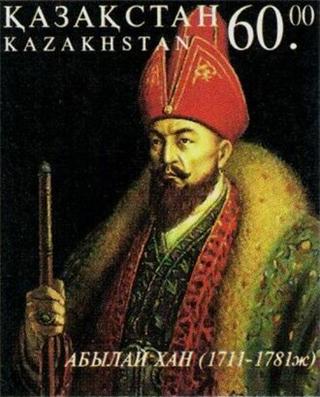
The Kazakh Khanate gave the Kazakhs their name, their territorial frame and much of their political memory. The division into three juzes, the role of the biys as mediators and the genealogical clan system survived the khanate and remained important into the twentieth century, while the Zhety Zhargy became the model of Kazakh customary law. By bringing much of the steppe between the Caspian Sea, the Altai and the Syr Darya under Kazakh khans, the khanate formed the space on which the borders of the Kazakh Soviet Socialist Republic, and in 1991 of independent Kazakhstan, were later drawn. Its long struggle with the Dzungars, above all the 'Years of the Great Disaster' (Aqtaban shubyryndy) after 1723, became central to Kazakh national history, as did Abylai Khan and the batyrs who fought beside him. Kazakh oral literature, from the zhyrau poets to the epics of the batyrs, preserved this memory and laid the foundations of the modern literary language. The khanate's turn to Russia in the eighteenth century also had wider consequences: it opened the steppe to Russian forts, officials and settlers and prepared the way for the Russian conquest of Central Asia in the nineteenth century. In modern Kazakhstan, Kerei and Janibek are commemorated by monuments, and the 550th anniversary of the khanate's foundation was marked with state celebrations in 2015.
Decline & Fall
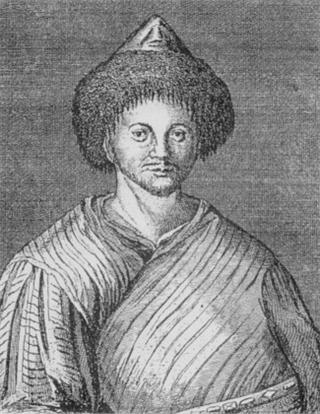
After Tauke Khan's death around 1715 the khanate lost its central leadership, and the three juzes went their separate ways under their own khans. The Dzungar invasion of 1723 drove the Kazakhs from their eastern pastures and from the Syr Darya towns, and although they recovered some ground, fear of the Dzungars and pressure from the Kalmyks, Bashkirs and Cossacks led them to seek protection. In 1731 Abulkhair Khan of the Junior Juz swore allegiance to Empress Anna of Russia, and parts of the Middle Juz followed; the fortress of Orenburg was founded in 1743 as a base on the steppe frontier. After the Qing destroyed the Dzungars in the 1750s, Abylai Khan of the Middle Juz balanced between Russia and the Qing and was proclaimed khan of all three juzes at Turkistan in 1771, but his authority did not outlast his death in 1781. Russia then dismantled the khanship: the Regulations of 1822 drafted by Mikhail Speransky abolished the office in the Middle Juz, the khan of the Junior Juz was removed in 1824, and the steppe was divided into districts under Russian officials. Kenesary Kasymov, a grandson of Abylai, led a revolt from 1837, was proclaimed khan in 1841 and was killed fighting the Kyrgyz in 1847. The Senior Juz passed under Russian rule during the advance into Zhetysu in the following decades.
The Kazakh Khanate united the nomads of the Kazakh steppe under Genghisid khans for nearly four centuries, giving the Kazakhs their name, their division into three juzes and their customary law, while its wars with the Dzungars and turn to Russia shaped the territory and memory of modern Kazakhstan.
References
- Golden, P.B. (1992) An Introduction to the History of the Turkic Peoples. Wiesbaden: Otto Harrassowitz.
- Muhammad Haidar Dughlat (1895) A History of the Moghuls of Central Asia, being the Tarikh-i-Rashidi, trans. E. Denison Ross, ed. N. Elias. London: Sampson Low, Marston and Company.
- Olcott, M.B. (1987) The Kazakhs. Stanford: Hoover Institution Press.
- Perdue, P.C. (2005) China Marches West: The Qing Conquest of Central Eurasia. Cambridge, MA: Belknap Press of Harvard University Press.
Connections
Open the full connections map →