At a glance
- Siam’s kingdom under the Chakri dynasty, ruled from Bangkok, which Rama I founded in 1782 after deposing Taksin.
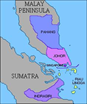
- It dominated the Lao states, western Cambodia and the northern Malay sultanates before European pressure forced cessions.
- Mongkut and Chulalongkorn modernised the state and kept Siam independent until the 1932 revolution ended absolute rule.
Rise & Fall
- 1782Rama I founds the Chakri dynasty and moves the capital to Bangkok
- 1785–1786Siam defeats Burma’s invasion in the Nine Armies War
- 1827Siamese forces crush Anouvong’s rebellion and sack Vientiane
- 1855The Bowring Treaty with Britain opens Siam to Western trade
- 1893French gunboats force the Chao Phraya; Siam cedes the lands east of the Mekong
- 1905The Slave Abolition Act completes the end of slavery
- 1917Siam joins the First World War on the Allied side
- 1932The People’s Party’s bloodless revolution ends absolute monarchy
Foundation
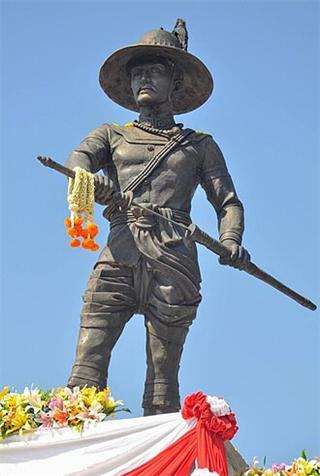
The Rattanakosin Kingdom grew out of the wreckage left by the fall of Ayutthaya to the Burmese Konbaung dynasty in 1767. Taksin, a provincial governor of partly Chinese descent, rallied resistance, expelled the occupying garrisons and ruled from Thonburi on the west bank of the Chao Phraya River, but by 1782 his rule had become erratic and a revolt broke out in the capital. His most successful general, Chao Phraya Chakri, born Thong Duang, returned from a campaign in Cambodia, had Taksin executed and took the throne on 6 April 1782, founding the Chakri dynasty that still reigns in Thailand; he is known as Rama I, or Phra Phutthayotfa Chulalok. He moved the capital across the river to the more defensible east bank, on what became Rattanakosin island, where the city pillar was set up on 21 April 1782. Bangkok was laid out on the model of Ayutthaya, with moats, canals and walls built largely by conscripted Lao and Khmer labourers. The Grand Palace and Wat Phra Kaew rose at its centre, and in 1784 the Emerald Buddha, which Chakri himself had brought from Vientiane in 1779, was installed there as the protective image of the realm. The new monarchy presented itself deliberately as the restorer of Ayutthaya’s order, law and Buddhism after fifteen years of upheaval.
Socioeconomy
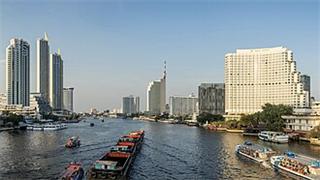
Siamese society rested on the sakdina system, which gave every person a rank expressed in notional units of land, from princes and nobles at the top to commoners (phrai) bound to perform corvée labour for the crown or a patron, and slaves (that), many of them debt bondsmen, at the bottom. Wet-rice farming in the Chao Phraya basin fed the population, while the court profited from royal trade monopolies and from the junk trade with China, which flourished under Rama II and Rama III and was largely run by Chinese merchants. Chinese immigration grew steadily, and Chinese tax farmers collected many of the kingdom’s revenues. The Burney Treaty of 1826 with the British East India Company opened limited trade, but the decisive change was the Bowring Treaty of 1855, which fixed import duties at 3 per cent, ended most royal monopolies and granted British subjects extraterritorial rights; similar treaties with other Western powers followed. Rice exports then expanded rapidly as new canals opened land in the central plain. Theravada Buddhism framed daily life through the monasteries, which also provided most schooling, and Mongkut, during his 27 years as a monk before his accession in 1851, founded the reformist Thammayut order. Chulalongkorn began the gradual abolition of slavery in 1874, a process completed by the Slave Abolition Act of 1905.
Military

The early Chakri kings first had to fight for survival against Burma. In 1785 Bodawpaya of the Konbaung dynasty invaded along a broad front in what Thai histories call the Nine Armies War; the Siamese defeated the main thrust at Lat Ya near Kanchanaburi, the attack on Thalang on Phuket island was repulsed, and later Burmese campaigns, the last major one against Thalang in 1809–1810, failed to reverse the result. Siamese armies then extended Bangkok’s reach. Chiang Mai was secured as a vassal and bulwark against Burma, and when Anouvong of Vientiane rebelled in 1826 and marched towards Bangkok, Siamese forces drove him back, sacked Vientiane and captured him; he died in captivity in Bangkok. Rivalry with Vietnam over Cambodia produced the Siamese–Vietnamese wars of 1831–1834 and 1841–1845, ending in a compromise under which King Ang Duong acknowledged both courts. Armies were raised mainly through the corvée system and supplemented with imported Western firearms. From the 1850s the threat came from Britain and France, which Siam could not match in the field. In 1893 French gunboats forced their way up the Chao Phraya in the Paknam incident, compelling Siam to give up the lands east of the Mekong. Chulalongkorn responded with a standing army, military schools and a conscription law of 1905, and in 1917 Siam joined the Allies and sent an expeditionary force to France.
Governance & Law

Rattanakosin kings ruled as Buddhist dhammaraja and sacred monarchs in the Ayutthayan tradition, assisted by a viceroy or ‘second king’ of the Front Palace (Wang Na) and by great ministers who headed the departments of the capital, the palace, lands and the treasury, alongside the two chief ministries of Mahatthai and Kalahom, which governed the northern and southern provinces. Rama I had the surviving laws of Ayutthaya revised into the Three Seals Law of 1805 and sponsored a council of monks to revise the Buddhist canon. Outer provinces were run by hereditary governors, and beyond them lay tributary states such as Chiang Mai, Luang Phrabang, Vientiane, Champasak, western Cambodia and the Malay sultanates of Kedah, Kelantan and Terengganu, which sent ornamental gold and silver trees as tokens of submission. Chulalongkorn (r. 1868–1910) transformed this structure. After the Front Palace crisis of 1874–1875 he moved cautiously, but the viceroy’s office was abolished in the mid-1880s, and in 1892 he reorganised the government into functional ministries. Prince Damrong Rajanubhab, as Minister of the Interior, replaced hereditary governors with salaried officials grouped in monthon, or circles, under the thesaphiban system, while tributary rulers were turned into provincial nobility. Vajiravudh (r. 1910–1925) promoted a royal nationalism and introduced surnames, but the kingdom remained an absolute monarchy without an elected legislature.
Global & Regional Impact
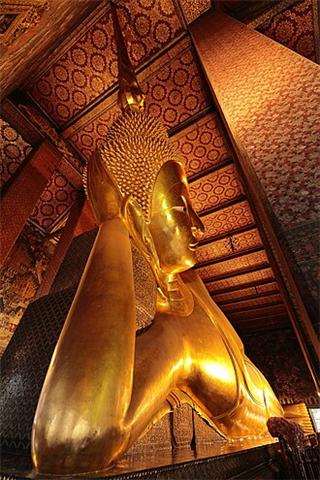
Rattanakosin Siam was the only state in mainland or maritime Southeast Asia to keep its independence through the age of European imperialism. This was owed partly to its position as a buffer between British Burma and Malaya on one side and French Indochina on the other, and partly to the diplomacy of Mongkut and Chulalongkorn and their timely concessions. The Anglo-French declaration of 1896 guaranteed the Chao Phraya basin as a neutral core, though the price was the loss of claims over Laos, western Cambodia and the northern Malay states. Within the remaining territory, Chulalongkorn’s reforms created a centralised bureaucratic state whose provinces, ministries, railways and schools shaped modern Thailand, and the historian Thongchai Winichakul has shown how mapping and treaty borders in this period produced the modern idea of Siam as a bounded national territory. Culturally the early kings rebuilt Ayutthayan court culture: the Ramakien, the Thai version of the Ramayana, was compiled under Rama I, the poet Sunthorn Phu composed Phra Aphai Mani in the early nineteenth century, and temples such as Wat Pho and Wat Arun gave Bangkok its skyline. Mongkut’s interest in astronomy and the Thammayut reform helped reconcile Buddhism with Western learning. Siam joined the League of Nations as a founding member in 1920, and the dynasty founded in 1782 still reigns.
Decline & Fall

The absolute monarchy that Chulalongkorn had strengthened came under strain under his successors. Vajiravudh’s court spending and his favouritism towards personal followers alienated parts of the officer corps, and a plot by young army officers was uncovered in 1912. Western-educated commoners in the bureaucracy and army increasingly resented the princes’ hold on high office. Prajadhipok (r. 1925–1935) inherited heavy debts and, during the Great Depression, cut salaries and dismissed officials, deepening discontent; he considered granting a constitution but was dissuaded by senior princes and advisers. On 24 June 1932 the People’s Party (Khana Ratsadon), a small group of civilian and military officials led by Phraya Phahon Phonphayuhasena, Pridi Banomyong and Plaek Phibunsongkhram, seized key points in Bangkok in a bloodless coup, detained leading princes and demanded a constitutional regime. Prajadhipok accepted a provisional constitution on 27 June and a permanent one on 10 December 1932, ending 150 years of Chakri absolutism. Continuing disputes with the new government led him to abdicate in 1935, and his young nephew Ananda Mahidol succeeded him. In 1939, under Phibunsongkhram as prime minister, the country was renamed Thailand. The kingdom founded in 1782 thus continued as the constitutional monarchy of Thailand, with Bangkok as its capital and the Chakri dynasty on the throne.
Rattanakosin Siam rebuilt Thai power after the fall of Ayutthaya, made Bangkok its capital and dominated the Lao, Cambodian and northern Malay states; under Mongkut and Chulalongkorn it modernised its government enough to remain the only Southeast Asian state never colonised, until the 1932 revolution ended absolute monarchy.
References
- Baker, C. and Phongpaichit, P. (2009) A History of Thailand. 2nd edn. Cambridge: Cambridge University Press.
- Wyatt, D.K. (2003) Thailand: A Short History. 2nd edn. New Haven: Yale University Press.
- Winichakul, T. (1994) Siam Mapped: A History of the Geo-Body of a Nation. Honolulu: University of Hawai’i Press.
- Terwiel, B.J. (2005) Thailand’s Political History: From the Fall of Ayutthaya to Recent Times. Bangkok: River Books.
Connections
Open the full connections map →